
Zelensky's "Heroes of the UPA" decree fractures Poland-Ukraine alliance

A symbolic decree by Kyiv honoring a wartime nationalist army accused of massacring Poles has triggered a sharp diplomatic crisis between Ukraine and its most important European ally — forcing Warsaw to choose between present solidarity and wounded historical memory.
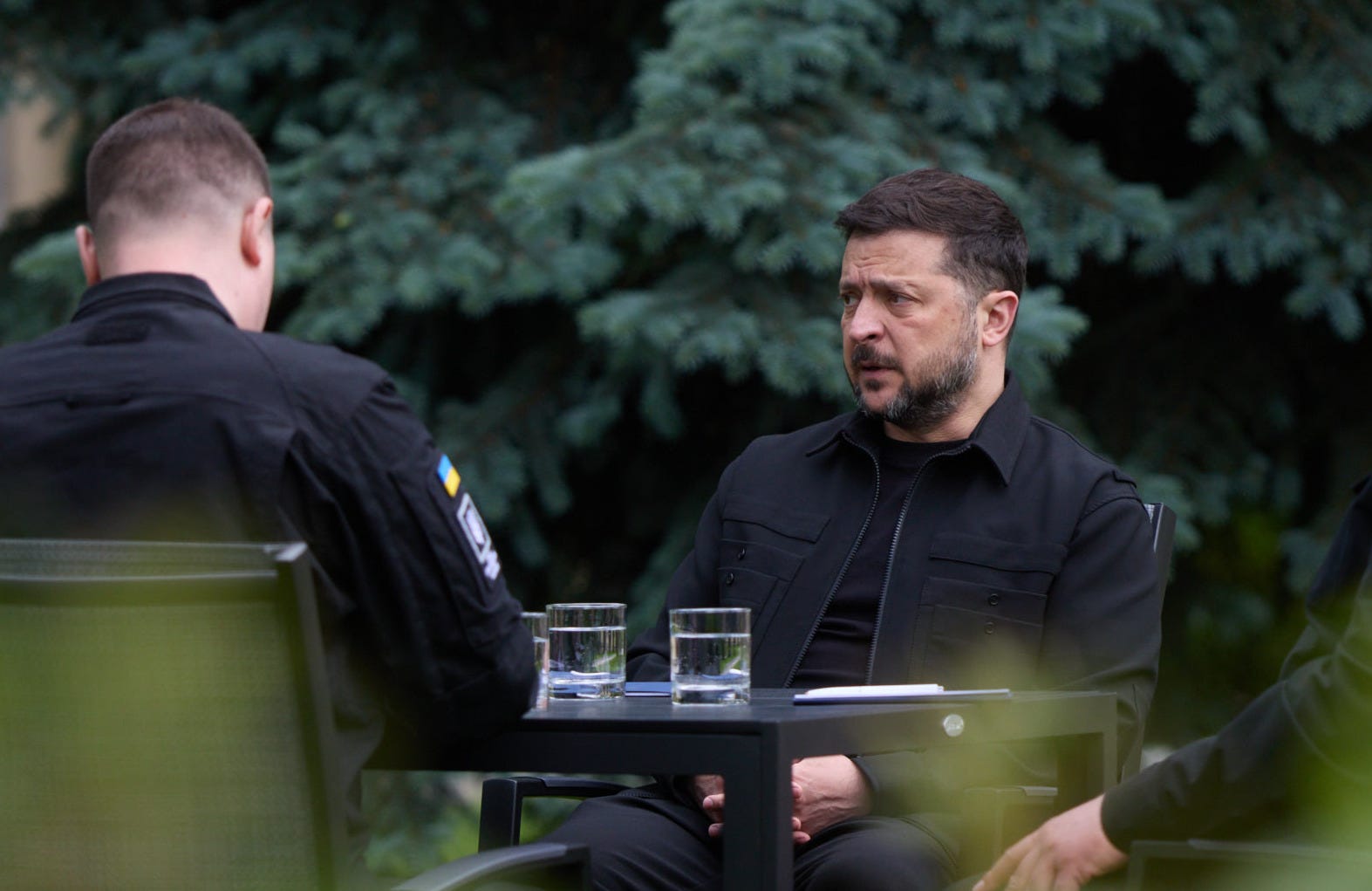
This image is used for illustrative purposes only.
At a Glance
Ukrainian President Volodymyr Zelensky signed a decree naming a special forces unit “Heroes of the UPA,” in honor of the Ukrainian Insurgent Army (UPA), a nationalist armed force active from 1942 to 1949 that Warsaw holds responsible for the deaths of an estimated 50,000 to 100,000 Polish civilians, according to Polish historians, between 1943 and 1945.
The Polish response was swift and crossed party lines: nationalist President Karol Nawrocki — a close ally of Donald Trump — moved to strip Zelensky of Poland’s highest state honor, while pro-European Prime Minister Donald Tusk called the decision “alarming.”
Ukraine’s Foreign Ministry pushed back, insisting the renaming was not intended to offend anyone and that only Moscow stands to gain from Polish-Ukrainian conflict.
The decree that sparked the crisis
Earlier this week, President Zelensky signed a decree granting the Special Operations Center “North” of Ukraine’s Special Operations Forces the honorary designation “Heroes of the UPA.” The UPA — the Ukrainian Insurgent Army — was an armed formation active between 1942 and 1949, linked to the Organization of Ukrainian Nationalists (OUN), whose stated goal was the creation of an independent Ukrainian state. For Kyiv, these fighters represent resistance against Soviet imperial domination; for Warsaw, they are inseparable from the systematic massacre of Polish civilians during World War II.
Zelensky justified the decision by stating he had acted “in order to restore the historical traditions of the national army and taking into account the exemplary execution of the tasks assigned to it in defending the territorial integrity and independence of Ukraine.” The decree came the same week the Ukrainian government also repatriated and reburied Andriy Melnyk, leader of the OUN, whose members served in SS formations and participated in the deportation of Jews and the killing of thousands of Polish civilians in the Volhynia region of northwestern Ukraine.
A Polish backlash that bridged the political divide
Karol Nawrocki, Poland’s nationalist head of state and a close ally of Donald Trump, said he received the decision “with great sadness” and moved to have a state body examine the withdrawal of the Order of the White Eagle — Poland’s highest honor, awarded to Zelensky in 2023 by then-President Andrzej Duda. “This is not how relationships between nations are built,” Nawrocki told reporters, warning that “the glorification of the UPA provides fertile ground for Russian propaganda and disinformation.”
Donald Tusk, Poland’s prime minister and leader of its pro-European government, took aim at both presidents while unambiguously condemning Kyiv’s choice, calling it “alarming.” Poland’s Foreign Minister Radoslaw Sikorski said the renaming “wounds the memory of the victims and damages dialogue between our nations.” Warsaw summoned the Ukrainian ambassador and delivered a formal protest.
Ukraine’s Foreign Ministry spokesman Heorhyi Tykhyi pushed back, telling reporters it was regrettable that Poland had reacted negatively, and that Ukraine had no intention of offending anyone. “Our history confirms that only Moscow benefits from conflicts between Ukrainians and Poles,” Tykhyi said, adding that for Ukrainian soldiers, the UPA’s struggle symbolizes absolute opposition to Moscow’s imperial ambitions. [translated from Ukrainian]
The unhealed wound of Volhynia
The Volhynia massacre remains one of the most painful historical fault lines in Central Europe. Between 1943 and 1945, UPA units carried out a series of systematic killings against the Polish civilian population in the Volhynia and Eastern Galicia regions of what was then German-occupied Poland, resulting in an estimated 50,000 to 100,000 deaths, according to Polish historians. Thousands of Ukrainians also perished in retaliatory violence during the same period.
Poland officially recognizes these events as a genocide. Ukraine disputes that characterization, viewing them as a conflict in which both sides bore responsibility, and has maintained that the UPA and the OUN were primarily expressions of resistance against Soviet domination. This interpretive fault line has persisted despite the two countries’ otherwise close wartime partnership. Reconciliation efforts have nonetheless advanced in recent years — including joint commemorations and, in November 2024, Ukraine’s lifting of a ban on the search and exhumation of Polish victims’ remains. The events of this week appear to have set that process back.
The identity trap of a nation at war
Zelensky’s decree follows an internal logic that is not difficult to understand. More than four years into Russia’s full-scale invasion, the Ukrainian government has been actively building a national pantheon of historical figures drawn from the independence movement, aimed at rallying Ukrainians around a shared memory of resistance to imperial domination — with Russia as the clear referent. In this framework, the UPA and the OUN are not perpetrators; they are precursors.
The diplomatic cost of that framing, however, is real. Poland is not simply another ally: it is the logistical backbone of Western support for Ukraine. Military supply corridors, refugee transit flows, political advocacy for Ukrainian EU and NATO accession — all run through Warsaw. Nawrocki himself put it plainly: “Only Vladimir Putin will benefit from a Polish-Ukrainian dispute over history.” The risk that this crisis will be amplified by Russian disinformation operations has been flagged by officials on both sides.
“Only Vladimir Putin will benefit from a Polish-Ukrainian dispute over history.” — Karol Nawrocki, President of Poland
The bottom line
The paradox is stark. By seeking to consolidate Ukrainian national identity around historically charged symbols, Zelensky is straining the alliance with the country he needs most. The question that remains open is not a historical one — it is strategic: How long can Warsaw separate its military support from its wounded national memory? And how long can Kyiv ignore the price of that expectation?
Sources: France Info · AFP · Reuters · Euronews · RFI