
Yermak freed: Ukraine's anti-corruption push faces its hardest test
The man who was Zelensky's most powerful aide walked out of detention after four nights — his €2.7 million bail paid by unnamed third parties. That detail may matter more than the arrest itself.

At a Glance
Andriy Yermak, who served as Volodymyr Zelensky’s chief of staff from 2020 to 2025, was released on May 18 after Ukraine’s High Anti-Corruption Court ordered a 60-day pre-trial detention on May 14.
The bail — set at 140 million hryvnias (approximately €2.7 million, or roughly $2.9 million) — was paid in full by third parties, days after Yermak publicly declared he could not afford it himself.
Investigators allege a money-laundering scheme tied to the construction of a luxury residential complex outside Kyiv, with an estimated €9 million laundered between 2021 and 2025.
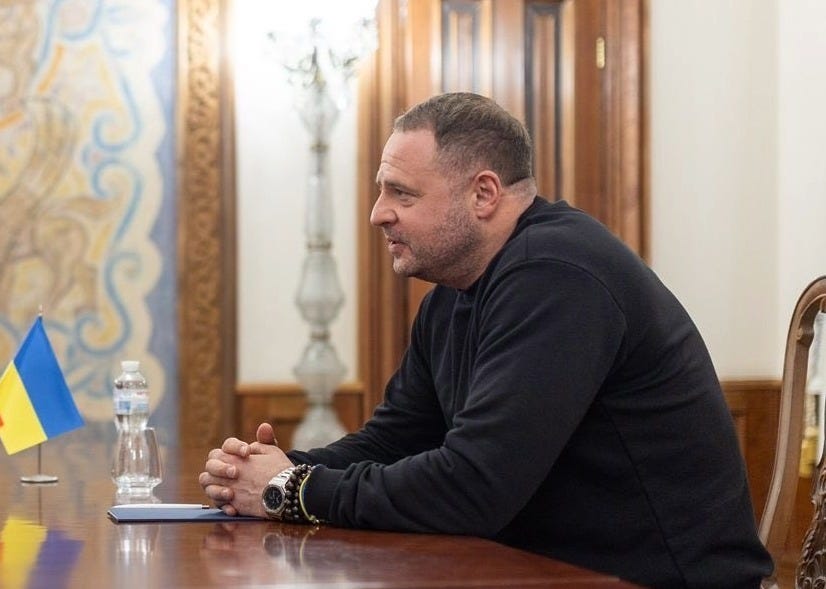
The man who said he had no money — and was free in four days
The paradox is hard to ignore. On May 13, Andriy Yermak — once one of the most powerful figures in wartime Ukraine — told the court he did not have the funds to post bail. Five days later, 140 million hryvnias had been assembled by what he had carefully called his “friends.” The speed of that payment, set against his public declaration of inability to pay, suggests the existence of an active and coordinated support network — though its precise identity remains unestablished.
Ukraine’s High Anti-Corruption Court confirmed the release once the full amount had cleared. Yermak remains subject to strict judicial obligations and has firmly contested all charges brought against him. His legal team has indicated it will appeal.
What the investigation reveals about the system
Ukraine’s National Anti-Corruption Bureau (NABU) and its Specialized Anti-Corruption Prosecutor’s Office (SAP) — together functioning roughly as an independent federal prosecutor, insulated from the executive chain of command — are investigating an alleged laundering circuit operating between 2021 and 2025, built around the construction of a high-end residential complex on the outskirts of Kyiv. Investigators estimate that up to €9 million may have been laundered through this scheme.
The speed with which a bail of this magnitude was assembled — by parties yet to be publicly identified — could indicate a disconnect between Yermak’s declared financial profile and his actual financial reach, though that conclusion cannot be drawn with certainty from the available evidence. NABU has separately confirmed that President Zelensky himself is not a subject of the investigation.
Ukraine under anti-corruption pressure: an Atlantic commitment, not just a domestic affair
For readers outside Europe, NABU and SAP are best understood as Ukraine’s equivalent of an independent federal anti-corruption prosecutor — institutions created specifically to operate outside the normal hierarchy of state power, under sustained pressure from Ukraine’s Western partners.
The arrest of Yermak — who accompanied Zelensky on his most sensitive diplomatic trips and was widely seen as the informal coordinator of Ukraine’s war diplomacy — demonstrates that these institutions have real reach. Ukraine’s path toward European Union membership is explicitly conditioned on measurable rule-of-law progress. Every case NABU prosecutes sends a signal to Brussels and Washington as much as to Kyiv.
But the opacity surrounding the bail payment could undermine precisely that signal. It is plausible that European and American partners are watching the remainder of these proceedings closely — and that the question of who funded Yermak’s release will not go unanswered indefinitely.
The bottom line
Ukraine has shown, once again, that its anti-corruption institutions can put the untouchable under arrest. The real test is what comes next. If the identity of the parties who covered the bail remains in the shadows — and if the trial ends in a procedural acquittal — it is the institutions themselves that will bear the cost.
NABU’s credibility is not built in the detention cell. It is built in the courtroom.
Sources: Euronews · France 24 · La Libre · National Anti-Corruption Bureau of Ukraine (NABU)