
Yermak detained: Ukraine's corruption problem hits home
Andriy Yermak, Zelensky's former top aide, has been placed in pretrial detention on corruption charges, a political earthquake that puts Kyiv's democratic credibility to the test as the war grinds on.

At a Glance
Ukraine’s High Anti-Corruption Court ordered Thursday the 60-day pretrial detention of Andriy Yermak, 54, who served as Zelensky’s chief of staff from 2020 until fall 2025. He is suspected of participating in a scheme that laundered approximately 460 million hryvnias (around €8.8 million, or roughly $9.5 million) through a luxury real estate project on the outskirts of Kyiv.
The court set bail at 140 million hryvnias (approximately €2.7 million, roughly $2.9 million) — an amount Yermak says he does not have.
President Zelensky, whose standing has already been weakened by a string of corruption scandals, issued no public statement in response.
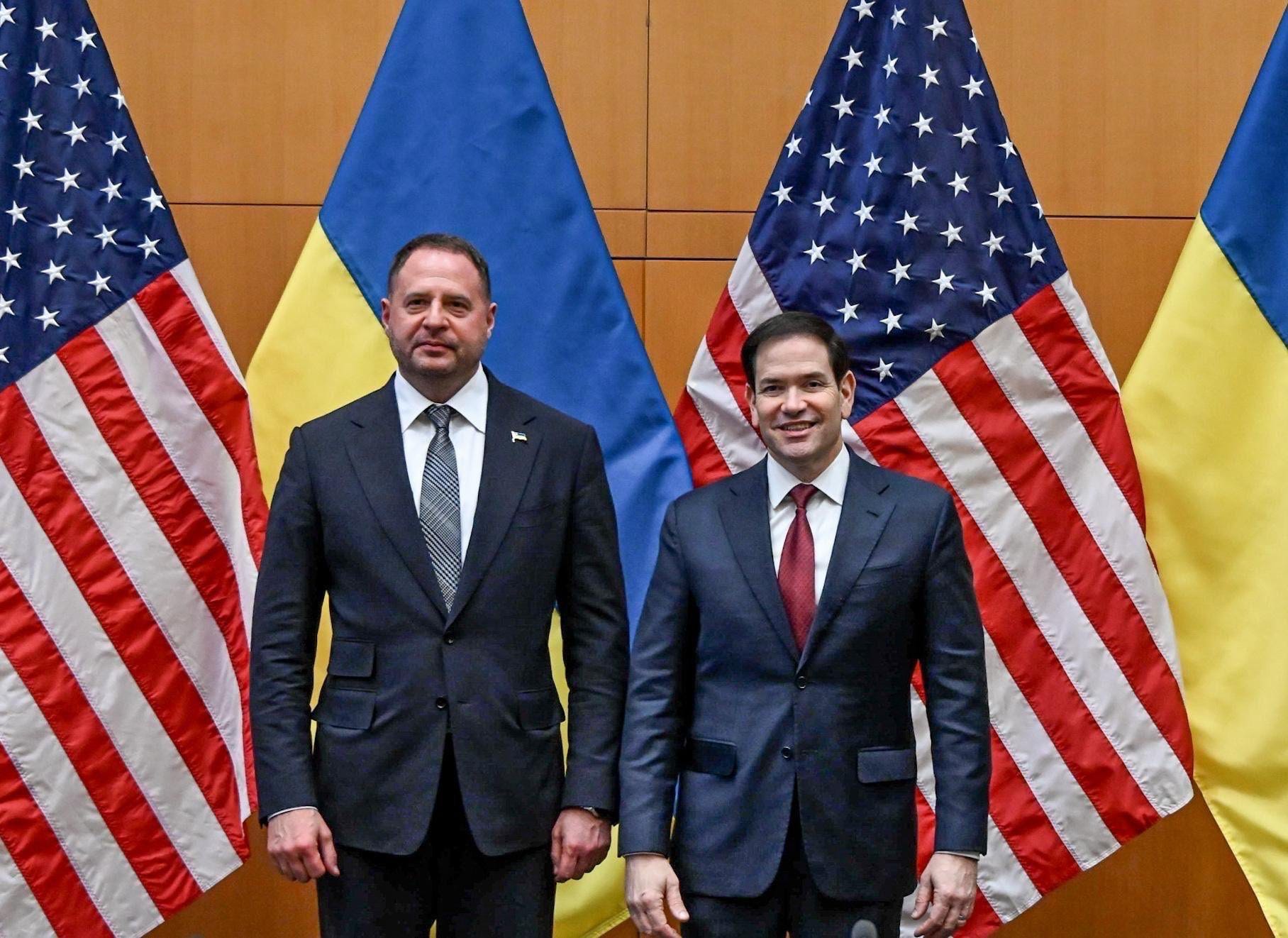
A once-untouchable insider faces justice
For five years, Andriy Yermak was far more than an aide. As head of the presidential administration from 2020 until fall 2025, he was the nerve center of Ukraine’s wartime leadership — the man Western negotiators called first, the face Kyiv’s allies saw across the table from Riyadh to Washington. His departure in November 2025, following a search of his residence conducted by anti-corruption investigators as part of a probe into irregularities in the energy sector involving senior government officials, had already hinted at the scale of what was coming.
On May 14, 2026, Ukraine’s High Anti-Corruption Court — a specialized tribunal established to handle high-profile graft cases with full institutional independence, functioning roughly like a federal anti-corruption bench — formalized the next step. The court ordered Yermak held for 60 days pending the investigation.
The alleged scheme centers on a luxury residential development on the edge of Kyiv, through which prosecutors say roughly €8.8 million in public funds was laundered. In a country where average living standards remain far removed from such sums, the figures carry a particular weight.
The defense: a total rebuttal
Yermak did not back down at Thursday’s hearing, which was broadcast live in full. “I stand by my position,” he told the court [translated from French], adding that he would contest every charge brought against him. His legal team has announced it will appeal the detention order. When asked whether he could post the €2.7 million bail, Yermak said he simply did not have that kind of money — a claim that the available facts cannot confirm or refute at this stage.
What the case reveals about Zelensky’s Ukraine
The Yermak arrest does not stand alone. It is the latest episode in a months-long judicial sequence targeting the inner circle of Ukrainian power: ministers pushed out, high-level searches, investigations spanning energy, defense and real estate. The pattern, even if its full scope remains to be established, suggests systemic vulnerabilities that go well beyond a single individual.
For Zelensky, already bruised by a series of corruption scandals, the silence maintained Thursday could signal an intent to let justice run its course without visible presidential interference — which, if sustained, would represent a meaningful show of institutional maturity. It is equally plausible, however, that the silence reflects tactical crisis management aimed at allied governments increasingly attentive to the governance conditions attached to their support.
That is the systemic stakes this case puts on the table. Ukraine is currently negotiating its path toward European Union membership — a process that closely mirrors the trajectory of Central European countries in the 1990s and 2000s, where Brussels made rule-of-law benchmarks a hard condition for accession. Anti-corruption performance sits at the top of that list.
A judiciary capable of reaching a former president’s chief of staff would send a powerful signal to partners in Brussels and Washington alike.
The question is whether the High Anti-Corruption Court‘s displayed independence holds over time — or whether it proves to be a response driven by circumstance rather than institutional conviction.
The bottom line
Ukraine faces an equation that would be difficult in peacetime and is near-impossible during an active war: demonstrating simultaneously to its allies that it deserves institutional trust, and to its own public that no one is above the law — not even those who managed the conflict from inside the presidential palace. If justice runs its course unchecked, the Yermak case could paradoxically strengthen Kyiv’s democratic credibility at a critical moment. If the proceedings stall, or if political interference surfaces, it will hand critics of Ukrainian EU accession a durable argument. The next 60 days will begin to show which way it goes.
Sources: France Info · AFP