
Wind and Solar Beat Fossil Fuels in the EU for the First Time
In 2025, wind and solar produced more EU electricity than fossil fuels for the first time ever. What that shift actually means.

In 2025, for the first time in the recorded history of the European electricity market, wind and solar generated more power across the 27 European Union member states than coal, gas, and oil combined. This is not a projection. It is a measurement.
For years, supporters of the energy transition made promises. Skeptics replied that renewables would remain a minority source of power on a continent dependent on Russian gas and Polish coal. The 2025 data settles that argument: wind and solar produced 30% of EU electricity, against 29% for all fossil fuels combined. One percentage point — but a threshold, both symbolic and structural, that had never been crossed before.
Ten years ago, that combined share stood at 13%. Over the past five years alone — since the launch of the European Green Deal, the EU’s policy framework for achieving climate neutrality by 2050 — it climbed from 20% to 30%. Coal, meanwhile, hit a new historic low: 9.2% of the electricity mix, down from nearly a quarter of EU power a decade ago.
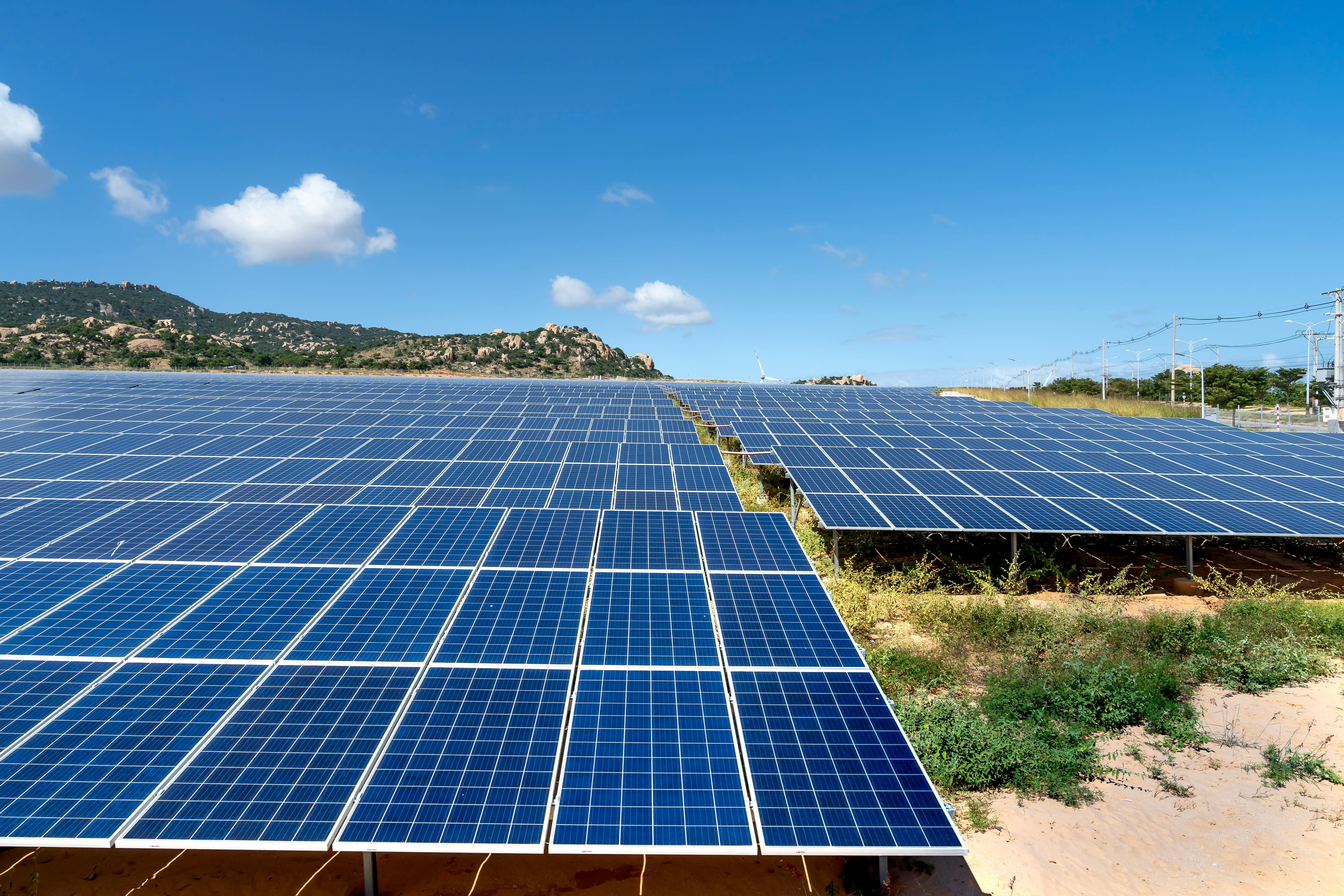
This image is used for illustrative purposes only.
At a Glance:
Wind and solar now account for 30% of EU electricity, ahead of fossil fuels at 29% — a first in the history of the European power market
Coal has fallen to 9.2% of the mix, down from nearly a quarter of EU electricity a decade ago; in 19 of 27 member states, coal is below 5% or absent entirely
EU power sector emissions continued to fall in 2025 (-0.4%), even as total electricity generation rose by 1.7%
How wind and solar crossed this threshold
The milestone is the product of sustained policy and market dynamics, not a weather accident.
The European Green Deal provided the regulatory framework. The EU Emissions Trading System (EU ETS) — the bloc’s carbon pricing mechanism, which covers power plants and heavy industry and sets a declining annual cap on their emissions — made fossil generation progressively more expensive. At the same time, the cost of producing solar power fell so sharply that generating a kilowatt-hour from sunlight now costs less than generating one from gas.
The result: solar generation grew by more than 20% for the fourth consecutive year, reaching a record 369 terawatt-hours (TWh) in 2025, according to Ember, an independent energy think tank whose annual European Electricity Review is the benchmark dataset for EU power sector analysis. Solar now generates more electricity in the EU than coal and hydropower, and accounts for more than a fifth of electricity in Hungary, Cyprus, Greece, Spain, and the Netherlands.
In 14 of the 27 member states, wind and solar together already outproduce all fossil sources combined.
The European dimension mattered at two levels. First, the EU’s integrated internal electricity market allows member states to supply each other, making the integration of variable renewables more stable than any single country could achieve alone. Second, the European Green Deal provided a long-term price signal — a regulatory certainty that directed private investment toward renewables at a scale no individual member state could have generated.
What the number conceals — and what it confirms
The nuance matters: 2025 was a less windy and less rainy year than average across Europe. The drop in wind generation (-2%) and hydropower (-12%) mechanically reduced the need for fossil fuel backup — gas doesn’t need to compensate for what hydro isn’t producing if solar picks up the slack. The crossing of the 30% threshold was partly enabled by weather conditions that were unusually favorable to solar.
What is structural, however, is the trajectory. In 2020, fossil fuels represented 37% of the EU electricity mix; by 2025, that figure stood at 29%. The decade of decarbonization in the EU power sector is documented, verified, and consistent with the most optimistic projections made when the Green Deal was launched.
There is a counterweight to this picture: gas remains the primary vulnerability. In 2025, reduced wind and hydro output pushed gas generation higher, driving the EU power sector’s gas import bill up 16% to €32 billion. This is a reminder that the European energy transition is not complete — it is underway.
What this tells the rest of the world
For an observer in North America or Asia, the EU figure is a proof-of-concept. The political debate in most major economies still revolves around the question of whether large economies can genuinely rely on renewables at scale. The EU — a 450-million-person economy, with heavy industry, cold winters, and a long history of energy import dependence — answers with data.
The comparison with the United States is instructive: over the 2019–2024 period, the carbon intensity of American electricity fell by 13%, versus 26% in Europe over the same period. The gap reflects different policy choices, but also the leverage of a unified internal market and a credible carbon pricing mechanism.
The replicability of the model is not automatic. Europe benefited from a regulatory framework built over 15 years, a credible long-term carbon price signal, and electrical grid interconnections that cannot be improvised. Countries looking to replicate this trajectory need all three components — which is part of why the EU actively shares its regulatory experience with international partners in climate negotiations.
Solar’s growth also contributed to pushing down wholesale electricity prices by an average of roughly 25% across 19 European countries between 2023 and 2025, according to an analysis reported by Euronews. For households, the transition is beginning to cost less than maintaining the fossil fuel status quo.
The Bottom Line
The real test will not be whether the EU reaches 35% or 40% renewables in its electricity mix. It will be whether it can reduce its dependence on imported gas — the one fossil fuel still deeply embedded in the system — without compromising supply for households during low-wind winters. Investment in battery storage and grid interconnection will be decisive. The electricity transition is established in principle. Its resilience under the most demanding conditions has yet to be proven.
Sources: Ember, European Electricity Review 2026 · European Commission, verified EU ETS emissions data 2025 (April 10, 2026) · European Investment Bank · Euronews · Carbon Brief