
West Bank media lockdown: the expulsion of a French journalist
Israel's expulsion of RFI journalist Alice Froussard signals a new front in its strategy to block independent coverage of the occupied territories.

It took thirty minutes. Alice Froussard landed at Ben-Gurion Airport at 10 p.m. on June 10, 2026. By 10:30, Israeli border police had stopped her, questioned her, and detained her. The next morning, she was on a flight back to Paris. Six years of reporting from the West Bank, valid press credentials, no pending legal proceedings — and a single accusation, unsupported by any document transmitted to her employer: “support for Hamas.”
What happened at Ben-Gurion that night is not a diplomatic incident between Paris and Tel Aviv. It is the most visible piece of a broader mechanism: the progressive lockdown of independent foreign journalists’ access to the occupied Palestinian territories. Gaza has been closed since October 2023. The West Bank was the last territory still partially accessible. It may no longer be.
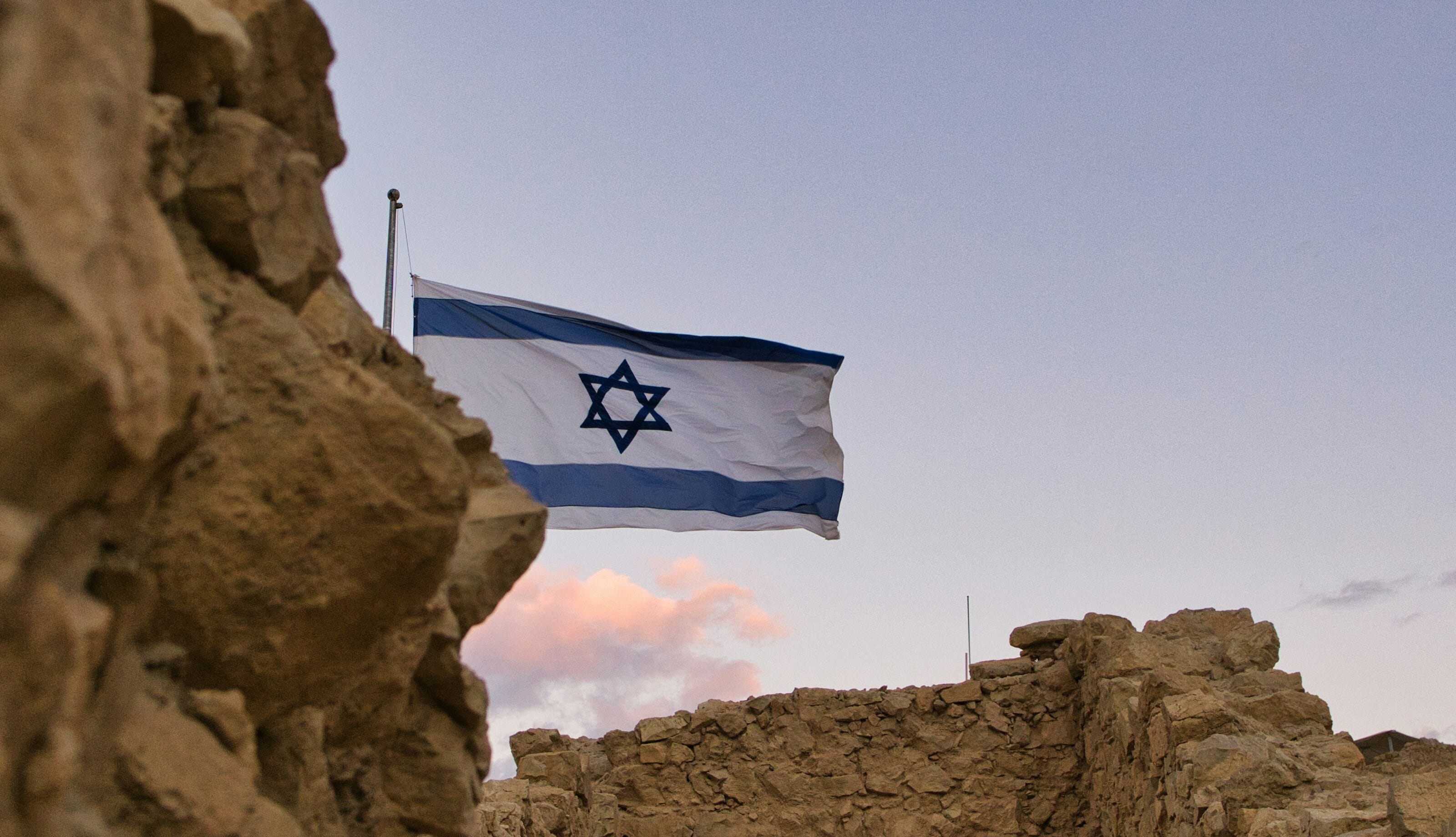
This image is used for illustrative purposes only.
At a Glance
Israel turned away Alice Froussard, a correspondent for Radio France Internationale (RFI), France’s state-owned international broadcaster, upon her arrival at Ben-Gurion Airport on June 10, accusing her of “support for Hamas” — without transmitting any formal justification to RFI or to the press freedom organization Reporters Without Borders (RSF).
The expulsion is part of a sequence stretching back to October 2023: a media blackout in Gaza, escalating pressure on journalists in the West Bank since August 2024, and the forced closure of Al Jazeera’s Ramallah bureau — all preceding Froussard’s removal at the airport itself.
A legal challenge filed by the Foreign Press Association in Israel (FPA), RSF, and the Committee to Protect Journalists (CPJ) before Israel’s Supreme Court to restore independent press access to Gaza has been pending since 2024, without a ruling.
What happened on June 10: the documented facts
A correspondent for Radio France Internationale for several years and a specialist in West Bank affairs, Alice Froussard was traveling to Ramallah for a journalism assignment. According to RSF, she held all the documents required to enter the country and practice her profession on territory she had covered for years.
Thirty minutes after landing at Ben-Gurion Airport on the evening of June 10, she was stopped by border control agents. She spent the night in the transit zone before being returned to Paris the following morning.
The decision was announced publicly by Amichai Chikli, Israel’s Minister of Diaspora Affairs and Combating Antisemitism. The stated grounds: the journalist had “supported Hamas.” No documents, no file, no evidentiary basis was provided to RFI. The network published a statement condemning “the obstruction of journalist Alice Froussard at her arrival in Israel,” which it said was taking place “in a context of growing difficulties faced by journalists covering the region.” It expressed its full support for Froussard.
Israeli authorities have, separately, pointed to past statements by Froussard — including characterizations of Israeli military actions as a “massacre” and descriptions of conditions in the West Bank as resembling apartheid — as the basis for the decision. These statements have not been independently verified as grounds for refusal under Israeli law, and RFI has not been provided with any formal documentation to that effect.
RSF described the measure as “an act of extreme gravity and a serious threat to press freedom,” raising a direct question: if the West Bank, too, is now closed to independent foreign journalists, who will document what happens there?
It is worth noting that Israeli authorities have, in past proceedings, justified access restrictions on grounds of national security and the risks that ongoing military operations would pose to journalists themselves — a rationale Israel’s Supreme Court partially accepted in its January 2024 ruling on Gaza access.
The mechanics of the lockdown: from Gaza to the West Bank
The expulsion of Alice Froussard is not the opening move. It may be the most consequential.
Since October 7, 2023, independent foreign journalists have been barred from entering the Gaza Strip. Only reporters embedded with the Israeli military — operating under military editorial constraints — are permitted access. The Foreign Press Association in Israel (FPA), a body representing international media organizations, joined by RSF and the CPJ, brought the case before Israel’s Supreme Court to challenge the ban. That proceeding, initiated in 2024, remains unresolved as of June 2026: hearings have been postponed repeatedly, with the most recent date pushed to the fall.
The legal framework tightened further in 2024 when Israel passed legislation effectively banning Al Jazeera’s operations in the country — a law subsequently used to justify the closure of the network’s bureau in Ramallah in September 2024. The Ramallah closure was the first time the measure was applied to the West Bank rather than to Israel proper, marking a geographic extension of the same logic that had governed Gaza.
Meanwhile, pressure on West Bank journalists was escalating. In September 2024, independent experts appointed by the United Nations counted at least three incidents in Jenin and Tulkarm where Israeli security forces fired live ammunition at journalists or their vehicles. Several reporters were forced to leave under threat. In at least one case, soldiers seized personal phones and forced journalists to delete footage. The UN experts concluded that Israeli forces in the West Bank were “replicating the same disregard for the safety of journalists as in Gaza.”
The progression is legible: Gaza media ban (October 2023) → violence against journalists in the West Bank (2024) → Al Jazeera bureau closure in Ramallah (September 2024) → airport-level expulsion of an accredited West Bank correspondent (June 2026). Each threshold crossed without triggering any binding international consequence.
What the numbers reveal: an unprecedented information blackout
Counting the dead is itself contested. The Committee to Protect Journalists (CPJ) — which applies a strict definition requiring confirmation that each individual was killed in direct connection with their journalism — has verified more than 190 journalist deaths in Gaza since October 2023, making it the deadliest conflict for the press in the organization’s recorded history. The United Nations, using a broader definition that includes all media workers killed in the conflict zone, puts the figure at more than 250. The gap between the two figures reflects a genuine methodological disagreement, not a dispute over the scale of the catastrophe.
This reality has a direct effect on the quality of available information. With no independent foreign press in Gaza, coverage has fallen almost entirely to local Palestinian journalists — who face the same risks and the same humanitarian conditions as the civilian population they document. Their reporting is, in the words of UN Secretary-General António Guterres, “indispensable” — but precarious, exposed, and structurally dependent on the tolerance of parties to the conflict.
In the West Bank, the situation converges toward the same outcome: since October 2023, at least 29 journalists have been detained by Israeli forces, according to the September 2024 UN experts’ statement. Several remain held under administrative detention — a procedure that, under Israeli law, allows detention without charge or trial.
The result is concrete: no independent foreign correspondent can today verify events in the occupied Palestinian territories without Israeli military supervision. The information gap is not incidental. It is structural.
Beyond the Franco-Israeli dispute
The diplomatic reading of the Froussard case — an Israeli retaliation for France’s banning of Smotrich and Ben Gvir — is tempting but misleading. It reduces a structural phenomenon to a bilateral quarrel.
The ban on Bezalel Smotrich, Israel’s far-right Finance Minister who has publicly called for annexing the West Bank and recolonizing Gaza, was announced on June 9, 2026, by Jean-Noël Barrot, France’s Minister for Europe and Foreign Affairs. It followed the ban on Itamar Ben Gvir, Israel’s far-right National Security Minister, imposed on May 23, 2026. Both measures are part of a French policy of targeted sanctions against Israeli officials deemed promoters of annexation — a posture mirrored, to varying degrees, by the United Kingdom, Canada, Australia, New Zealand, and Norway, which sanctioned the same individuals in June 2026.
The timing between the Smotrich ban and Froussard’s expulsion is real. But the logic of excluding journalists predates this diplomatic sequence by more than two years. Framing the expulsion as a tit-for-tat response erases that trajectory.
For an American reader, the closest reference point is the Pentagon’s embedded journalism program during the 2003 Iraq War: conditional, military-supervised media access as a substitute for independent reporting. The critical difference is that in Iraq, embedding coexisted with journalists operating outside military control. In the occupied Palestinian territories in 2026, embedding may be the only remaining option.
Other governments — among them Russia since 2022, Myanmar, and Eritrea, according to press freedom organizations — have employed comparable selective-accreditation mechanisms to control information flows. What distinguishes Israel’s situation is the judicial dimension: a case is before the Supreme Court of a democratic state, filed by recognized organizations, through a mechanism designed to provide legal recourse. After eighteen months and multiple postponements, it has yet to produce a ruling.
Analysis
The shift in the decision chain
What deserves attention in the Froussard case is not only the expulsion but who announced it. The decision was made public by Amichai Chikli, Israel’s Minister of Diaspora Affairs — not the Defense Ministry, not a court, not an intelligence service. This could suggest the expulsion was decided within a political rather than a security framework, at the precise moment Franco-Israeli tensions peaked. That reading remains an inference: Israel’s internal decision-making is not public record. But the choice of spokesperson is a signal.
The paradox of judicial recourse
The proceedings before Israel’s Supreme Court illustrate a structural problem: the only available mechanism for appeal belongs to the state whose decisions are being challenged. In January 2024, that same Court upheld the Gaza media ban while leaving the proceeding open — effectively validating the contested measure while deferring judgment on its legality. The pattern since then has been repetition, not resolution.
The Bottom Line
The Supreme Court proceedings could, in theory, produce a ruling compelling restored press access — first in Gaza, potentially in the West Bank. Such a ruling would carry weight as precedent for other states that restrict journalistic access on security grounds.
But if the Court continues to postpone without acting, the question shifts: what international mechanism exists to compel access to a territory under military occupation, when national courts abstain and international resolutions carry no enforcement power? Alice Froussard may yet be reaccredited. The logic that produced her expulsion — incremental, consistent, and so far without effective remedy — is harder to reverse than a single entry ban.
The logic that produced her expulsion — incremental, consistent, and so far without effective remedy — is harder to reverse than a single entry ban.
Sources: RSF (Reporters Without Borders) — statement June 11, 2026, and Israel country profile · CPJ (Committee to Protect Journalists) — data on journalists killed · United Nations — independent experts’ statement Sept. 12, 2024; international media seminar Dec. 2025 · French National Assembly — written questions nos. 553, 60, 5615, 8120 · French Ministry of Foreign Affairs (diplomatie.gouv.fr) · France 24 · AFP