
Venezuela's debt crisis: how a French banker beat Wall Street
Matthieu Pigasse and his firm Centerview were tapped to restructure Venezuela's $150 billion foreign debt — a mandate born in a White House screening room.

While the biggest names on Wall Street watched from the sidelines, a French banker with a long track record of left-wing politics walked away with the deal. Matthieu Pigasse and Centerview Partners — the New York-based boutique investment bank for which he opened a Paris office — have been hired by the Venezuelan government to lead the restructuring of its foreign debt, a mountain of obligations estimated at nearly $150 billion. It ranks among the most complex sovereign finance operations in a decade, with Centerview’s role widely reported on May 26, 2026. And it was largely sealed in a makeshift White House screening room.
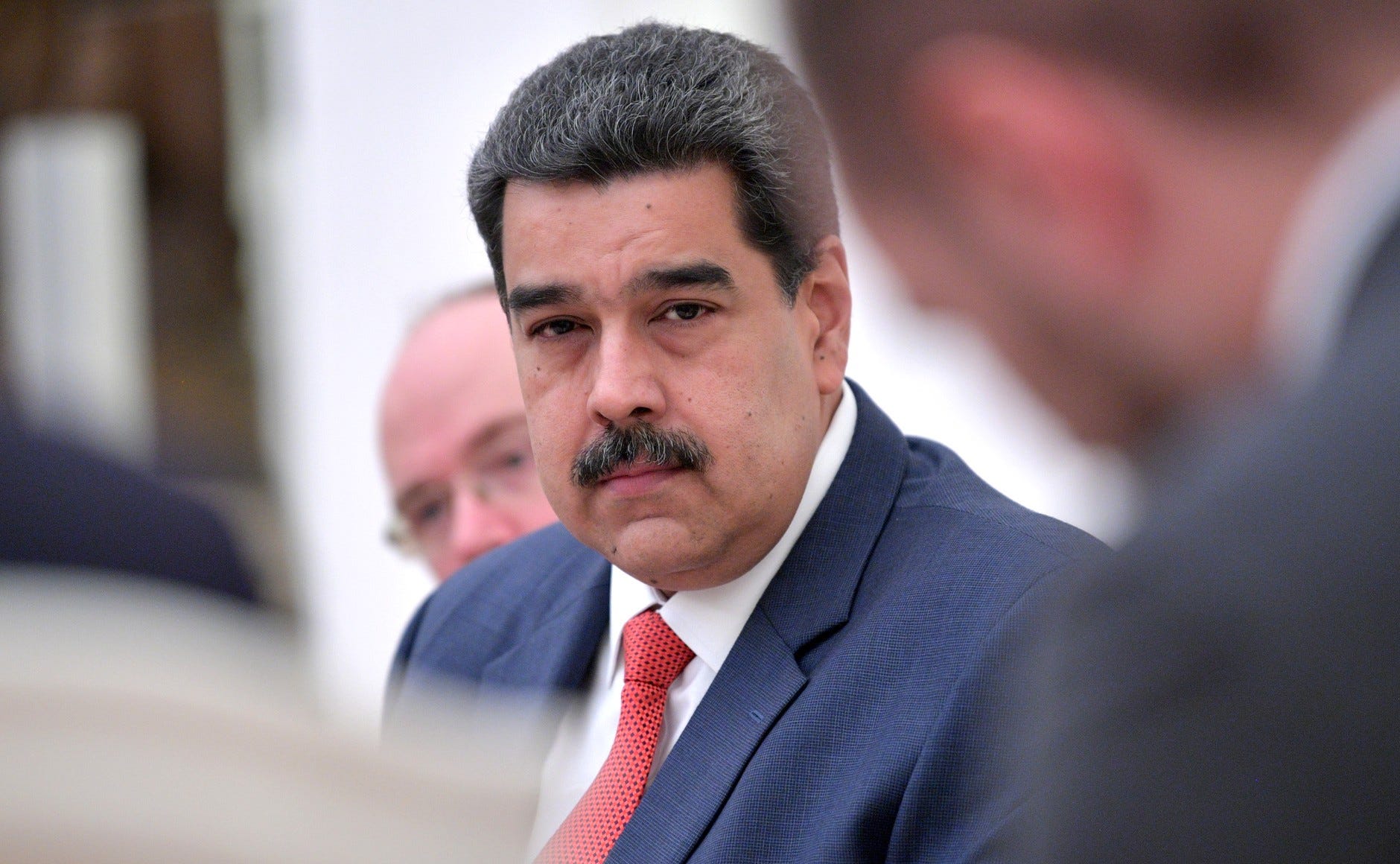
This image is used for illustrative purposes only.
At a Glance
Matthieu Pigasse and Centerview Partners have secured the mandate to restructure Venezuela’s foreign debt — estimated at around $150 billion — in one of the largest operations of its kind since the Greek bailouts of the 2010s.
The selection came with the facilitation of the Trump administration, as Venezuela cautiously reopens its economy to foreign capital under U.S. influence, barely five months after an American military operation ended the Maduro era.
Pigasse’s winning edge came from a dual network: longstanding ties to Venezuela’s new leadership in Caracas, and close proximity to Donald Trump’s inner circle — including a former U.S. special envoy for Latin America.
The biggest sovereign restructuring since Greece
The comparison is hard to avoid: the last debt restructuring of this scale was Greece’s, a decade-long ordeal that stretched from 2010 to 2018 and mobilized the International Monetary Fund, the European Central Bank (the EU’s monetary authority), and scores of private creditors in an agonizing series of negotiations. Venezuela’s foreign debt — accumulated under the chavista governments of Hugo Chávez and Nicolás Maduro, worsened by collapsing oil prices and years of default — now stands at roughly $150 billion.
Pigasse is no stranger to deals like this. He led comparable operations when he ran the Paris desk of Lazard, the storied investment bank that has specialized in sovereign restructurings for decades. Centerview Partners, however, has a more limited track record in operations of this scope — a mismatch that, by accounts in American business circles, made Caracas’s choice something of a surprise.
What made the difference was not technical expertise alone. It was access.
A White House screening, a network fifteen years in the making
The story of this mandate begins, symbolically, around January 24–25, 2026, at a private screening inside the White House — a makeshift projection room assembled for the occasion. Roughly three weeks after the U.S. military operation that ended Nicolás Maduro’s hold on power on January 3 — and days after Delcy Rodríguez was sworn in as interim president on January 5 — Pigasse attended a private showing of the documentary about Melania Trump. Among those present: Tim Cook, Apple’s chief executive, Queen Rania of Jordan — and Fernando Sulichin, an Argentine film producer who co-produced the documentary and is described as close to both Pigasse and senior Venezuelan officials.
That kind of proximity — between a French banker, an Argentine producer, and Trump’s inner circle — captures the nature of Pigasse’s competitive advantage. This was not a network assembled for the occasion. His ties to Delcy Rodríguez, Venezuela’s interim president since January 5, reportedly go back some fifteen years — a timeline Pigasse himself has confirmed — to a time when he was seeking investors for chavista Venezuela. And Mauricio Claver-Carone, the former Trump administration special envoy for Latin America, has stated publicly that he personally advocated for Pigasse with Rodríguez; the two traveled to Venezuela together in February 2026, among at least two confirmed trips in recent months.
Analysis: when geopolitics hands out mandates
Venezuela’s reopening — a jackpot with strings attached
Venezuela’s debt restructuring is not merely a technical exercise in rescheduling obligations. It is the prerequisite for Caracas’s reintegration into the global financial system — and Venezuela is now resuming engagement with the International Monetary Fund (IMF) while reopening its borders to foreign capital under American stewardship. Should the process succeed, it could unlock one of the most resource-rich economies in the Western Hemisphere, long frozen out of private capital markets.
For Centerview and Pigasse, the potential upside is substantial. Fees on a restructuring of this scale could run into the tens of millions of dollars. Beyond fees, the mandate would confer privileged access to Venezuela’s economy at the precise moment it reopens, which could represent a durable strategic position in a market that has been inaccessible for years.
The Pigasse paradox
There is something notably ironic about this transaction. Pigasse has long worn his left-wing politics openly, including a well-known sympathy for Latin American chavismo in its earlier incarnations. He now holds a mandate — facilitated by Donald Trump’s administration — to restructure the debt of a government that same administration helped to remove from power. This suggests that, in international finance, openly declared political convictions may matter less than the networks quietly maintained across ideological lines — and that the ability to move fluidly between antagonistic worlds constitutes, in itself, a professional asset.
The governance question
This mandate raises a broader question that extends well beyond one banker’s career arc: to what extent are major sovereign restructuring mandates awarded on the basis of competence — and to what extent on the basis of political access? In this case, the answer appears to lean heavily toward the latter, which may raise legitimate questions among Venezuela’s creditors and the international institutions involved about the governance of a process with enormous stakes for millions of people.
The Bottom Line
The Venezuelan mandate leaves an open question that markets and institutions will not settle quickly: can the same person who cultivated ties to a government when it was a global pariah now credibly lead its financial rehabilitation? If the answer is yes, that says something pointed about the flexibility of networks in international finance — and about the institutional guardrails, or lack thereof, surrounding the award of the world’s most sensitive sovereign mandates.
Sources: France Info