
U.S. troops in Europe: delay or strategic retreat?
The Pentagon has cut its combat brigades in Europe from four to three. For Poland, Washington's top ally, the question is no longer whether the U.S. is pulling back — but how fast.

At a glance:
The Pentagon has officially reduced its combat brigades in Europe to three — returning to 2021 troop levels and erasing five years of post-Ukraine buildup.
The planned deployment of 4,000 soldiers to Poland is officially “delayed,” with their final destination left undetermined, leaving Warsaw exposed to a strategic vacuum it cannot ignore.
This announcement is the latest in a cascade of drawdown signals: earlier this month, Washington announced the withdrawal of some 5,000 troops from Germany — a figure President Trump suggested would go far higher.
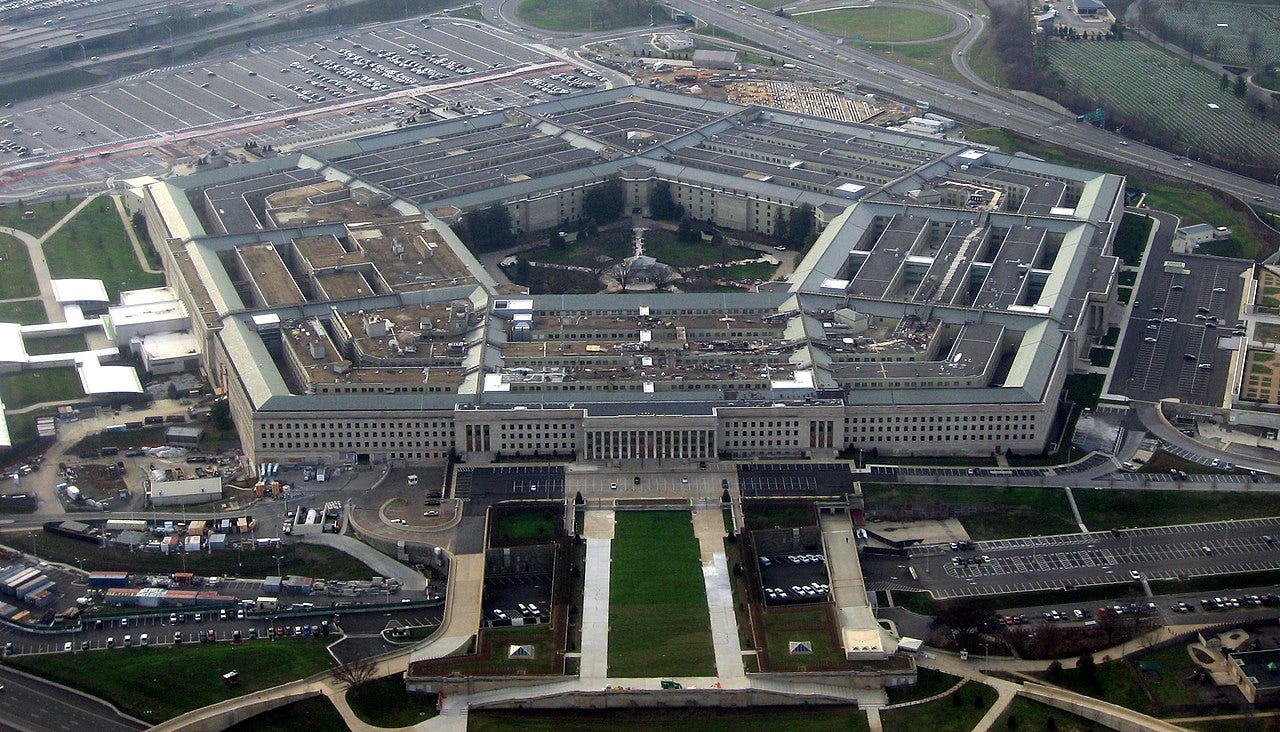
This image is used for illustrative purposes only.
The semantics of withdrawal: “delayed” vs. “canceled”
On May 15, a U.S. general announced, without ambiguity, that the planned deployment of 4,000 soldiers to Poland had been canceled. Four days later, Vice President J.D. Vance publicly walked that back: this was a “delayed” deployment, not a cancellation. The troops “could go elsewhere in Europe,” Vance said, adding that “no final decision” had been made on their destination.
The semantic correction resolves nothing on the ground. The Pentagon confirmed in a formal statement that the reduction of one brigade “caused the delay in the deployment” to Poland, and that it would “determine the final disposition” of those forces in Europe at a later date. In other words, Washington takes one step back while insisting it is not retreating.
Defense Secretary Pete Hegseth — a former Fox News host turned Pentagon chief and a close Trump ally — spoke directly with Poland’s Deputy Prime Minister Kosiniak-Kamysz, with the department pledging to “remain in close contact” with its Polish counterparts and to guarantee “a strong military presence in Poland.” Verbal assurances that sit uneasily alongside the concrete decisions being announced.
A drawdown timeline without precedent since the Cold War’s end
Cutting to three combat brigades returns the U.S. footprint in Europe to its 2021 baseline — before Russia’s full-scale invasion of Ukraine prompted NATO allies to surge their eastern flank defenses. The clock has been wound back, but the threat environment has not.
On May 1, the Pentagon announced the withdrawal of roughly 5,000 troops from Germany within a year. The following day, Trump signaled the reduction would go “far beyond 5,000” of the approximately 36,000 U.S. soldiers then stationed in the country. Each announcement appears to serve as a floor for the next, not a ceiling.
Poland occupies a singular position in this sequence. Warsaw is considered a model ally by the Trump administration, with defense spending among the highest in Europe as a share of GDP — the metric Washington uses to separate allies it rewards from those it penalizes. Yet even this exemplary partner finds itself exposed to the uncertainty of arbitrarily deferred deployments.
The Iran variable behind the European equation
Vance has consistently framed the shift in strategic terms: Europe must become more autonomous, he argued during the same press conference, reiterating that self-reliance “remains our strategy.” The call for European strategic autonomy is not new — it has defined the Trump administration’s posture toward NATO since the earliest weeks of the first term. What is new is the context in which it is now being applied.
These troop movements are being watched with particular intensity after Trump pledged to make European allies “pay” for failing to support his war against Iran. That conditional introduces a dimension without precedent in postwar alliance management: U.S. military commitment to NATO partners may now be linked not only to defense spending targets but to geopolitical alignment on Washington’s broader foreign policy priorities.
This sequence could suggest that America’s military presence in Europe is increasingly being managed as a bargaining chip — less a structural commitment to collective defense than a bilateral lever of pressure. Concluding that the transatlantic link is broken would be premature. But it is difficult to ignore that its nature is being fundamentally renegotiated.
For a reader in Boston or Toronto, the closest analogy would be the federal government threatening to withdraw military resources from a state that failed to back its foreign policy — a logic that reframes collective solidarity as political loyalty.
The bottom line
The distinction between “delayed” and “canceled” may carry no practical weight if the final decision, deferred sine die, confirms the withdrawal. The real question is whether Europe has the time — industrial, budgetary, doctrinal — to fill a gap that Washington appears determined to widen, whatever label it attaches to each step of the pullback.
Sources: France Info · France 24 · La Presse · RTS