
Ukraine's war crimes justice at risk

As Washington has pulled back more than $280 million in funding for war crimes investigations, the European Union is moving to fill part of the gap — before evidence disappears and witnesses fall silent.
At a Glance
The Trump administration froze U.S. foreign aid in January 2025, effectively defunding dozens of NGOs documenting Russian war crimes in Ukraine and ending programs worth at least $283 million since 2022.
Ukraine’s Prosecutor General’s Office has recorded 230,000 war crimes — torture, murder, sexual violence, child deportations — but investigations are slowing as funding dries up.
Europe has established a special tribunal to prosecute Russia’s leaders for the crime of aggression and contributed €10 million to its creation — one part of a broader response that has yet to replace what Washington withdrew.
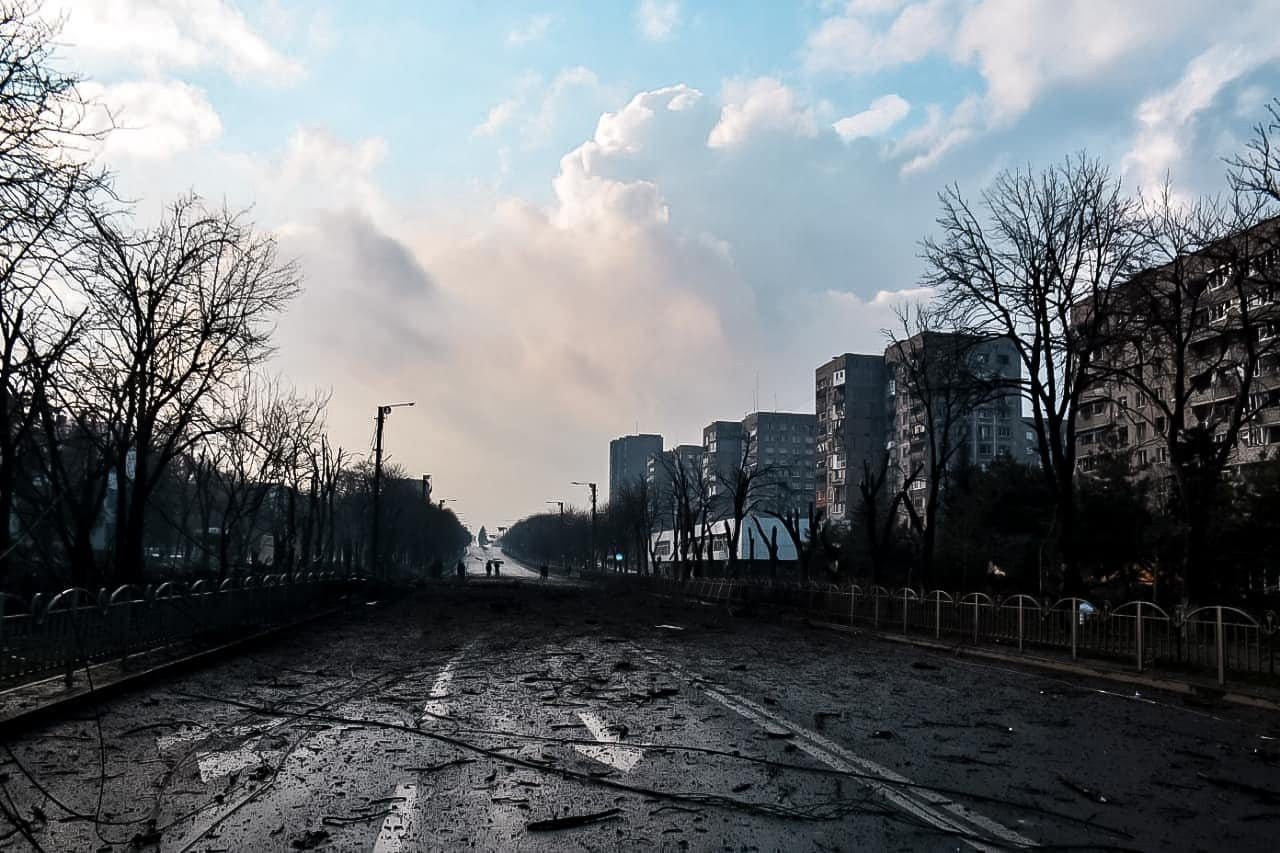
This image is used for illustrative purposes only.
The evidence is perishable
Since Russia launched its full-scale invasion on Feb. 24, 2022, its military has turned violence against civilians into a systematic tool of war. In Bucha, in Izium, in Mariupol: torture, summary executions, sexual violence, mass deportations. Ukraine’s Prosecutor General’s Office has documented 230,000 war crimes to date. Each case rests on fragile testimony, perishable evidence, and victims who age — or die — before justice can reach them.
Dozens of Ukrainian and international NGOs are dedicated to this painstaking work: collecting survivor accounts, digitally preserving evidence, training lawyers in international humanitarian law. Their survival depends almost entirely on foreign donors. Until early 2025, the United States was the central pillar of that support.
The American pullback: financial and symbolic
In January 2025, the Trump administration froze foreign assistance under its “America First” agenda. For organizations working on war crimes accountability in Ukraine, the blow was immediate. Reuters traced more than $283 million in U.S. funding earmarked for these efforts since 2022 — though the precise amount disbursed before the freeze remains unclear. At least 40 percent of those programs have since been terminated or allowed to expire.
Among the direct casualties: USAID, the U.S. Agency for International Development, which the Trump administration shut down. Its closure ended a $62 million program to strengthen Ukraine’s justice system. Six projects at Ukraine’s Prosecutor General’s Office — collectively worth $89 million — saw their payments frozen. The consequences were immediate: layoffs, canceled training programs, suspended field missions.
The shift is also doctrinal. Since the Nuremberg trials of Nazi war criminals, the United States had championed international accountability for the world’s worst atrocities. The Trump administration now contests the authority of the International Criminal Court (ICC), a body the U.S. has never joined, to exercise jurisdiction over cases involving its allies.
The deported children: a race against time
The American pullback also strikes at the most politically sensitive file: Ukrainian children deported to Russia. Kyiv accuses Moscow of having forcibly transferred more than 20,000 children since the war began. Russia maintains these transfers were protective measures for children in combat zones — a claim disputed by researchers and human rights organizations.
The Humanitarian Research Lab at Yale University’s School of Public Health played a central role in documenting this campaign. Using satellite imagery and open-source intelligence, the lab mapped more than 200 facilities inside Russia where Ukrainian children had been sent for what its researchers describe as systematic “re-education” — a deliberate effort to strip children of their Ukrainian identity and language. The lab’s findings contributed directly to the ICC’s decision in March 2023 to issue arrest warrants for Russian President Vladimir Putin and Russia’s Children’s Rights Commissioner Maria Lvova-Belova for the alleged war crime of unlawful deportation.
The lab’s federal funding was cut by the State Department in February 2026. A six-week extension was granted to allow the transfer of its data archive to Europol, the European Union’s law enforcement agency — a sign that Europe is quietly absorbing some of what Washington dropped. As of late March 2026, Yale’s director reported the lab had funds only through May 1, with $5 million earmarked by a bipartisan congressional effort that had yet to arrive. The lab’s longer-term survival remained uncertain. Just 2,000 of the deported children have so far returned to Ukraine.
Europe steps up — but can it close the gap?
Faced with the American void, the European Union accelerated a long-standing initiative: the creation of a special tribunal specifically designed to prosecute Russia’s leaders for the crime of aggression against Ukraine.
On June 25, 2025, Ukrainian President Volodymyr Zelensky signed an agreement in Strasbourg with the Council of Europe — the continent’s principal human rights body, separate from the European Union — to establish this unprecedented court. The legal necessity stems from a specific jurisdictional gap: while the ICC can prosecute war crimes and crimes against humanity committed in Ukraine, it cannot prosecute the crime of aggression in this case due to technical restrictions in its founding statute. The special tribunal is designed to fill that gap, with the potential to hold Russia’s senior political and military leadership — up to Putin himself — accountable.
The EU’s response goes beyond the tribunal. It includes the International Centre for the Prosecution of Crimes of Aggression, established in The Hague to support preparatory legal work, bilateral contributions from individual member states, and the Europol data transfer that will preserve Yale’s evidence archive. The EU has also committed €10 million (approximately $11 million) through its foreign policy instruments starting January 2026 to support the tribunal’s operational groundwork. According to information not yet officially confirmed, additional EU funding is expected to strengthen Ukraine’s child protection infrastructure.
Analysis: Europe’s commitment and its limits
Europe’s engagement on international justice carries unprecedented strategic weight. For the first time, an international tribunal dedicated specifically to the crime of aggression — the act of launching an unlawful war — is being built within a European institutional framework. That the ICC cannot prosecute this charge in the Russian case is a legal anomaly Europe has chosen to correct on its own.
That is a genuine achievement. But even accounting for the full scope of European efforts, the operational gap left by Washington’s withdrawal remains severe. More than $283 million in American funding had underpinned the daily work of accountability: field investigators, legal trainers, evidence archivists, child-tracing researchers. The EU’s financial instruments and the special tribunal — not expected to be fully operational until 2027 — cannot substitute for that ground-level infrastructure in the near term.
Real accountability does not begin in a courtroom. It begins in a freezing apartment in Izium, where an investigator braves iced roads and drone threats to take a survivor’s testimony.
It lives in the servers where satellite images are archived, in the law offices where Ukrainian prosecutors receive training in international humanitarian law. That invisible infrastructure is what the American withdrawal is quietly dismantling — and what no tribunal, however legitimate, can rebuild retroactively.
The risk is not abstract: evidence degrades, witnesses die, case files stall. International justice, even when it eventually delivers a verdict, depends entirely on the work having been done at the right time. That time is now — and it is passing.
The bottom line
A European tribunal can enshrine the principle that military aggression is not beyond the reach of the law. But it cannot, on its own, replace the hundreds of investigators, lawyers and researchers that American defunding has thrown into crisis. The real question facing European capitals is not whether they want to defend international justice — they have said they do. It is whether they are ready to pay its true operational cost, case by case, euro by euro, before the evidence is gone.
Sources: L’Express · Reuters · Council of Europe · AP News · RFE/RL · Yale School of Public Health