
Ukraine's northern front stirs
Kyiv deploys unprecedented forces along its Belarusian border, fearing a Russian push toward the capital. Moscow and Minsk deny it. The political calculus tells a different story.

At a Glance
Ukraine’s Security Service (SBU) announced Thursday a massive deployment across five northern regions — Chernihiv, Kyiv, Zhytomyr, Volyn, and Rivne — as part of a broad defensive posture against a potential offensive from Belarus.
President Volodymyr Zelensky identified the Belarus–Bryansk corridor as the likeliest staging ground for a future Russian offensive, with multiple attack scenarios reportedly under review targeting Kyiv and Chernihiv.
The Kremlin dismissed the allegations on Monday. Belarusian President Alexander Lukashenko insists his country threatens “no one” — while pledging to defend Russia “by every possible means.”
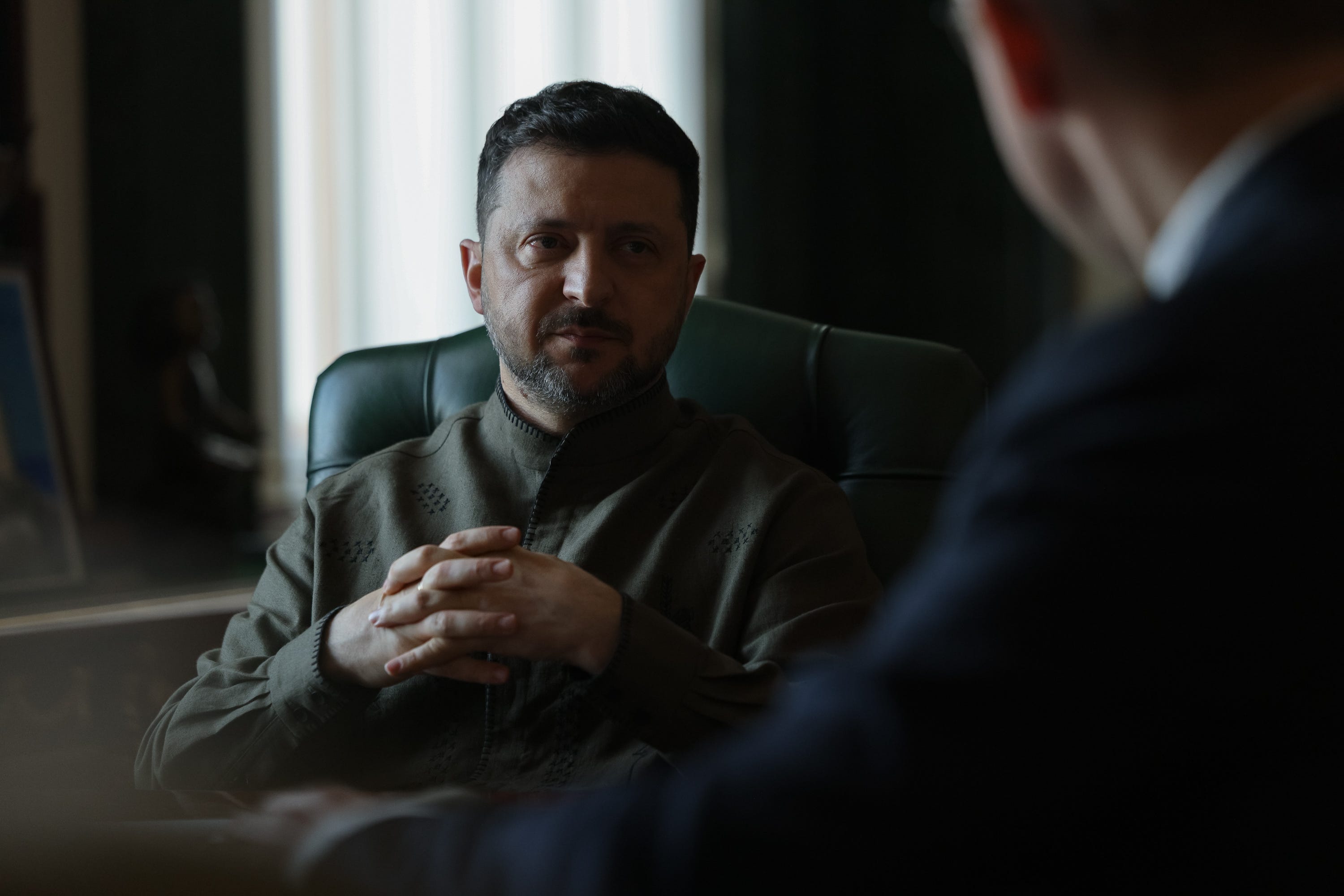
This image is used for illustrative purposes only.
A deployment designed as a message, not just a shield
Ukraine’s Security Service (SBU) — the country’s primary domestic intelligence and counterterrorism agency, broadly comparable to a combined FBI and CIA — described the northern deployment as “unprecedented in the quantity of forces and resources involved,” drawing in police, the armed forces, the National Guard, and border troops. The five regions covered — Chernihiv, Kyiv, Zhytomyr, Volyn, and Rivne — form a defensive arc along and behind the northern border; while Chernihiv and Volyn abut Belarus directly, Kyiv and Zhytomyr are included as strategic depth, reflecting Kyiv’s concern that any northern offensive would not stop at the border. The stated objectives are twofold: establish a credible deterrent and prevent the infiltration of saboteurs or intelligence agents into border zones.
Operations include stepped-up identity checks and inspections of sites suspected of harboring prohibited materials. This looks less like a front line than an interior security cordon — which suggests Kyiv fears destabilization through infiltration at least as much as a conventional ground assault.
On May 21, Zelensky traveled to Slavutych, a northern Ukrainian city built to house Chernobyl plant workers and located near the Belarusian border, to oversee construction of defensive structures. On Telegram, he issued a direct warning: Belarus and Russia “must clearly feel that there will be consequences if there are aggressive actions against Ukraine.”
The Belarus–Bryansk corridor, a new strategic focal point
In his May 20 address, Zelensky named the Belarus–Bryansk axis — the corridor straddling Russia’s Bryansk region and the Belarusian border — as the route from which “the Russians are planning scenarios for additional attacks against Ukraine, targeting our northern regions, our Chernihiv-Kyiv axis.” [translated from French] Ukrainian intelligence services are said to be tracking multiple distinct offensive scenarios along this corridor, though that figure has not been independently confirmed by open sources.
For weeks, Kyiv has feared that Moscow might use Belarusian territory to open a new northern front, including one pointed directly at the capital. The fear is not unfounded: in February 2022, Russian armored columns rolled into Ukraine from Belarus before being turned back at Bucha and Hostomel, towns northwest of Kyiv that would become synonymous with documented war crimes.
A Ukrainian military analyst cited by news agencies offered a countervailing assessment, however: no “signs of troop or equipment concentration on the Belarusian side of the border” were observable, making an offensive “unlikely” in the near term. That evaluation, which cuts against the Ukrainian government’s own framing, is worth noting — it could suggest that the SBU’s deployment reflects a preventive deterrence logic more than a response to any verified, imminent threat.
Moscow denies it, Minsk deflects
The two allied capitals rejected Ukraine’s allegations in characteristically distinct ways. The Kremlin batted away claims earlier this week that Moscow was preparing to draw Minsk into active combat operations. Belarusian President Alexander Lukashenko — the authoritarian leader who has ruled Belarus since 1994 and who openly backed Russia’s 2022 invasion — insisted Thursday that his country posed “no threat to anyone,” while simultaneously affirming his readiness to defend Russia “by every possible means.”
That formulation is a well-worn Belarusian posture: calculated ambiguity. Lukashenko denies offensive intent while keeping defensive participation on the table — which, in the grammar of hybrid conflict, means preserving all options while committing to none.
Analysis — Kyiv is also playing for a domestic audience
The northern deployment unfolds within a political sequence that extends well beyond military logistics. At a moment when ceasefire negotiations are stalling and Washington is pressing for a territorial settlement, Kyiv has a strong interest in keeping the reality of Russian threat perception visible — including on fronts that had seemed frozen.
Demonstrating that the war could expand rather than contract is one way to resist the logic of forced compromise.
The move could also be aimed directly at Minsk. By signaling that Belarus will be treated as a co-belligerent if an attack originates from its soil, Zelensky is attempting to impose a political cost on Lukashenko — whose actual room to refuse Moscow’s requests remains a subject of genuine debate among European analysts.
For American and Canadian readers, the dynamic has a loose parallel: imagine Canada being pressured by a hostile great power to allow its territory to be used as a launching pad against the United States, while its government insists it is doing nothing of the sort. The difference is that Belarus has no democratic institutions capable of resisting that pressure, and Lukashenko’s political survival is entirely contingent on Moscow’s goodwill.
The bottom line
Ukraine has reactivated a front many assumed was frozen. But the real stakes may not be military. If Moscow currently lacks the capacity to open a major second ground front, the mere fact that Kyiv must prepare for one diverts human and material resources urgently needed elsewhere. The deeper question is one of threshold: at what point does Ukraine’s northern deterrence lose credibility — and at what point does Lukashenko lose the ability to say no to Moscow’s requests for his territory?
Sources: AFP · Boursorama · La DH · La Presse (Montreal)