
Ukraine's drone war hits Russia at the pump
Moscow is rationing gasoline in 15 regions after a record wave of Ukrainian drone strikes on oil refineries. The Kremlin is downplaying the damage. The numbers tell a different story.

At a Glance
In May 2026, Ukrainian drones struck Russian oil infrastructure at least 30 times — the highest monthly total since the war began — hitting 16 refineries, including 8 of the country’s 10 largest.
More than a dozen Russian regions, including Moscow, have imposed fuel sales limits; Russian-occupied Crimea became the first territory to officially suspend cash sales of gasoline.
Russia’s refining output in May 2026 is projected to fall to 4.58 million barrels per day — down 13% from a year earlier and the lowest level since the fall of 2009.
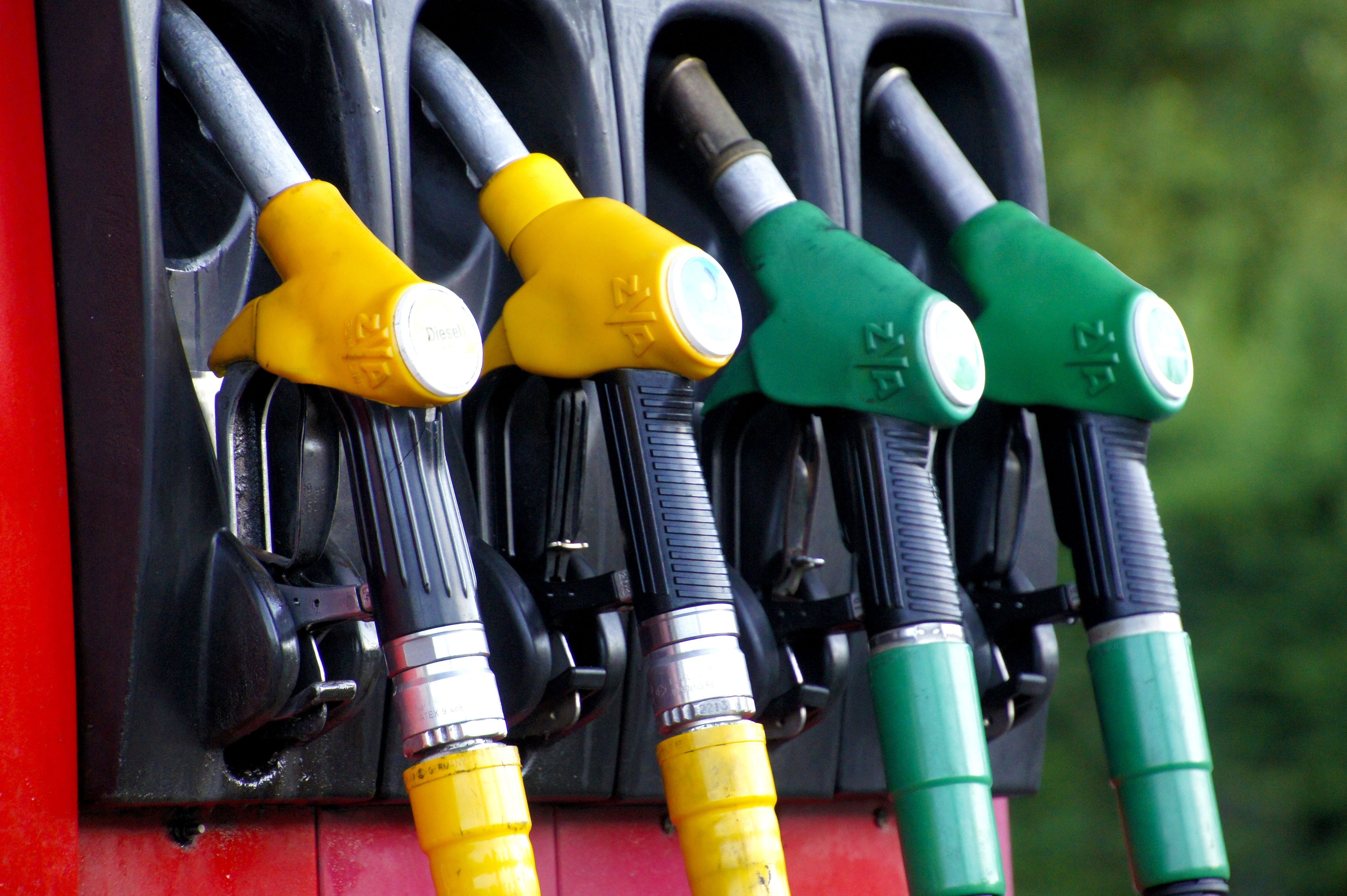
This image is used for illustrative purposes only.
Gas stations as a mirror of war
In the Moscow region, stations run by Lukoil, Gazprom, and ORTK have capped sales at 100 liters of gasoline per customer. In St. Petersburg, some urban chains have dropped limits to between 50 and 95 liters per person. In the Belgorod region, which borders Ukraine, the Rosneft network has banned customers from filling jerry cans altogether.
These are not peripheral anecdotes. They reflect a reality the numbers confirm: Ukraine’s sustained drone campaign against Russia’s oil sector is working. In May, 16 refineries were struck, including 8 of the country’s 10 largest — some hit multiple times. According to projections by OilX, an energy analytics firm, Russian refining volumes for the month are expected to fall to 4.58 million barrels per day — 13% below May 2025 levels and the lowest figure since the fall of 2009.
Kyiv has been transparent about its objectives: cripple the revenue base that funds the Russian federal budget and force ordinary Russian citizens to feel the concrete consequences of the full-scale invasion.
A strategy that keeps evolving
What sets May’s offensive apart from earlier waves is the growing sophistication of the targets. After initially focusing on primary distillation units, Ukraine has moved on to secondary processing equipment, storage terminals, and pumping stations — installations that Western sanctions make particularly difficult to repair. Spare parts are increasingly unavailable, and restoration timelines keep stretching.
Kyiv claims to have struck 15 Russian refineries between January and May 2026. Volodymyr Zelensky, Ukraine’s president, stated that nearly 40% of Russia’s primary refining capacity was offline in May — a figure higher than the one-third estimate cited by some analysts, and one that is nearly impossible to verify independently from inside Russia. Zelensky also suggested that Vladimir Putin may not be receiving “all the statistics on what’s really happening” [translated from Ukrainian] — an assertion that cannot be confirmed but is consistent with documented patterns of information management within the Kremlin.
Official spin versus ground-level reality
Alexander Novak, Russia’s deputy prime minister, acknowledged that oil production had fallen “somewhat” due to “unplanned repairs” at several refineries, while insisting that market conditions remained stable. The Russian government has also imposed a blanket ban on exports of gasoline and aviation kerosene — a measure described as unprecedented in the country’s recent history, and one that sits awkwardly alongside the official narrative of normalcy.
In Russian-occupied Crimea — the Ukrainian peninsula illegally annexed by Russia in 2014 — occupation authorities suspended cash sales of gasoline and introduced rationing coupons capped at 20 liters per person. Sergei Aksyonov, the Moscow-installed head of Crimea’s occupation administration, announced the measure following a new series of Ukrainian strikes on logistics infrastructure. In the Russian-occupied Luhansk region of eastern Ukraine, gas stations were similarly capped at 20 liters per customer. Official explanations have oscillated between “temporary difficulties,” “seasonal demand,” and “unplanned maintenance” — language that may reflect a deliberate effort to contain public anxiety without denying the disruptions outright.
Fuel as a weapon of war
Ukraine’s logic rests on a structural reality: oil and gas revenues represent a significant share of Russia’s federal budget. Striking refineries applies simultaneous pressure on two fronts — squeezing export capacity while throttling domestic supply, creating both a fiscal and a social squeeze.
This is not a new playbook. Oil infrastructure has historically been a high-value target in modern conflicts — from Kuwait’s burning oil wells in 1991 to the pipeline strikes of the Balkan wars in the 1990s. What is new here is the relative effectiveness of low-cost drones against massive industrial facilities, and the persistence of this campaign across more than a year of sustained operations.
Russia retains some room to adapt: rerouting supply from Central Asia, improvising administrative demand management, cannibalizing less critical facilities for spare parts. But each workaround carries its own cost — financial, logistical, or political — compounding the budget pressure already imposed by the war itself.
The Bottom Line
Russia’s gasoline rationing is not yet a subsistence crisis. But fuel limits at pumps in the Moscow region carry a political signal that goes beyond economics:
a war that has remained largely abstract for many Russian citizens is beginning to show up in daily life.
The deeper question is not whether Russia’s refineries can be repaired — they can, given time. It is whether time is working for Moscow or against it, in a war where both sides are racing to exhaust each other’s resources before their own run out.
Sources: Euronews · OilX analytics platform (via Bloomberg, relayed by Euronews) · Public statements by Volodymyr Zelensky, President of Ukraine · Alexander Novak, Deputy Prime Minister of Russia