
Ukraine's army overhaul: Zelensky bets on pay and fixed contracts
Tripled pay, fixed-term contracts, foreign recruits: Zelensky is rebuilding Ukraine's army — but funding still hinges on international aid.

At a Glance
Front-line infantry soldiers will now be eligible to earn up to 300,000 hryvnias per month — roughly $7,100 at current exchange rates, or three times current combat bonuses.
Fixed contracts of 6 to 14 months will be introduced for infantry and assault troops, with a six-month exemption from mobilization once the service term ends.
Kyiv is targeting a force where 30 to 50 percent of assault and infantry soldiers are foreign volunteers.
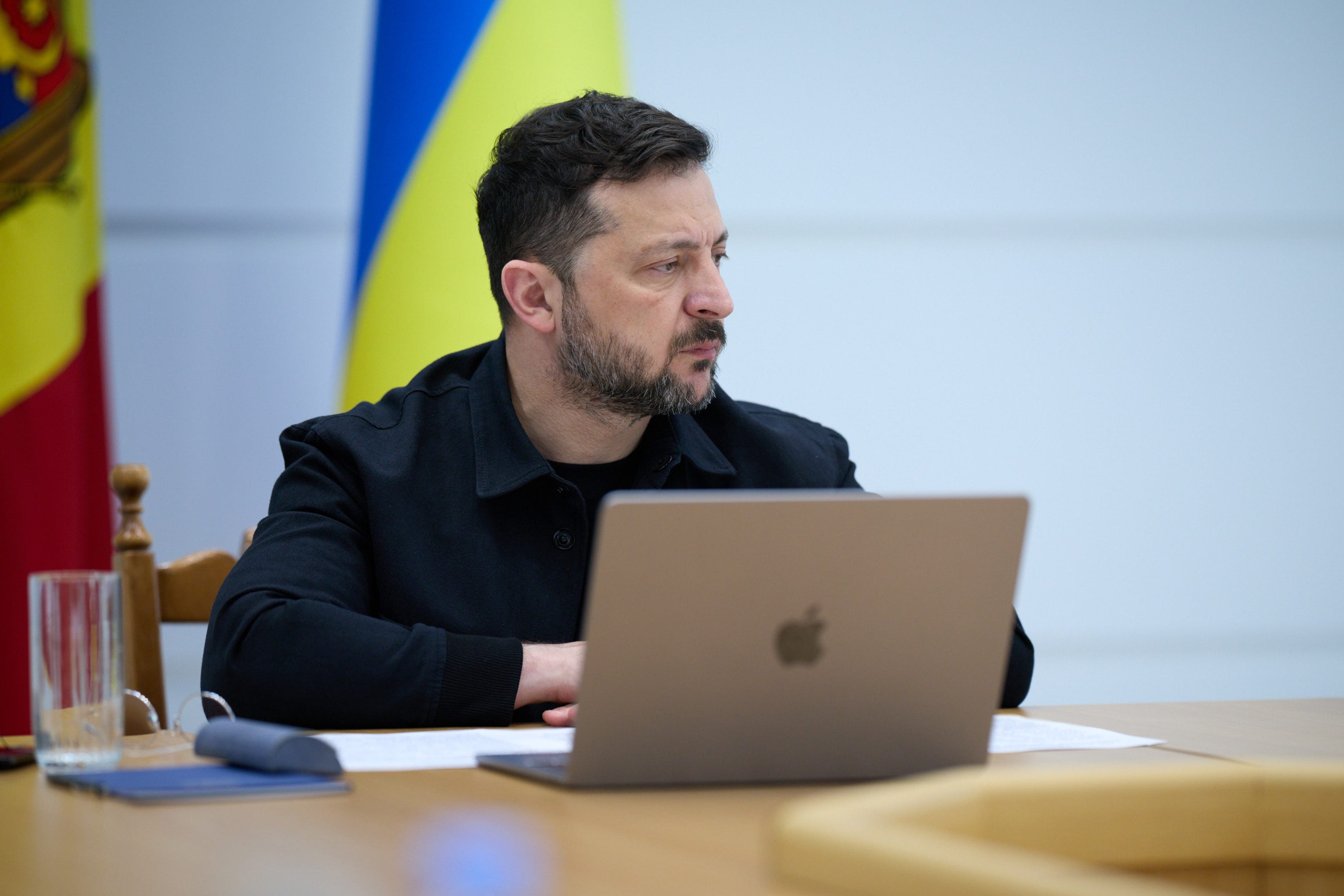
This image is used for illustrative purposes only.
A system stretched to the breaking point
The diagnosis is unsparing: after four years of full-scale war, Ukraine’s military is suffering from a chronic manpower shortage. Infantry soldiers — the most exposed and most demanding corps — hold their positions for months without any prospect of rotation. The widespread use of drones on the battlefield has severely constrained movement, trapping troops in extended deployments that grind on until exhaustion sets in.
Mobilization, the only active recruitment mechanism to date, has become deeply unpopular. Desertions have occurred, sometimes motivated by soldiers switching to better-managed units. It was against this backdrop of institutional strain that President Volodymyr Zelensky announced on June 12, 2026, a package of measures aimed at rebuilding the moral compact between the Ukrainian state and its soldiers.
What the reform actually changes
A significant pay raise, with infantry at the center
The centerpiece of the package is a substantial pay increase. Front-line infantry soldiers will now be able to earn up to 300,000 hryvnias per month — approximately $7,100 at current exchange rates, three times the current combat bonuses. For non-combat personnel, the monthly minimum wage rises from 20,000 to 30,000 hryvnias. Senior commanders will also see salary increases, with the stated aim of creating a positive incentive for maintaining effective leadership.
Fixed-term contracts: a break from open-ended mobilization
The second measure may prove the most structurally significant. Fixed contracts of 6 to 14 months will be introduced for infantry and assault troops. Upon completion, soldiers will be exempt from mobilization for six months. For other combat roles — drone operators, artillery crews, and military medics — 24-month contracts will be offered, with the same six-month grace period at the end of service.
This is a conceptual rupture. Since Russia’s full-scale invasion began in February 2022, mobilized Ukrainian soldiers had no legal path to demobilization. Introducing a contractual end date transforms an indefinite obligation into a time-bounded voluntary commitment — a shift that could open recruiting to people currently reluctant to sign up because they see no way out.
Streamlined unit transfers and a partial amnesty
The government also intends to dramatically simplify transfer procedures between units through an app called Armiia+ (”Army+”), without additional bureaucracy. New measures will provide incentives for soldiers who left their units without authorization to return to service.
An army trying to professionalize under fire
Foreign recruitment: a long-term strategic signal
Zelensky also ordered a major expansion of voluntary foreign recruitment, with fighters from Latin America playing an increasing role. The stated target is striking: over time, 30 to 50 percent of assault and infantry soldiers would be foreign volunteers, according to Mykhailo Fedorov, Ukraine’s Minister of Defense. If reached, that share would fundamentally alter the sociological composition of Ukraine’s frontline units — and raise unresolved questions about integration, command structure, and the institutional loyalties of these recruits.
Funding under pressure
The reform still needs to be translated into law and approved by the Verkhovna Rada, Ukraine’s parliament. Passage appears unlikely to be contested on its merits — improving conditions for soldiers enjoys broad political consensus — but the financing is another question. Ukraine’s 2026 military budget has already been revised to a record 4,370 billion hryvnias, equivalent to roughly $94 billion, up from an initial projection of approximately $61 billion. Ukraine remains heavily dependent on international aid to cover these commitments.
The deeper question: can you build a professional army under existential pressure?
What this reform reveals, at its core, is an unresolved tension between two fundamentally incompatible military models that Kyiv is trying to run simultaneously. On one side, a mass conscription army — indispensable given the scale of the Russian threat. On the other, a professional volunteer force built on material incentives — the only path toward long-term sustainability and toward a force credible in the eyes of potential Western security partners.
Zelensky’s wager is that money and contractual visibility will be enough to convert coerced obligations into chosen commitments. That bet could pay off if international aid holds and if the intensity of the fighting is sufficient to keep patriotic sentiment ahead of resistance to mobilization. It could also fail if resources dry up or if the war’s duration erodes social consent further. Either way, Ukraine is stress-testing, in real time, a question every democracy at war eventually has to confront:
how much can free citizens be asked to sacrifice in defense of their freedom?
The Bottom Line
Can an army professionalize while remaining an army of the masses? Ukraine does not have the luxury of choosing between the two models — it must run both simultaneously, with constrained resources, against an adversary that faces no such dilemma. Whether this reform succeeds or fails will say something essential about democracies’ capacity to sustain long wars without losing their soul — or their soldiers.
Sources: France Info · L’Express