
Ukraine's ammo lifeline: Czech initiative loses half its backers
How a populist pivot in Prague is quietly undermining one of Ukraine's most critical supply chains.

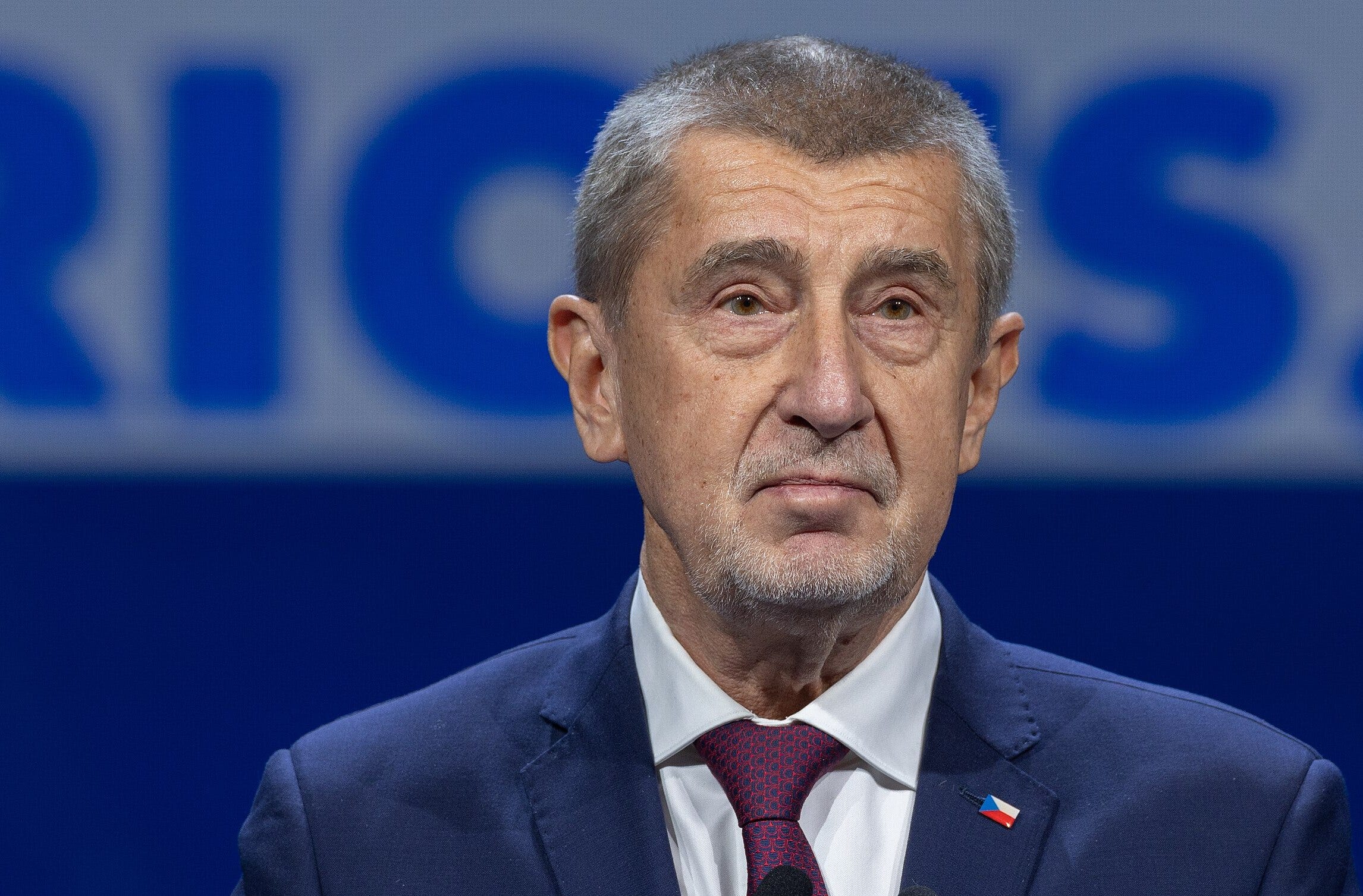
This image is used for illustrative purposes only.
Since Czech Prime Minister Andrej Babiš returned to power in December 2025, the country that once served as Ukraine’s most reliable artillery ammunition broker has become a reluctant partner. The number of countries financing the Czech-led munitions initiative has dropped from 18 to just nine — a reduction of 50% in under six months, according to Czech President Petr Pavel in an interview published May 26 by the Financial Times.
At a Glance
The Czech initiative has delivered more than 4 million large-caliber artillery shells to Ukraine since 2024, supplying up to half of all such ammunition reaching Ukrainian forces.
Since Babiš took office in December 2025, nine of the 18 contributing nations have pulled out; Prague has not disclosed which ones.
Military analysts point to a structural factor as well: the growing role of drones on the battlefield is reducing demand for conventional artillery at the same scale.
A mechanism built for a crisis
In early 2024, Ukraine was burning through artillery shells far faster than Western manufacturers could produce them. Russia was churning out roughly 4.5 million rounds per year — three to four times what NATO-aligned industry could match — while Ukraine’s Soviet-era stockpiles were being depleted. The government of Petr Fiala, the pro-Ukrainian conservative prime minister who preceded Babiš, engineered a workaround: Prague would act as a central purchasing broker, buying shells from non-Western producers and routing them to Kyiv, funded by a coalition of willing states.
The results were concrete. Czech logistics delivered 1.5 million shells in 2024 and 1.8 million in 2025. The Czech Defense Ministry currently holds contracts for approximately 1 million additional rounds to be delivered in 2026. Tomáš Kopečný, who served as the Czech government’s special envoy for Ukraine until his departure from public service in January 2026, noted that major contributors — Germany, the Netherlands, Denmark — sent their own audit teams to verify every euro spent and found an efficient, transparent system.
Babiš’s calculated ambiguity
Andrej Babiš — the 71-year-old billionaire founder of the populist ANO movement — built much of his 2025 electoral campaign around skepticism toward the program. He criticized a perceived lack of transparency and took aim at the profits earned by the Czechoslovak Group, one of Europe’s largest ammunition producers. He pledged that not a single Czech crown would fund weapons for Ukraine. Viktor Orbán, Hungary’s prime minister and the European Union’s most vocal defender of Vladimir Putin, publicly welcomed Babiš’s election, calling it the return of “an old ally.”
The coalition Babiš assembled in November 2025 reflected that worldview. It includes the SPD (Freedom and Direct Democracy), a far-right, anti-EU, pro-Russian party, alongside Motoristé sobě, a right-wing populist formation. All three coalition partners agreed in writing to reduce financial support to Ukraine and push for a negotiated end to the war.
Once in office, however, Babiš reversed course. In January 2026, under pressure from European allies gathered in Paris as part of the “coalition of the willing,” he announced the initiative would continue — with one key condition: the Czech Republic would contribute no national funding. Prague would remain the logistical coordinator, nothing more.
That half-step may have sent exactly the wrong signal to partner governments. A Western military official quoted by the Financial Times put the discomfort plainly: some contributing countries now find it difficult to justify funding a program that “is not even properly supported by the ruling politicians of the lead country.”
Two explanations for the same collapse
It would be too simple to attribute the loss of nine contributing nations solely to Babiš’s political toxicity toward Ukraine. General Dominique Trinquand, France’s former head of the military mission to the United Nations, offers a structural explanation: the nature of the war has changed. Ukraine initially relied heavily on Soviet-era 122mm and 152mm artillery, but has progressively integrated NATO-standard 155mm systems. Drones, meanwhile, have taken on an ever-larger share of battlefield operations. The Czech initiative — designed to solve a specific ammunition shortage at a specific moment — may partly be a victim of its own tactical obsolescence.
Both explanations are likely true simultaneously. It is plausible that Babiš’s hostile rhetoric accelerated withdrawals that shifting battlefield priorities would have eventually triggered anyway. What remains clear is that Germany and several Nordic countries are still contributing, according to the same Western military official — suggesting the initiative retains a functional core despite its contraction. The program’s future is expected to be formally addressed at the NATO summit scheduled for July 2026 in Ankara, Turkey.
What Prague reveals about European defense
The Czech episode exposes a structural vulnerability in Europe’s support architecture for Ukraine: most aid mechanisms rest on coalitions of willing states, by definition fragile when domestic politics shift. When a key coordinating government changes hands, the entire logistics network wobbles.
For a reader in Boston or Toronto, the closest analogy would be a single U.S. state coordinating all weapons deliveries to an ally, funded by a coalition of other states — without any federal authority to guarantee continuity. That scenario would be unthinkable within the American system; it is the everyday reality of European defense policy.
The Czech Republic hosts approximately 350,000 Ukrainian refugees — the highest per-capita ratio in the EU for a country of 11 million. That same refugee presence is precisely what the SPD, Babiš’s far-right coalition partner, has weaponized politically against Ukrainian support, in a dynamic that echoes populist playbooks across the continent.
The Czech initiative proved that a small country, with pragmatism and logistics rather than military might, could shape a battlefield thousands of miles away. It is now proving, in its unraveling, that this kind of mechanism is also the most exposed to electoral shocks.
The bottom line
The real question is not whether Prague will stay on as coordinator. It is whether Europe can build support architectures for allies under pressure that outlast a single electoral cycle — or whether Ukraine is condemned to depend on commitments whose shelf life is measured in parliamentary terms.
Sources: Euronews · France Info · Radio Prague International · La Libre Belgique