
Ukraine's air defenses crack under Russia's record drone surge
Russia kills at least 21 in one of Ukraine's deadliest strikes of 2026. Zelensky demands U.S. Patriot missiles as peace talks stall and Europe's air defenses lag behind.

Before dawn on June 2, 2026, air raid sirens were not enough. A combined Russian salvo of ballistic missiles and drones struck Kyiv, Dnipro, and several other Ukrainian cities simultaneously, killing at least 21 people — including two children in Dnipro — and wounding more than 130. A toll that continued to rise throughout the morning as rescue workers dug through rubble. In Kyiv, residents spent the night in their bathrooms, too far from metro stations to reach shelter in time. “All the windows exploded,” [translated from French] one woman told AFP journalists on the scene. By morning, Ukrainian President Volodymyr Zelensky had once again made the demand he has been repeating for weeks: more missiles for Ukraine’s Patriot air defense batteries, and U.S. help in supplying them.
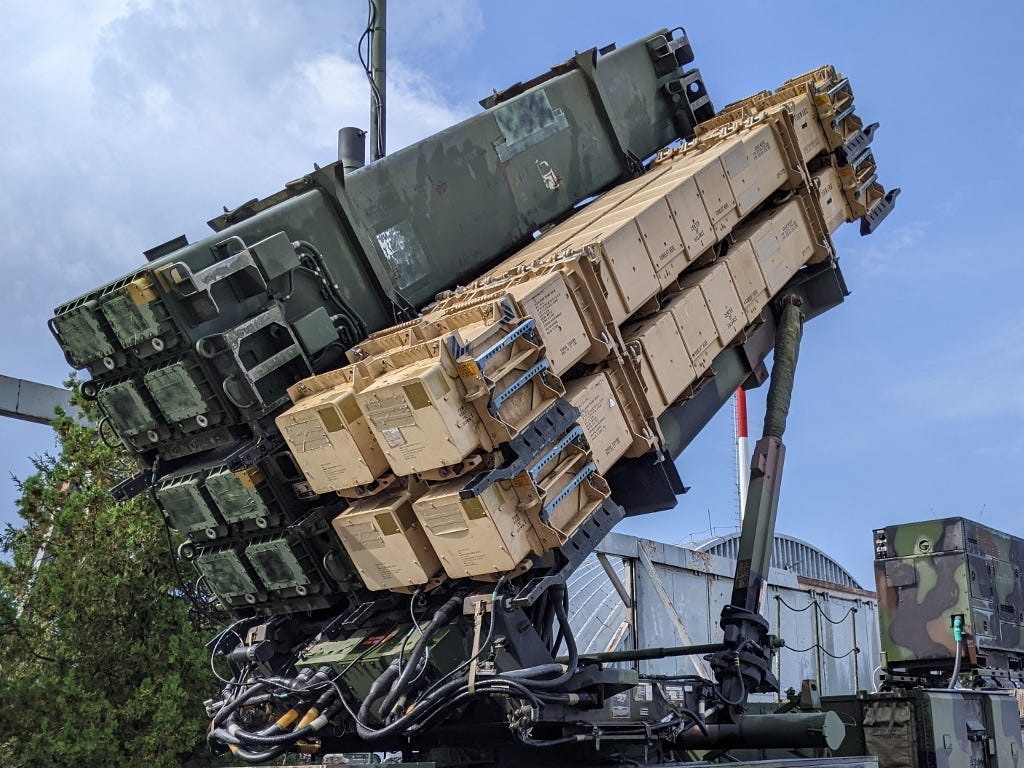
This image is used for illustrative purposes only.
At a Glance
At least 21 people were killed — including two children — in a Russian combined attack of drones and ballistic missiles striking Kyiv, Dnipro, Odessa, and Kharkiv on June 2, 2026; the death toll was still rising as of publication.
Zelensky called U.S. support for Patriot missile resupply “absolutely necessary,” reiterating a request he delivered directly to President Donald Trump in a letter the previous week.
Russia launched a record 8,150 long-range drones against Ukraine in May 2026 — a 24% increase over April — as peace negotiations remain deadlocked after more than four years of war.
A night of terror from Kyiv to Dnipro
The June 2 strike exposed a structural vulnerability in Ukraine’s defense posture. Ukrainian forces have built a sophisticated, layered system for intercepting Russian drones — widely considered one of the most capable ever developed in wartime. But ballistic missiles are a different challenge entirely. Intercepting them requires Patriot interceptor missiles, which are supplied almost exclusively by the United States, and Ukrainian commanders have been warning for weeks that stockpiles are running dangerously low.
In Kyiv, the toll stood at six dead and 66 wounded, including three children, according to Mayor Vitali Klitschko. Several medical facilities, including four hospitals, sustained damage across the capital, Klitschko reported. In Dnipro, Ukraine’s industrial center in the central-east of the country, at least 15 people died, including two children, according to local authorities — with rescue teams still working through the night. In the port city of Odessa on the Black Sea coast, a maternity ward and a general hospital were struck but no deaths were reported. In Kharkiv, in northeastern Ukraine near the Russian border, 14 people were wounded as part of the same broad assault. Regional authorities simultaneously ordered the evacuation of more than 7,000 civilians from several communities in the Kharkiv region, citing “the security situation” and fears of a Russian ground advance.
Russia’s Defense Ministry insisted the strike targeted only “military-related infrastructure.”
The Patriot gap: Ukraine’s critical dependence
The Patriot system — a U.S.-designed surface-to-air missile defense platform used by NATO allies and several partner nations — is at the center of Ukraine’s appeal. It is one of the few systems capable of intercepting the types of ballistic missiles Russia has increasingly deployed, including the Oreshnik, a Russian intermediate-range ballistic missile that Moscow says can carry nuclear or conventional warheads, used for the third time since the war began. But a Patriot battery without interceptor missiles is an empty structure. And those missiles come from Washington.
“Every delay in support for Ukraine’s air defense system costs lives.” — Yuliia Svyrydenko, Ukrainian Prime Minister
Foreign Minister Andrii Sybiha went further, accusing Russian President Vladimir Putin of having “terror as his only card” and arguing that Russia was “losing on the battlefield.”
Zelensky himself had sent a letter to U.S. President Donald Trump the previous week, requesting additional Patriot missiles to meet the surge in Russian attacks. That letter came two days after a devastating May 25 strike involving nearly 600 drones and approximately 90 missiles — the largest single Russian assault recorded since the full-scale invasion began in February 2022.
Why Washington matters more than ever
The numbers behind the escalation
Russia launched 8,150 long-range drones against Ukraine in May 2026 — a 24% rise compared to April — according to an AFP analysis of Ukrainian air force data. The intensity is not merely tactical. It comes at a moment when peace negotiations, briefly revived under U.S. pressure earlier this year, have stalled again. Kyiv and Moscow agreed to a three-day ceasefire in May, brokered through outside mediation, but it produced no lasting framework. Meanwhile, the Institute for the Study of War (ISW), an independent U.S.-based think tank that tracks battlefield developments, estimated that Ukraine recaptured roughly 282 square kilometers from Russian forces in May — though ISW noted that net territorial shifts remained subject to ongoing verification. If confirmed, it would represent the second consecutive month of Ukrainian gains after a prolonged period of Russian advances.
The strategic logic of Zelensky’s appeal
Ukraine has built a drone interception capability that analysts consider among the best in the world. What it cannot build independently is a ballistic missile shield. That dependency on U.S. interceptors gives Washington — and specifically the Trump administration — decisive leverage over Ukraine’s ability to defend its cities. Zelensky’s repeated public appeals, framed in the language of urgency rather than diplomacy, are a calculated pressure strategy: each mass casualty event becomes an implicit indictment of delayed Western action.
Europe’s structural gap
Zelensky’s call for Europe to “develop its own anti-ballistic defense” names a problem that European defense planners have long struggled to address: the continent’s missile defense architecture remains heavily dependent on a single supplier — the United States — whose reliability European governments now openly question. Several EU and NATO members have placed orders for Patriot systems or equivalent platforms, but production timelines that defense analysts say could span years, not months, make near-term self-sufficiency impossible. The window of acute danger is now.
The Bottom Line
If the deaths of June 2, 2026 confirm the brutality of Russia’s campaign, they also expose a deeper tension in the Western response to this war: Ukraine is being asked to hold a line its allies have not yet fully equipped it to defend. The real unknown is not Zelensky’s will to resist — it is whether Washington and Brussels will deliver, at the necessary scale and speed, what they have repeatedly promised. Every Patriot missile not delivered is a calculation Russia is already making.
Sources: Euronews · AFP · La Presse (Canada)