
Ukraine rejects EU's half-seat offer
Kyiv has turned down German Chancellor Friedrich Merz's proposal to grant Ukraine "associate member" status in the European Union — a seat at the table, but no vote.

Behind the diplomatic exchange lies a fundamental disagreement about what European integration actually means.
At a Glance
In a letter dated May 18 to EU leaders, Merz proposed an “associate membership” allowing Ukraine to attend EU institutions without voting rights — a transitional step, in Berlin’s view, toward full accession
Ukrainian President Volodymyr Zelensky rejected the offer as “unfair,” demanding full and meaningful membership, and pointing to the recent departure of Hungary’s Viktor Orbán as the political opening to accelerate talks
Ukraine is now pushing to open six new accession negotiation clusters within two months — signaling Kyiv is betting on a fast-tracked process, not a compromise middle ground
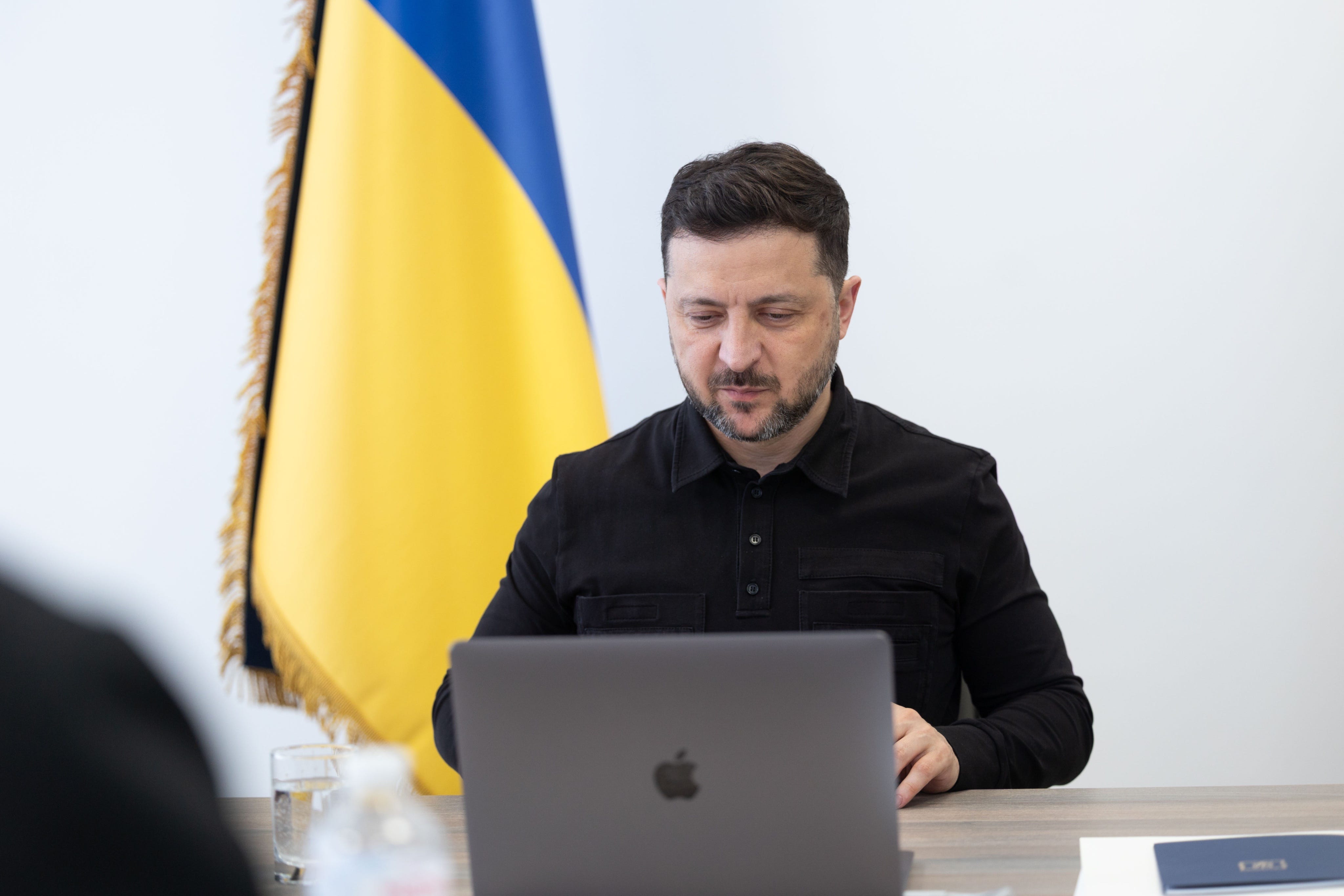
This image is used for illustrative purposes only.
A seat at the table — without a voice
In a letter addressed to EU heads of state and government, German Chancellor Friedrich Merz acknowledged upfront that the bloc will not be able to “complete the accession process in the near future, given the countless obstacles and the political complexities of ratification processes across member states.” His solution: don’t wait.
Under Merz’s proposal, Ukraine would be allowed to attend certain European Council summits — the gatherings where EU heads of state set the bloc’s strategic direction — and would receive an “associate” European Commissioner without portfolio and “associate” Members of the European Parliament without voting rights. Berlin has framed this as a “decisive step” bridging Ukraine’s current candidate status and full membership, and has suggested the arrangement could help create conditions for ending the war with Russia.
Kyiv sees it differently.
“Unfair” — and the door closes
In a letter sent Friday evening to European Council President António Costa, European Commission President Ursula von der Leyen, and Cypriot President Nikos Christodoulides — who currently holds the EU’s six-month rotating chairmanship — Zelensky drew a clear line. It would be unfair, he wrote, for Ukraine to sit within the European Union while remaining without a voice (translated from French). The moment has come, he added, to advance Ukraine’s accession in a full and meaningful way.
Rather than simply refusing, Zelensky used the same letter to reframe the political landscape entirely. The recent electoral defeat of Hungarian Prime Minister Viktor Orbán — a longtime veto-wielding opponent of Ukrainian accession — had, in Zelensky’s reading, removed the bloc’s main structural blocker and opened a genuine window for progress. Ukraine is now pushing to open negotiations on six accession clusters — the thematic policy chapters that structure the accession process — within the next two months.
Two logics that don’t speak the same language
Merz’s proposal fits a well-established European tradition: when faced with the politically impossible, invent an intermediate status. The EU’s institutional history is full of hybrid arrangements — association agreements, enhanced partnerships, structured cooperation frameworks — designed to manage politically stuck situations without forcing a decision. Think of it as the EU equivalent of an observer state at the United Nations: present in the room, informed of the debates, but without a vote on the resolutions that shape the outcome. The reflex suggests a certain pragmatic wisdom. It may also signal a structural reluctance to make hard choices.
Zelensky’s position operates on a different logic entirely. Ukraine has borne the cost of a war that is, by its stakes, a war for the European order. Accepting a seat without a voice would validate the idea that a country at war — unstable, costly, complex — can be integrated without being included in decisions. The word “unfair” is not rhetorical: it names a real asymmetry.
European Commission President von der Leyen framed the broader constraint plainly during a recent visit to Cyprus: accession is a “two-way contract” between the candidate, which carries out reforms, and member states, which are expected to reward that effort. “Ultimately, it is a political decision taken by all member states, because unanimously, they must decide on accession,” she said. That word — unanimously — is a reminder of what Orbán’s departure does not fully resolve: other member states could, over time, become new points of friction.
Analysts have noted that a credible EU trajectory could help Zelensky sell any future peace settlement to Ukrainians, particularly if a deal falls short of restoring full territorial control or securing NATO membership.
This is not just an institutional debate. It is a negotiation over what Ukraine gets to take home from the war.
That dimension may explain why Kyiv is holding firm.
The Bottom Line
Merz’s proposal, however well-intentioned, exposes a question the EU has yet to answer: is Ukraine’s integration a political objective in its own right, or one instrument among many in managing the conflict? If the latter, an associate status has a logic. If the former, Zelensky is right to refuse a chair without a microphone. What EU leaders decide at the next European Council will reveal a great deal about the real nature of the bloc’s solidarity with Kyiv — and what the word “member” is actually worth.
Sources: Euronews · Reuters · AFP