
Ukraine hits Russia's oil network — and a nuclear plant
Ukraine struck Russian oil hubs 750 miles from the front — and a drone hit Europe's largest nuclear plant. What it means for the war's next phase.

At a Glance
Overnight on May 30–31, Ukraine struck two major oil infrastructure sites deep inside Russia: the Saratov refinery (owned by Rosneft, Russia’s state-controlled oil giant, capacity approximately 7 million metric tons per year) and the Lazarevo pumping station in Kirov Oblast, a critical node in Russia’s trans-European oil transit network.
A drone damaged the turbine building at the Zaporizhzhia nuclear power plant — Europe’s largest, under Russian occupation since 2022. The International Atomic Energy Agency (IAEA) confirmed a hole in an exterior wall; radiation levels remained within normal limits. Kyiv denied any responsibility.
That same night, Russia launched more than 200 drones against Ukraine. Over the past week: roughly 2,300 attack drones, 1,560 guided bombs, and 108 missiles. One man was killed in Chernihiv Oblast.
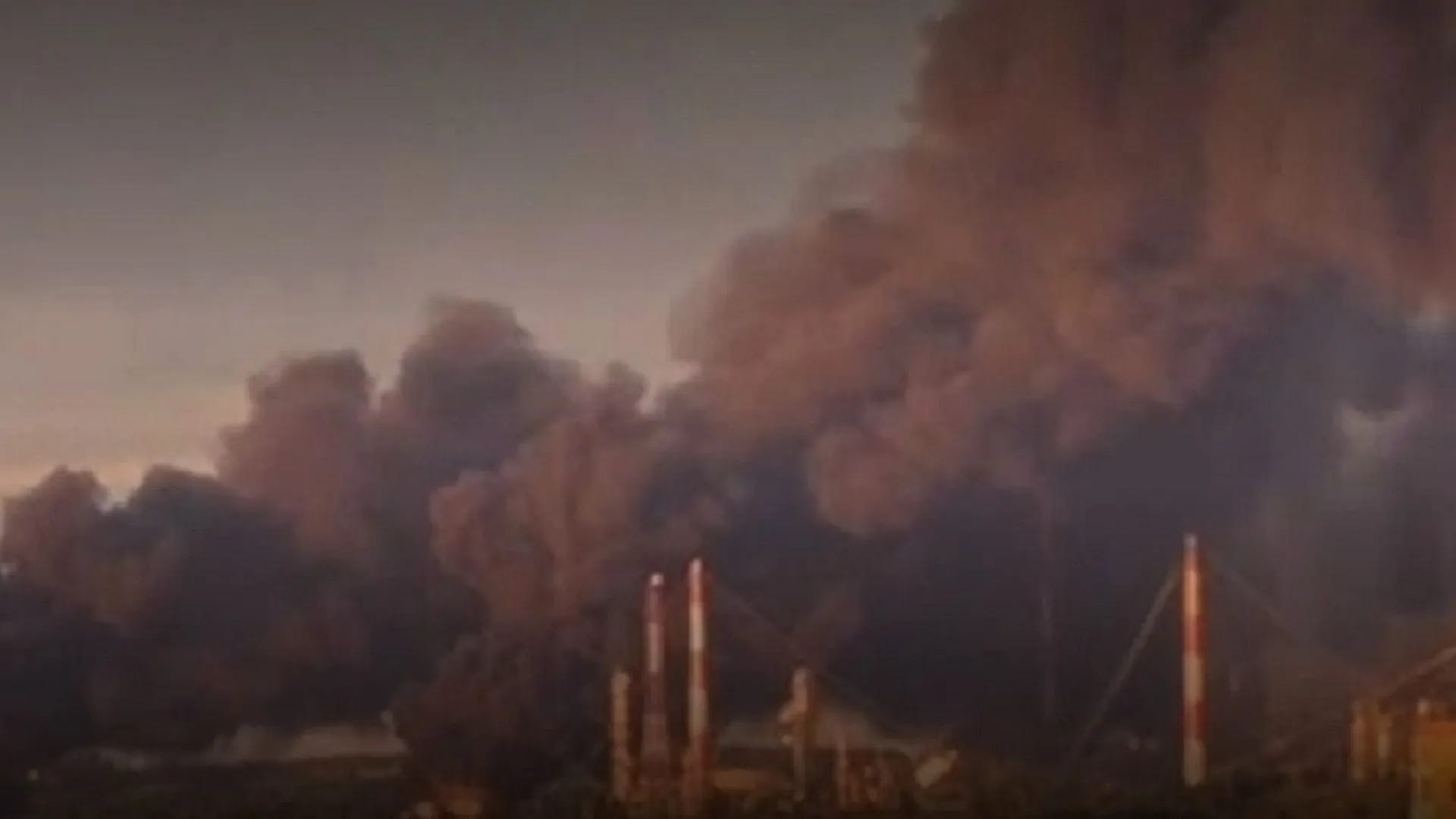
This image is used for illustrative purposes only.
The refinery campaign: attrition as strategy
Two targets, two distinct logics — one shared objective.
The Saratov refinery is not a symbolic strike. Located roughly 435 miles from the front lines, it is owned by Rosneft and processes approximately 7 million metric tons of crude per year, producing fuel that feeds Russia’s military supply chain. Even a partial, temporary shutdown disrupts logistics at the source.
The Lazarevo pumping station in Kirov Oblast runs even deeper: nearly 750 miles from the Ukrainian border. This is not a refinery but a major oil transit hub. It moves crude along the Surgut-Polotsk pipeline, which carries Siberian oil to the Baltic export terminals at Primorsk and Ust-Luga and into Belarus. The station also connects to the Druzhba pipeline system — one of the two largest oil trunk networks in European Russia. Striking Lazarevo means potentially disrupting the oil export routes that Moscow depends on to finance the war.
Ukraine’s campaign against Russian energy infrastructure is not new, but it is pushing deeper. Following a series of earlier strikes, Western news agencies reported that virtually all of Russia’s major central refineries had been forced to reduce or suspend production. Ukrainian President Volodymyr Zelensky described the Saratov strike as a “long-range sanction” against a refinery — framing the destruction of Russia’s war economy as deliberate doctrine.
Zaporizhzhia: the incident that should not exist
The situation at the Zaporizhzhia Nuclear Power Plant belongs to a different category — and carries different stakes.
A drone struck the turbine building on Saturday. The IAEA — the United Nations’ nuclear watchdog — confirmed a hole in the exterior wall of the machine hall, based on information from the plant’s Russian-controlled operator. Agency experts on site verified that radiation levels remained normal and that critical equipment had not been damaged.
But the question of responsibility fractures along predictable lines.
Rosatom, the Russian state nuclear company managing the plant since Russia’s seizure of the facility in 2022, immediately accused Ukraine of a deliberate attack. Kyiv rejected the claim, calling it “another disinformation operation by the occupying state” — and noting the obvious paradox: why would Ukraine strike its own nuclear plant on territory it is trying to reclaim?
IAEA Director General Rafael Grossi did not assign blame, but issued an unambiguous warning: “Attacking nuclear sites means playing with fire.” [translated from French]
“Attacking nuclear sites means playing with fire.” — Rafael Grossi, IAEA Director General
His formulation was deliberately evenhanded. But it underscores a structural danger that no diplomatic language has resolved: a nuclear plant under military occupation, in an active war zone, where each side’s accusations cancel the other’s credibility.
What is not in dispute: Zaporizhzhia has been offline since late 2022. Its six reactors — with a combined installed capacity of 6,000 megawatts, representing roughly half of Ukraine’s pre-war nuclear generating capacity — sit in cold shutdown, cooled by backup diesel generators. Any disruption to that chain risks a partial meltdown. The plant was already the source of multiple mutual accusations before this latest incident.
The Western dilemma: air defense or escalation?
Against this backdrop, Zelensky renewed his appeal to Western partners for additional air defense missiles. The past week’s numbers speak for themselves: approximately 2,300 attack drones, 1,560 guided bombs, and 108 missiles launched against Ukraine — figures that suggest Russia’s strike capacity has not been degraded, and may be expanding.
Ukraine received a new launcher for Germany’s IRIS-T air defense system — a medium-range, surface-to-air missile system capable of intercepting ballistic missiles and drones — on Saturday. Each additional launcher can protect thousands of civilian lives. But Ukraine’s demand extends beyond the launchers themselves: it is the interceptor missiles that are running short, with Western stockpiles depleting faster than production lines can replenish them.
The paradox is real. Supplying Ukraine with sufficient air defenses to intercept Russian strikes would reduce civilian casualties without constituting an escalatory act. Yet Western allies remain cautious about volumes — concerned simultaneously about drawing down their own reserves and crossing unwritten lines with Moscow.
The bottom line
The week of May 25–31, 2026 illustrated a tension that international diplomacy still cannot name plainly. Ukraine is fighting an asymmetric war in which one axis is the deliberate destruction of its adversary’s war economy, at ranges that leave no sanctuary inside Russia. Moscow, meanwhile, continues to strike civilian infrastructure at industrial scale — while leveraging a nuclear plant it illegally occupies as a persistent source of ambiguity and pressure.
The question no one is putting directly: how far are Western democracies prepared to go in arming a Ukrainian victory — and at what point does Russia’s economic attrition become, for Moscow, a reason to escalate rather than negotiate?
Sources: Euronews · AFP · Ukrainska Pravda · IAEA