
Ukraine-EU: Germany's unexpected middle path for Kyiv
Berlin is proposing "associate member" status for Ukraine — a structured middle path before EU accession that Zelensky has yet to embrace.

At a Glance:
German Chancellor Friedrich Merz sent a letter to EU leaders — including European Council President Antonio Costa and Commission President Ursula von der Leyen — proposing that Ukraine be granted “associate member” status as an intermediate step before formal accession.
Under the proposal, Kyiv would gain partial access to EU institutions: a seat at certain European Council summits, an “associate” commissioner without portfolio, and “associate” MEPs with no right to vote.
Ukrainian President Volodymyr Zelensky has set 2027 as the target for Ukraine to be technically ready for accession — a bar Germany has already explicitly ruled out meeting on that timeline.
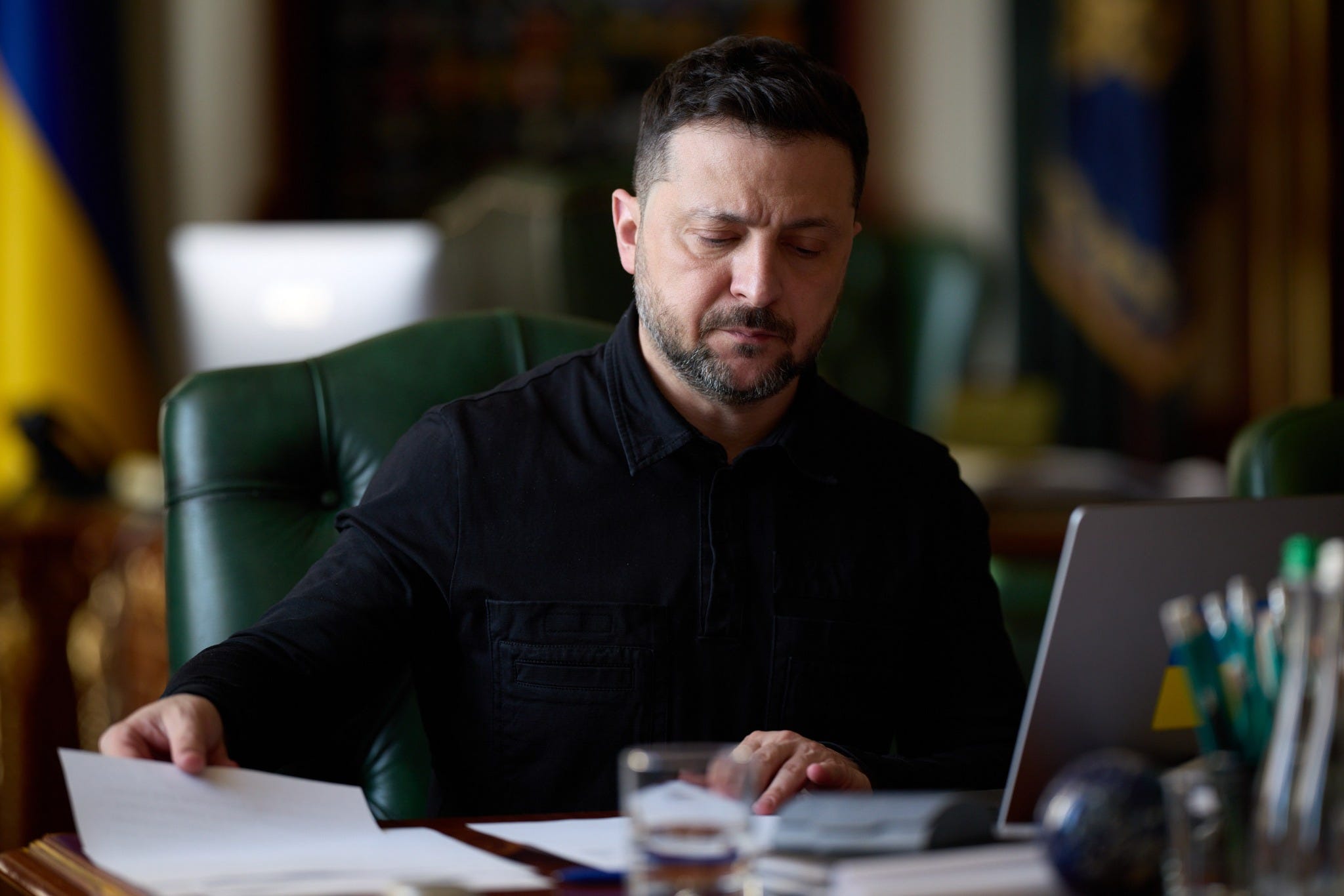
This image is used for illustrative purposes only.
Berlin breaks the institutional silence on Ukrainian accession
For months, the question had been handled with a diplomatic delicacy bordering on avoidance. German Chancellor Friedrich Merz chose to address it head-on in a letter to European Council President Antonio Costa, European Commission President Ursula von der Leyen, and other EU leaders: full Ukrainian membership in the European Union is not achievable in the near term.
The obstacles are “countless,” Merz wrote — and the political complexities of ratification procedures across 27 member states compound them further. The conclusion follows naturally: if formal accession is out of reach for now, something must be created between candidate status and full membership.
That something, Berlin is now calling “associate member.”
Partial access to EU institutions — without the rights that come with it
The framework Merz has sketched operates on a logic of phased integration. Ukraine would be invited to certain meetings of the European Council — the body that brings together EU heads of state and government — and would have an “associate” commissioner with no ministerial portfolio, as well as “associate” members of the European Parliament with no right to vote. Some accounts of the proposal also point to partial access to the EU budget and a possible extension of the mutual defense clause — Article 42.7 of the EU Treaty — to Ukraine, though these elements have not been formally confirmed.
The concept resembles what multilateral bodies sometimes call observer status — presence in the room without a seat at the decision-making table. The analogy is imperfect, and deliberately so: this proposal has no existing legal basis in EU treaty law, which is precisely what makes it novel. As Merz framed it:
Kyiv would be inside the building, not yet at the table.
He was careful to specify that this status would not constitute a watered-down membership — in his framing, a “decisive step” toward full integration rather than a diplomatic waiting room.
The Hungarian veto — and what comes after
The stalling of formal accession negotiations had one primary source: the systematic veto of Viktor Orbán’s government — Hungary’s then-prime minister had blocked every procedural advance since 2022. In December 2023, Ukraine secured official EU candidate status — a symbolic milestone that did not unlock the formal negotiation process.
The political landscape has shifted. Peter Magyar, Hungary’s new pro-European prime minister since May 9, opens a window: Budapest, under new leadership, could lift its veto and allow accession talks to formally begin, even though informal discussions with Kyiv had already taken place behind the scenes.
It is in this context of partial unblocking that Berlin’s proposal takes on its full meaning. It is not a substitute for accession — it is an attempt to make the waiting period politically viable, by giving Ukraine visible institutional standing while the accession process runs its course.
Analysis — Three readings of a single diplomatic move
① The Merz proposal as an admission of realism. By stating explicitly that accession is impossible “in the near future,” Berlin breaks with an ambiguity carefully maintained since 2022. This realism could prove useful: it reassures allies who fear a Ukraine absorbed too quickly by an unprepared EU, and offers a more honest negotiating baseline than an open-ended promise.
② A response to external timeline pressure. Various diplomatic formats have floated the idea of Ukrainian EU accession by 2027 — a timeline that, if it were to materialize, could place Berlin under pressure to deliver what EU institutions cannot currently absorb. By proposing a structured framework, Germany may be seeking to reclaim control over the European calendar, and to prevent an externally brokered deal from imposing a pace the bloc’s institutions cannot sustain.
③ The Zelensky problem. The Ukrainian president has rejected transitional formulas with remarkable consistency. His target — Ukraine technically ready for full membership by 2027 — is not merely a negotiating posture. It answers a powerful domestic political demand in a country at war. Any concession on European integration risks being read at home as abandonment. It is plausible that Kyiv will view “associate member” status as an attempt to make Ukraine accept a half-victory in place of the real thing.
The bottom line
Berlin’s proposal is politically shrewd — and potentially unsellable in Kyiv. The real question is not whether “associate member” status is a good idea on paper. It is whether Zelensky can, politically, accept anything short of full membership — and whether the EU can, institutionally, deliver what he is demanding before the diplomatic window closes.
Sources: France Info · AFP