
Ukraine ceasefire talks stall as Russian strikes kill five

Russian drone and missile attacks killed five civilians and wounded roughly 40 others across eastern and southern Ukraine overnight June 8–9, 2026 — as President Volodymyr Zelensky held talks with U.S. envoys in a fresh attempt to restart peace negotiations that have been deadlocked for months.
Ukraine peace talks, civilian casualties, and Kremlin intransigence: the gap between diplomacy and reality has rarely looked wider.
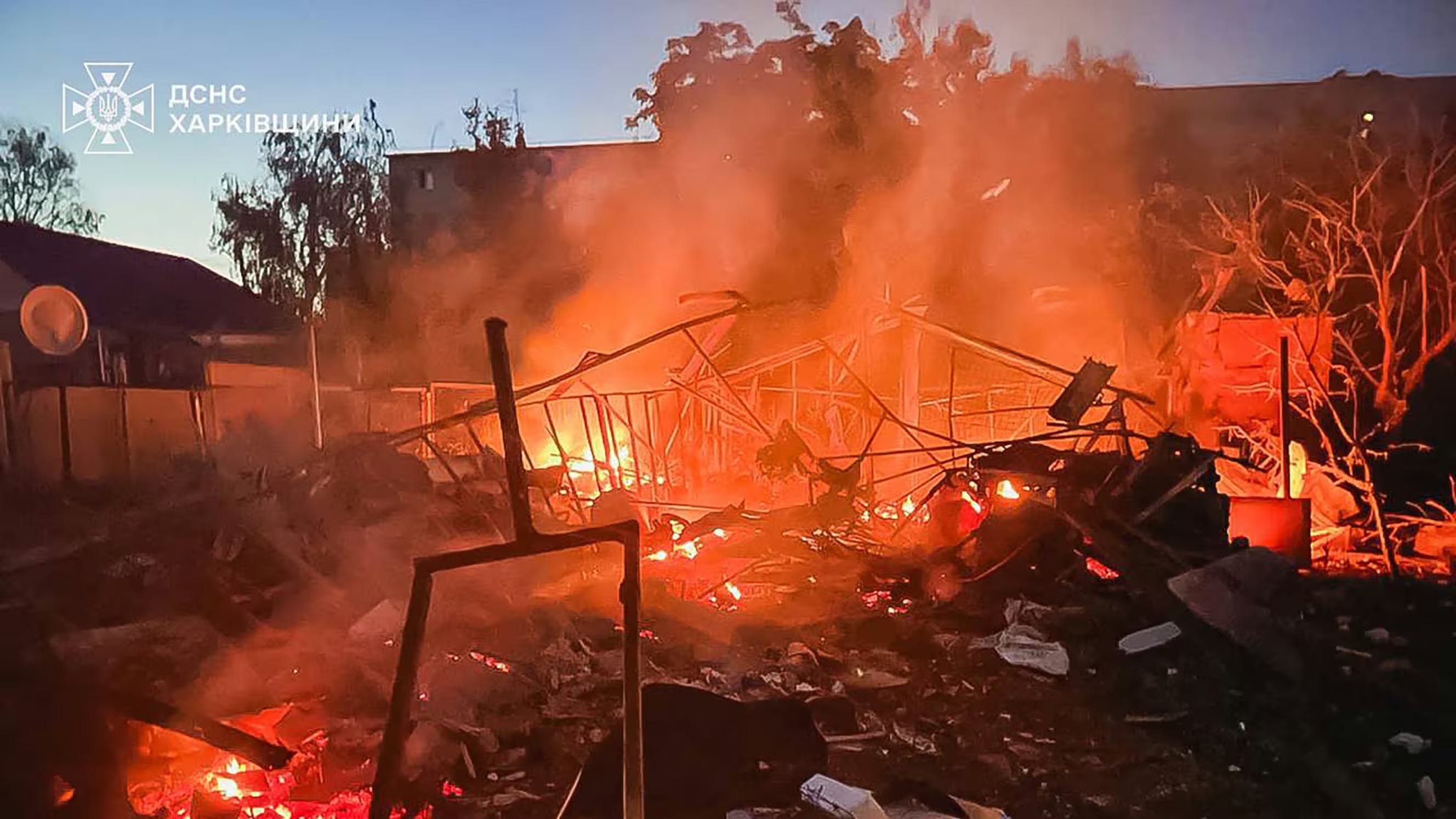
This image is used for illustrative purposes only.
At a Glance
Russian forces launched 166 long-range drones and two missiles overnight June 8–9; 146 drones were intercepted. Five civilians were killed and around 40 wounded across the Kharkiv and Zaporizhzhia regions.
Zelensky described his call with U.S. envoys Steve Witkoff and Jared Kushner, reported on June 9, as “very positive,” saying both men showed willingness to push diplomacy forward ahead of the G7 summit expected in France in mid-June.
The deadlock holds: Vladimir Putin rejected a one-on-one meeting with Zelensky, insisting on a final settlement agreement before any face-to-face talks.
Overnight June 8–9: 166 drones, five dead, 40 wounded
Russia launched 166 long-range drones and two missiles at Ukraine overnight June 8–9, 2026. Ukraine’s air force intercepted 146 of the drones. The remaining projectiles struck residential areas in two regions.
In Chuhuiv, a city in the Kharkiv region of northeastern Ukraine, three civilians were killed — a 22-year-old woman and two men in their 50s and 70s, according to Ukrainian officials. The city of Kharkiv itself sustained at least 15 wounded. In Zaporizhzhia, a major industrial city in southern Ukraine, a separate strike killed two people and wounded at least 20 others, with the toll still rising in early reports.
Russian bombardments have killed or wounded civilians in residential areas nearly every day since the start of the full-scale invasion in February 2022. According to the United Nations’ most recent tally — a verified minimum, published in April 2026 — at least 15,850 civilians have been killed and 44,800 wounded in Ukraine since then. Ukrainian forces regularly strike back, hitting targets both in occupied territory and inside Russia.
Zelensky and the U.S. envoys: searching for “momentum”
Zelensky — Ukraine’s president — spoke by phone with Steve Witkoff, a real estate developer and close ally of President Trump serving as a special envoy for Ukraine negotiations, and Jared Kushner, Trump’s son-in-law and senior adviser, who has taken a role alongside Witkoff in the diplomatic effort. Zelensky was on a stopover in Moldova at the time of the call.
He described the exchange as “very positive” and said he was grateful for both men’s willingness to work as actively as possible in the coming weeks to restore momentum to diplomacy aimed at ending Russia’s war against Ukraine. He shared information about Moscow’s “intentions” and discussed prospects around the G7 summit — the annual meeting of the world’s seven leading democratic economies — expected in France in mid-June 2026.
Zelensky has repeatedly raised the prospect of a Witkoff-Kushner visit to Kyiv, which would be a first since the large-scale invasion began. In early June, he acknowledged that Iran was currently “Washington’s number one problem,” but insisted that peace in Europe remained on the agenda.
Why diplomacy is stuck: the mechanics of a deadlock
Several rounds of U.S.-mediated negotiations have failed to bring Kyiv and Moscow closer to any agreement over the past several months. The process may have stalled further as Iran increasingly consumed Washington’s diplomatic bandwidth — a dynamic that suggests Ukraine’s negotiating prospects are structurally dependent on American attention, which is a finite resource.
The previous week, Zelensky had proposed a direct one-on-one meeting with Putin to negotiate an end to the conflict. Moscow’s response was a flat refusal. Putin is demanding a final settlement before any face-to-face meeting, and conditions any resolution on major political and territorial concessions from Kyiv — including a complete withdrawal from the Donetsk region in eastern Ukraine. Kyiv has rejected these demands as tantamount to capitulation.
Analysis: peace as a horizon, war as managed reality
The sequence of events on June 9 illustrates a tension Europe cannot afford to ignore. On one side, diplomatic language that keeps hope of a negotiated settlement alive. On the other, a military reality that has not shifted.
The Ukrainian president does not have the luxury of choosing between negotiating and resisting. He is required to do both at once.
That Zelensky described his call as “very positive” while bombs were falling the night before is not cynical wartime communication — it is the structural constraint of any diplomacy conducted under fire.
The deeper question is one of American timing. The G7 in France in mid-June 2026 could serve as a useful pressure point — or it could become yet another summit where good intentions fail to produce binding commitments. Recent history of Ukraine-focused summits argues for caution.
For Europe, the stakes are direct: if Washington continues to treat Iran as the higher diplomatic priority, the credibility of Western support for Kyiv — and deterrence against Moscow — could gradually erode. Not dramatically. But measurably.
The Bottom Line
American diplomacy on Ukraine needs a G7 that delivers more than a communiqué. If envoys Witkoff and Kushner do not visit Kyiv before the end of June — and if Moscow holds its maximalist terms — what leverage will remain by fall, when another Ukrainian winter approaches and American attention has moved on?
Sources: France 24 · France Info