
Ukraine at 1,567 days: a war with no exit in sight
More than four years into Russia's full-scale invasion, Ukraine's war has lasted within a single day of the First World War. The front barely moves. The diplomacy has stalled.

Here is what the numbers actually show.
At a Glance
Russia gained only about 1,427 square miles on the Ukrainian front over the past year — a surface area smaller than the state of Rhode Island, according to data from the Institute for the Study of War.
Civilian casualties certified by the United Nations are rising: at least 211 civilians were killed in March 2026, a 50% increase over February and 29% higher than March 2025.
The early-summer deadline set by the Trump administration to end the war is ending with no agreement between Moscow and Kyiv in sight.
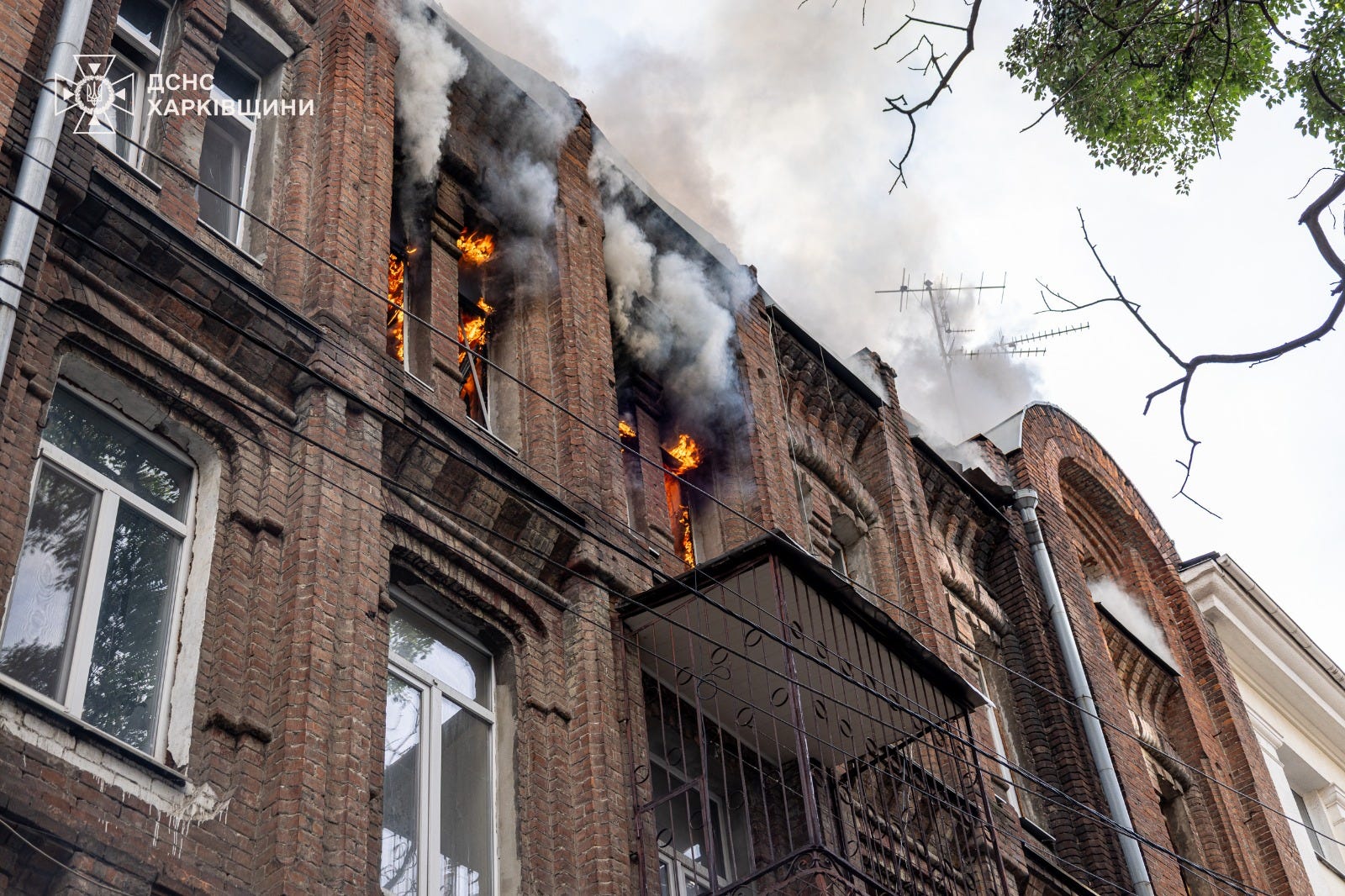
This image is used for illustrative purposes only.
For 1,567 days, missiles and drones have kept falling. On Tuesday, June 9, 2026, the war that Russia launched against Ukraine on February 24, 2022 reached the exact same duration as the First World War — from the first shots fired on July 28, 1914 to the armistice of November 11, 1918. The parallel is tempting. It is also misleading.
In 1918, the armistice ended the fighting because Germany had collapsed from within — militarily, economically, politically — and an exit mechanism existed between exhausted powers. In June 2026, none of those conditions are in place. Russia’s demands — full control over four Ukrainian oblasts it claims to have annexed and Ukraine’s permanent exclusion from NATO — remain structurally incompatible with Kyiv’s red lines. The front barely moves. Casualties accumulate behind a fog of statistics. And U.S. diplomacy, after a year of feverish engagement, has produced rounds of negotiations without a single breakthrough.
The real question, at day 1,567, is not: has this war lasted as long as the Great War? It has. The question is whether it looks more like that war’s end — or its middle.
A front frozen beneath rising violence
Along the roughly 1,000-kilometer line of contact stretching across eastern and southern Ukraine, the situation in spring 2026 can be described in a handful of stark figures.
Between June 2025 and June 2026, Russian forces gained a net total of approximately 1,427 square miles of Ukrainian territory — a surface slightly smaller than Rhode Island for an entire year of combat, according to calculations by Russia Matters, a research project at Harvard University’s Belfer Center, using data from the Institute for the Study of War (ISW), a Washington-based defense research organization. In May 2026 specifically, Russia’s spring-summer offensive was largely contained: Ukrainian forces held their positions, and Russia’s net monthly gains fell below May 2025 levels. As of June 10, 2026, Russia controls approximately 20% of Ukraine’s internationally recognized territory, including Crimea, which it has occupied since 2014.
These figures might suggest a kind of equilibrium. They conceal a more complex reality: the war has transformed into an attritional conflict in which both sides seek to exhaust the adversary rather than break through its lines. Large-scale armored offensives belong, for the most part, to an earlier phase. The battlefield is now dominated by drones — reconnaissance, strike, and kamikaze variants — capable of neutralizing an armored vehicle or artillery position from kilometers away at a cost of a few hundred dollars per unit.
A human toll no one truly knows
Perhaps the most revealing figure of this conflict is this: no one knows exactly how many people have died.
The UN Human Rights Monitoring Mission in Ukraine (HRMMU), a body established by the United Nations to document civilian casualties in real time, certified 14,999 Ukrainian civilians killed and 40,601 injured from February 2022 through December 2025. A subsequent UN report from February 2026 updated the total civilian casualty figure to 53,006 — including 15,954 deaths — as verification of additional cases was completed. These figures, rigorous in methodology, cover only what UN investigators were able to verify individually, case by case. The UN’s Human Rights Office itself acknowledges that the real number is “considerably higher” — entire cities such as Mariupol, where intense street fighting and sieges made systematic documentation impossible, have never been fully accounted for.
The recent trend is particularly alarming. In March 2026, at least 211 civilians were killed and more than 1,200 injured — a 50% rise over February and 29% higher than March 2025. It was the deadliest monthly civilian toll since July 2025. Long-range weapons — missiles and drones — accounted for 36% of casualties, striking cities and villages often far from the front line.
Beyond direct casualties, an estimated 16,000 Ukrainian civilians are currently held in Russian detention facilities, according to estimates by Ukrainian human rights advocates. Prisoner exchanges between the two sides primarily involve military personnel; securing the release of civilians has proven far more difficult.
A third of Ukraine’s population now lives below the poverty line, according to UN figures — a dimension of the war’s cost that rarely surfaces in diplomatic communiqués.
On the military side, uncertainty is even greater. In late February 2026, a former senior Western official described by Russia Matters as “highly informed” estimated that Russia had suffered approximately 1 million military casualties — killed and wounded combined. Ukrainian military casualties were estimated at 250,000 to 300,000 by the same source. Ukraine’s military command, for its part, placed Russian casualties — killed and wounded — at over 1,340,000 as of May 8, 2026, a figure that several Western intelligence analysts treat as a significant overestimate. This extraordinary range reflects less ignorance than a war in which statistical fog has itself become an instrument.
Trump’s deadline — and what it produced
On February 7, 2026, Ukrainian President Volodymyr Zelensky, whose mandate was extended under martial law, stated that “the Americans are proposing that the parties end the war by the start of summer.” That deadline is now ending with no agreement in sight.
Since Donald Trump returned to the White House in January 2025, U.S. diplomacy has generated a succession of negotiating rounds: Istanbul, Abu Dhabi, Geneva, Miami. Trump’s envoys Steve Witkoff and Jared Kushner met with Ukrainian and Russian delegations on multiple occasions. After each session, “significant progress” was declared — and then contradicted by subsequent developments. The latest major meeting in Geneva ended with Zelensky accusing Russia of “dragging out” the talks.
The structural reason for this impasse is well-documented. Moscow demands full control over four Ukrainian oblasts it claims to have annexed in 2022 — Donetsk, Luhansk, Zaporizhzhia, and Kherson — and Ukraine’s permanent exclusion from NATO. Kyiv refuses any territorial concession and rejects neutrality unless accompanied by concrete security guarantees. These are not negotiating postures; they reflect internal political constraints that neither Putin nor Zelensky can abandon without risking destabilization.
Russia also reportedly presented the United States with what Zelensky described as a “Dmitriev package” — named after Kirill Dmitriev, head of Russia’s sovereign wealth fund — a bilateral economic cooperation proposal reportedly worth as much as $12 trillion, a figure equivalent to roughly half of U.S. annual GDP. If accurate, the scale of the proposal would suggest that Moscow may be seeking to decouple its economic relationship with Washington from the Ukrainian question entirely.
Europe steps in — by necessity
While U.S. diplomacy stalls, the European Union has deepened its commitment. In April 2026, the EU’s twenty-seven member states approved a 90-billion-euro loan to Ukraine — one of the largest financial commitments in EU history toward a non-member country. The United Nations simultaneously launched a $2.3 billion humanitarian appeal for 2026, aimed at supporting 4.1 million of the most vulnerable Ukrainians. As of this writing, the appeal remains only half-funded.
In parallel, the EU has been preparing a plan to deploy peacekeeping troops on Ukrainian soil in the event of a ceasefire. Twenty-six of Kyiv’s allies have also signed security guarantee commitments contingent on a peace agreement — a development that signals a profound strategic shift: Europe, long reliant on the American security umbrella, is constituting itself as a fallback guarantor, not by design, but by default.
After more than a year of exhausting engagement with Washington — during which Trump suspended portions of military aid and publicly described Zelensky as a “dictator” — Ukraine has been pivoting its diplomatic center of gravity toward Europe.
Analysis
A comparison that misleads
The First World War ended in 1918 because Imperial Germany collapsed from within. Russia in 2026 shows no signs of imminent collapse. Despite enormous military losses and sweeping economic sanctions, Vladimir Putin’s government has demonstrated remarkable resilience. Putin is not Kaiser Wilhelm II.
The historically closer parallel may not be 1918 but 1953: the Korean War ended with an armistice — not a peace treaty — after three years of fighting, in what is roughly equivalent to a heavily armed standoff supervised by outside powers. The demarcation line froze a territorial status quo that no party fully recognized but none has challenged militarily in seventy years. U.S. troops remain stationed on the Korean Peninsula to this day. This scenario — a frozen conflict with Western security guarantees — could prove more realistic for Ukraine than the model of a German-style capitulation.
The mechanics of prolongation
The continuation of the conflict serves contradictory but convergent interests. Putin has no incentive to make territorial concessions: time, in theory, works in favor of Ukrainian attrition. Trump has not delivered on his promise of “peace in 24 hours” but can still present himself as an active mediator. The EU would rather manage a contained conflict than accept an agreement that codifies Russian territorial gains and sends a dangerous signal to other revisionist powers elsewhere in the world.
The fundamental question
Can a durable peace be negotiated when the minimum conditions of both parties are structurally incompatible? Ukraine cannot recognize territorial losses without triggering a domestic political crisis. Russia cannot abandon its annexations without acknowledging the failure of its “three-day war.” Caught in this vise, diplomacy produces rounds, not results.
The Bottom Line
The Korean War has officially been ongoing since 1950. It was never formally ended — merely suspended. If the WWI parallel is misleading, it may be because the most probable outcome of this conflict resembles neither Versailles nor a classic armistice, but something our existing frameworks struggle to name: a cold, partial, monitored peace — indefinitely provisional.
The question is no longer whether this war can last as long as the First World War. It already has. The question is whether the powers with the means to stop it have the will — and the interest — to do so.
Sources: UN Human Rights Monitoring Mission in Ukraine (HRMMU/OHCHR) · Human Rights Watch, World Report 2026, Ukraine chapter · UN News / UNRIC, monthly civilian casualty reports 2026 · Russia Matters / Harvard Kennedy School Belfer Center, War Report Card June 2026 (russiamatters.org) · Institute for the Study of War (ISW), Russian Offensive Campaign Assessment June 2026 · Touteleurope.eu, 2025–2026 chronology · Al Jazeera, territorial mapping February 2026 · Le Grand Continent, June 2026 · Euronews, Zelensky statements February 2026 · RTBF, civilian detainees report June 2026