
Trump's NATO fury over Iran isn't fading, three months on

U.S. Ambassador to the EU Andrew Puzder warns from Brussels: Washington’s resentment toward its European allies remains fully intact, three months after they refused to back the U.S.-Israeli war on Iran. With the NATO summit in Ankara six weeks away, the transatlantic rift is far from closed.
At a Glance
Andrew Puzder, the U.S. ambassador to the European Union, said on June 5, 2026, that President Trump remained “very disappointed” with his NATO allies for refusing to provide military support during the U.S.-Israeli war on Iran.
Spain and Italy blocked U.S. base access; France denied overflight rights for weapons transfers; the United Kingdom initially restricted base access before a partial reversal limited to defensive purposes only.
The NATO summit in Ankara, Turkey, in July 2026 is the critical deadline for salvaging an alliance Washington is already quietly hollowing out — pulling back troops and military assets from European soil.
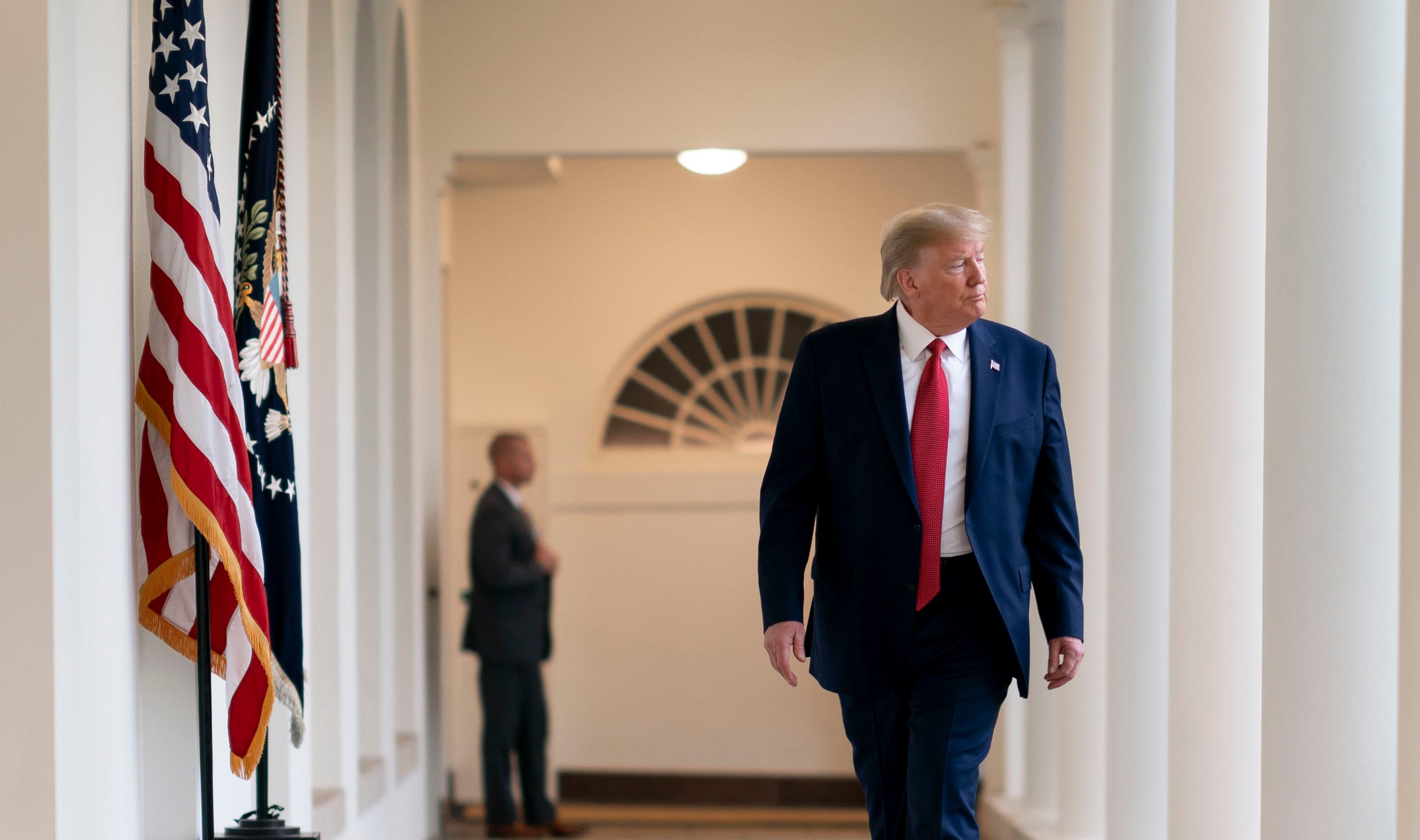
This image is used for illustrative purposes only.
Trump’s grievance, three months on
Speaking on the sidelines of the Brussels Economic Security Forum (an annual Brussels forum on economic and security policy), Andrew Puzder — who has served as U.S. ambassador to the European Union since September 2025 — made no effort to soften the message. Asked whether Trump’s frustration with European allies had eased, he replied: “I don’t think that’s the case.” “I know he is very disappointed,” he added.
The American complaint is specific. When Washington launched its joint military strikes with Israel against Iran — the largest U.S. military engagement since the 2003 invasion of Iraq — several European allies refused to grant U.S. forces access to their military bases on European soil. Spain and Italy blocked that access outright. France denied overflight rights for aircraft carrying American weapons to support strikes against Iran. The United Kingdom, under Prime Minister Keir Starmer, initially restricted U.S. access to its British bases before partially reversing course — authorizing use for defensive purposes only, citing a “precise and limited defensive objective.”
For the Trump administration, the underlying argument is one of reciprocity. The United States has financed and maintained military bases on European soil for decades. In Puzder’s framing, European allies had a moral obligation to provide at least basic logistical access.
“A big mistake for a small ask.” — Andrew Puzder, U.S. Ambassador to the EU, June 5, 2026
The base access dispute and the logic of reciprocity
What distinguishes this American grievance is that it was never about active military solidarity — sending European troops into combat alongside U.S. forces. Washington was asking for something far more limited: transit rights for aircraft carrying munitions, and use of bases that the U.S. itself funds and maintains on allied territory.
That perceived asymmetry — we have defended Europe for decades; when we needed an air corridor, the answer was no — is the core of Washington’s resentment. Trump put it bluntly on social media, calling his NATO allies “cowards” and vowing to “remember” how they rejected U.S. military requests.
The vow has been partially acted upon. Washington has since scaled back several U.S. military capabilities in Europe. Secretary of State Marco Rubio confirmed in May 2026 that Europeans would have to learn to live with “fewer American troops on their soil.” U.S. Air Force cargo aircraft departing from Ramstein Air Base in Germany — among the most visible symbols of the American military presence on the continent — have become a shorthand for a gradual disengagement that Washington no longer feels the need to disguise.
NATO under pressure six weeks from Ankara
What is at stake in Ankara goes far beyond managing a diplomatic incident. The question is whether NATO — the political-military alliance founded in 1949 on the principle of collective defense, in which an attack on one member is considered an attack on all — can survive a fundamental challenge from its most powerful member.
NATO Secretary General Mark Rutte, the former Dutch prime minister who has led the alliance since 2024, tried to absorb the blow. In May, he said Europeans had “gotten the message loud and clear” from Washington and were “stepping up.” European warships have been pre-positioned near the Strait of Hormuz — a critical chokepoint for global oil and gas shipments between Iran and the Arabian Peninsula — as part of a coalition led by London and Paris. Major arms procurement orders are in progress to signal European willingness to shoulder more of their own defense burden.
But whether these gestures are enough remains an open question. The Iran war has had a significant collateral effect on European defense: as the United States draws heavily on its stockpiles of advanced munitions — including Patriot air defense batteries — for Middle East operations, deliveries to Ukraine risk being affected. Rutte acknowledged publicly that the question was no longer whether Europeans needed to do more, but how fast commitments could be converted into actual capabilities.
Analysis: a clash of doctrines, not just trust
What may be playing out between Washington and its European allies since the Iran war began is potentially deeper than a diplomatic falling-out. It could be a confrontation between incompatible doctrines.
For the Trump administration, NATO looks like an arrangement of reciprocity: the United States protects Europe; Europeans support American interests. Article 5 — the collective defense clause that has been the alliance’s foundational guarantee since 1949 — is treated less as an absolute principle and more as a bilateral contract. If European partners do not uphold their side of that contract — including on theaters outside the Euro-Atlantic area — the contract may lose its value.
For most European capitals, that reading is constitutionally and politically untenable. The legal justifications offered varied: Spain, Italy, and France refused on the grounds that the war lacked a UN mandate and domestic political consensus. The United Kingdom took a narrower path, invoking collective self-defense to justify limited base access — a distinction that itself illustrates how fractured the European response was, and how difficult it will be to present a unified position at Ankara.
None of these responses, however calibrated, amounted to the solidarity Washington felt it was owed. And no volume of arms procurement orders, however substantial, is likely to resolve that underlying divergence. The Ankara summit may, at best, bring it under control. Closing it is a different matter.
The Bottom Line
Six weeks from Ankara, the real question isn’t whether Trump will forgive his allies. It’s whether an alliance built on collective defense can survive the transformation of its founding member into a unilateral power that conditions its protection on solidarity in wars of its own choosing. The answer Ankara provides — or fails to provide — will say a great deal about what NATO still is.
Sources: Euronews · RTS · France Info · NATO (nato.int)