
Trump vs. Meloni: a photo that cracked the alliance
A handshake. Two photographs released by the Italian Prime Minister's office. A brief meeting on the sidelines of the Group of Seven summit. None of it was enough to paper over the fracture.

At a glance
Donald Trump claimed in a phone interview with Italian television that Giorgia Meloni, Italy’s Prime Minister, had “begged” him for a photo together at the G7 summit in Évian-les-Bains, France.
Meloni fired back publicly on Instagram, calling the claim “completely made up” and warning that neither she nor Italy was “the kind to beg anyone for anything.”
Italy’s Foreign Minister Antonio Tajani canceled a planned official visit to Washington scheduled for June 21–22 in protest.
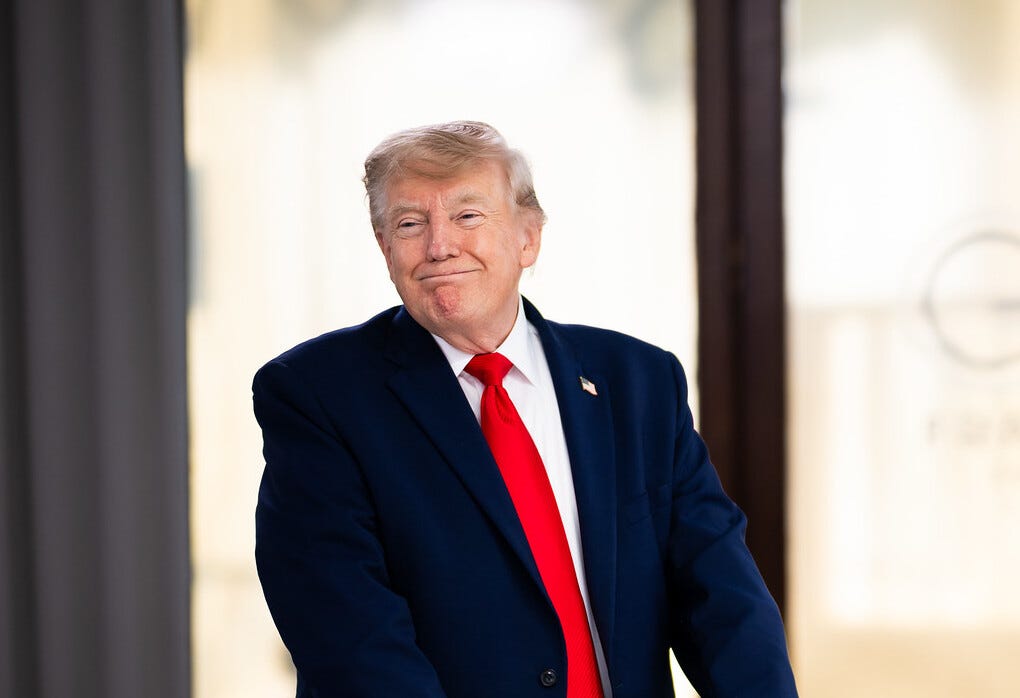
This image is used for illustrative purposes only.
The scene: Évian-les-Bains, behind closed doors
The Group of Seven summit — a gathering of the leaders of the United States, Canada, France, Germany, Italy, Japan, the United Kingdom, and the European Union — took place in Évian-les-Bains, a French Alpine resort on the shores of Lake Geneva, from June 15 to 17, 2026. Think of the G7 as the informal board of directors of the world’s major democracies: a forum where the dynamics between leaders often matter as much as the formal communiqués.
On the sidelines, Donald Trump and Giorgia Meloni, Italy’s Prime Minister and head of government since October 2022, held a brief bilateral meeting. Photos were published. A video showed them shaking hands.
Hours later, Trump gave a phone interview to journalist Daniele Compatangelo for the program L’Aria che tira on La7, an Italian television network. A transcript of the exchange was published by the channel — no audio recording was released. According to that transcript, Trump described the Évian-les-Bains meeting in strikingly personal terms: Meloni had “begged” him for a photo, he said, and he had agreed because he felt sorry for her.
Meloni’s response and Rome’s retaliation
Giorgia Meloni did not let the remarks stand. On Friday, June 19, she posted on Instagram with unusual sharpness toward an American ally, calling Trump’s statements “completely made up” and saying she was “genuinely stunned” by them. She then drew a broader indictment: Trump, she argued, treats longtime Western partners with less respect than he shows toward adversaries of the West.
Neither she nor Italy was “the kind to beg anyone for anything.”
Antonio Tajani, Italy’s Foreign Minister and Deputy Prime Minister, announced the cancellation of his Washington visit, citing what he described as “serious and offensive” remarks by the U.S. President.
Analysis: the collapse of a strategic bet
The rupture is significant not only for its content, but for what it reveals about a carefully constructed political relationship.
Since taking office, Meloni had built a singular working relationship with Trump — understood in both Rome and Washington as a potential bridge between Europe’s nationalist right and the American administration. That positioning gave Italy a level of transatlantic visibility that few European governments could claim.
The relationship had already begun to fray before Évian-les-Bains. In April 2026, Trump publicly criticized Meloni after Italy declined to support U.S. military operations against Iran, expressing shock at what he called her lack of “courage.” Tensions had also emerged around Vatican positions on American foreign policy. Meloni had attempted to defuse each of these episodes.
It is plausible that Trump used this media exchange — conducted with an Italian journalist, in a format targeted at an Italian domestic audience — as an additional pressure tool against Rome, calculating little blowback on the American side. This sequence could suggest that Washington now treats Italy as a secondary partner rather than a privileged European lever. This remains a hypothesis, but the pattern is difficult to ignore.
For American readers, the broader stakes are clear. The G7 is not simply a photo opportunity. It is the closest thing the Western world has to a standing coordination mechanism between major democracies. When one of its members publicly humiliates another — in a move that is denied but not disproved — it signals something about the texture of the alliances themselves, not merely about the personalities involved.
The bottom line
The real question here is not whether Meloni actually begged for a photo — she denies it, and no audio has been released. The question is whether personal loyalty can substitute for a stable alliance doctrine. Meloni had built her transatlantic influence on that bet since 2022. The events at Évian-les-Bains suggest the answer may be no — and that not even Trump’s closest European partners are safe from a public reversal, without warning, without explanation, regardless of their record of alignment.
Sources: Euronews · RTBF