
Three EU/EEA countries on track to eliminate cervical cancer
Iceland, Portugal, and Norway have hit the 90% HPV vaccination mark — the threshold that puts them on the path to eliminating cervical cancer as a public health problem.

At a Glance
Three EU/EEA countries (the EU plus Iceland, Liechtenstein, and Norway) reached the EU Council’s 90% HPV vaccination target in 2026 — four years ahead of the 2030 deadline.
Fifteen years of European data confirm long-term effectiveness: a Swedish study published in The BMJ in February 2026 tracked 926,000 women for 18 years and found no signs of waning protection.
All 30 EU/EEA member countries now recommend HPV vaccination for boys as part of their national immunization programs — a structural break from a public health logic that had, until recently, treated this as solely a women’s issue.
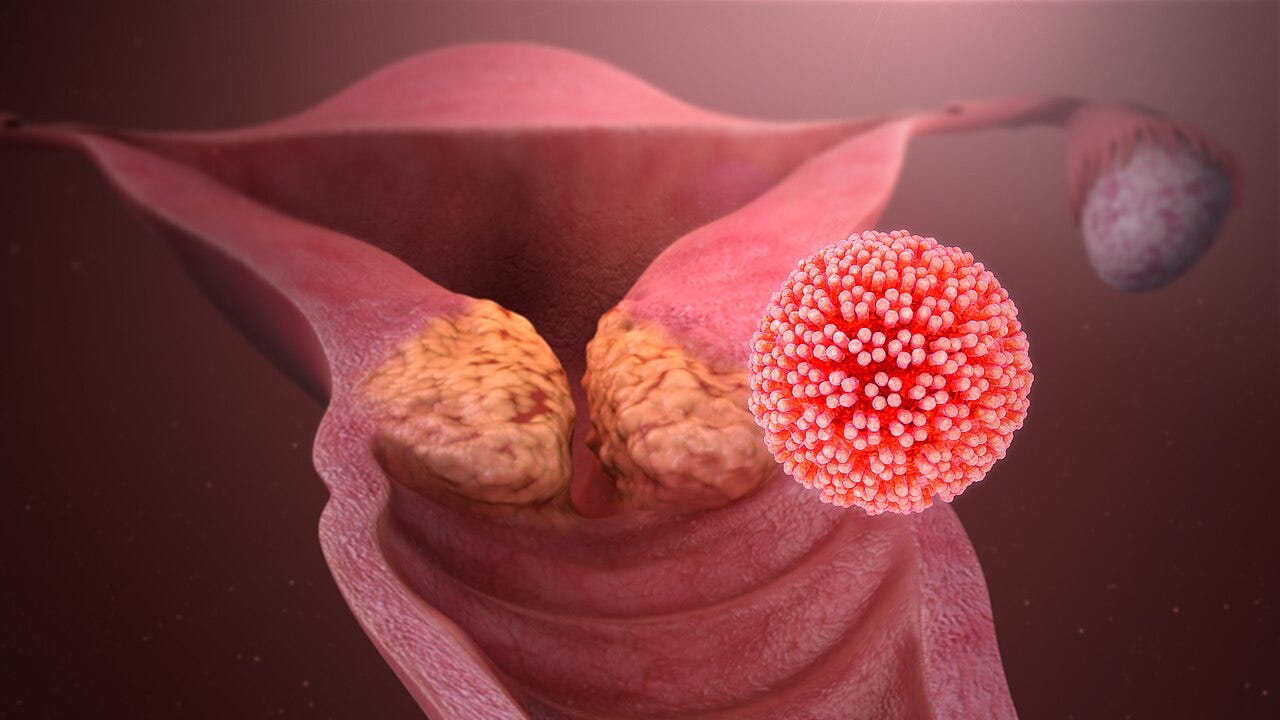
This image is used for illustrative purposes only.
What 90% actually means
The figure is not arbitrary. The World Health Organization has defined 90% HPV vaccination coverage among adolescent girls as the threshold needed — and sufficient — to set a country on track to eliminate cervical cancer as a public health problem. Below that level, the virus keeps circulating. Above it, herd immunity takes hold.
Iceland, Portugal, and Norway have crossed that line. The evidence comes from a report published on April 20, 2026, by the European Centre for Disease Prevention and Control (ECDC), the EU agency responsible for epidemiological surveillance, timed to coincide with European Immunization Week.
These are not projected figures. They reflect actual vaccination data submitted by each country and analyzed by the agency.
The mechanism: why some countries got there
The ECDC report identifies a decisive variable: school-based vaccination programs. Countries that administer the vaccine through schools — rather than through medical offices or pharmacies — consistently achieve higher coverage rates, for both girls and boys. The school setting neutralizes access inequalities: no appointment needed, no out-of-pocket cost, no complex administrative step for parents.
That is precisely the delivery model adopted by the three pioneer countries. The correlation is consistent with what the data show across the region.
Fifteen years of data on cervical cancer
Europe began vaccinating against HPV in 2007. Fifteen years later, the epidemiological evidence converges. A longitudinal Swedish study covering 926,000 women, published in The BMJ in February 2026, establishes that the quadrivalent HPV vaccine provides sustained protection against invasive cervical cancer for at least 18 years — with no measurable decline over time.
Women vaccinated before age 17 face a 79% lower risk of cervical cancer — a result documented across 926,000 women over 18 years of follow-up.
Comparable results have been documented in Denmark and the Netherlands.
Since 2020, European countries have recorded declining cervical cancer incidence among vaccinated cohorts. The causal link, long anticipated, is now documented at population scale.
Why the EU framework made a difference
This shift would not have had the same reach without a political decision made in June 2024: the EU Council recommendation on vaccine-preventable cancers. The EU Council is the body that brings together government ministers from all 27 member states; its recommendations, while non-binding, carry significant political weight.
The 2024 recommendation was the first formal EU-level recognition of the direct link between immunization programs and cancer prevention. It set the 90% target for girls, called on member states to extend vaccination to boys, and asked the ECDC to strengthen its monitoring capacity — the agency launched a public vaccination coverage dashboard simultaneously with the April 20 report, making each country’s performance visible across all 30 EU/EEA states.
The EU framework did not vaccinate a single child. But it created a measurable political obligation, publicly tracked, applied simultaneously in 30 countries. That is what European-level coordination can achieve that isolated national policies often cannot.
Analysis: what remains to be done
The gap between the three pioneer countries and the rest of the EU/EEA is real. Several large member states remain well below the 90% threshold, and their timelines for catching up remain uncertain. The Council’s target is a goal for 2030, not a generalized achievement.
The school-based delivery model has documented transferability — but it requires administrative commitment that not every education system has yet translated into operational protocol.
Vaccination alone is also not sufficient. The ECDC notes that screening programs remain essential to detect cancers linked to HPV strains not covered by the vaccine. Eliminating a cancer, in the epidemiological sense, requires both tools running in parallel.
The bottom line
Three countries out of thirty have crossed the threshold. The question is no longer whether the model works — fifteen years of data have settled that. The more instructive question is what, in the health systems of the countries still lagging, prevents a medically uncontroversial intervention from becoming a political priority. That answer will determine how quickly the other 27 get there.
Sources: ECDC · The BMJ · CIDRAP · VaccinesToday · Gavi · The Lancet Public Health