
The Nowak murder and Musk's intervention: Starmer draws a line
A student killed, police under fire, a billionaire intervening. Starmer accuses Musk of exploiting the Nowak murder to fracture British society.

What might have remained a local tragedy — a teenager stabbed on his way home from a party, a killer convicted, a family in grief — has become one of the starkest illustrations of how quickly a crime can be turned into a culture war. The murder of Henry Nowak, an 18-year-old Polish-British student killed in Southampton, on England’s southern coast, in December 2025, has exposed the fault lines running through British politics — and the capacity of Elon Musk, the American billionaire and owner of the social platform X, to widen those fault lines from thousands of miles away.
On June 4, 2026, Keir Starmer, Britain’s Labour Prime Minister, received the Nowak family at 10 Downing Street. Emerging from that meeting, he said something that went well beyond a statement of condolence: Elon Musk had “once again” meddled in British domestic politics, “trying to stoke division.”
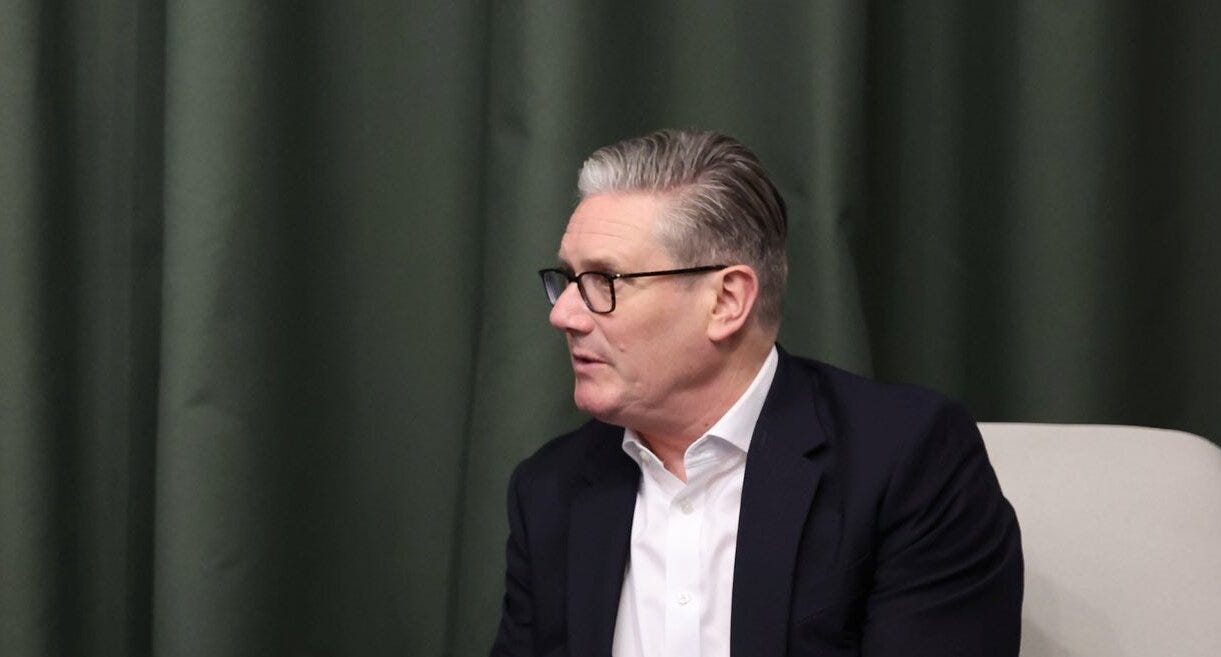
This image is used for illustrative purposes only.
At a Glance
The jury convicted Vickrum Digwa, a 23-year-old Sikh man, of murder on May 28, 2026. He was sentenced on June 1 to life imprisonment with a minimum term of 21 years for the killing of Henry Nowak, 18, who was stabbed five times in Southampton on December 3, 2025. Digwa had lied to police at the time of his arrest, falsely claiming to have been the victim of a racist attack and to have acted in self-defense — a lie that led officers to handcuff Nowak as he lay dying.
Video footage of the police intervention, showing Nowak being handcuffed while fatally injured, spread rapidly on social media and was seized upon by far-right groups, who accused the police of anti-white bias — a charge the British government firmly rejects.
Elon Musk posted multiple messages on X targeting the British police, claiming their official policy required them to treat white people in a racially discriminatory manner, and offered to fund legal action against the force. Prime Minister Starmer accused him of exploiting the tragedy to divide the country.
How a lie triggered a crisis
Vickrum Digwa stabbed Henry Nowak five times as Nowak walked home from a party in Southampton in the early hours of December 3, 2025. When police arrived, Digwa told officers a fabricated story: he claimed to be the victim, said he had been subjected to racial slurs, and argued he had acted in self-defense. Officers believed him.
The consequence was captured on police body-camera footage that would later circulate widely: Nowak, fatally wounded and barely conscious, was handcuffed and informed of his arrest. He died from his injuries shortly after.
The jury convicted Digwa of murder on May 28, 2026. He was sentenced on June 1 to life imprisonment with a minimum 21-year term before parole eligibility. His mother, Kiran Kaur, 53, was separately found guilty of assisting an offender — a verdict that further demolished any remaining claim that Digwa had acted in self-defense.
Britain’s Independent Office for Police Conduct (IOPC) — the country’s civilian police oversight body, roughly equivalent to a civilian review board with investigative powers — has opened a formal inquiry into the conduct of the officers on the scene. Its findings are expected within three months.
X as an amplifier of unrest
The release of the body-camera footage set off a sequence that has become grimly familiar in British public life: far-right exploitation, accusations of institutional racism against white people, and Musk’s intervention.
The tech billionaire posted multiple times on X about the case. In one widely shared post, he claimed the British police’s official policy “requires them to have a racist attitude toward white people” — a charge the government rejected as false. He also offered to fund civil litigation against the police.
This was not Musk’s first foray into British domestic affairs. The year before, he had weighed in heavily on the grooming gangs scandal — networks of men, predominantly of Pakistani origin, who had perpetrated systematic sexual abuse against young girls and teenagers, most of them white and from disadvantaged backgrounds. He has also repeatedly expressed public support for Tommy Robinson — whose legal name is Stephen Yaxley-Lennon — a prominent figure in Britain’s far-right movement.
On the night of June 2, a gathering outside the Portswood police station in Southampton descended into violence. Eleven officers were injured. Two men were arrested and charged; one pleaded guilty to violent disorder on June 4, while the other entered a not-guilty plea on a charge of assaulting a police officer.
Analysis: democracy under digital pressure
A father’s counter-narrative
In the middle of the political firestorm, one voice cut through: that of Henry Nowak’s father, who publicly asked that his son’s death not be used to “create further division, hatred or tension.” That statement — measured, dignified, directly at odds with the extremist narrative — gave the Starmer government a powerful counterpoint. The family’s restraint, as Starmer himself noted, stood in deliberate contrast to the inflammatory tenor of the posts circulating on X.
When AI tools endanger innocent people
The Nowak case has also surfaced a newer and more troubling dimension of platform responsibility. A former police officer — who had left the force in April 2024 — was incorrectly identified on social media, and by Grok, the artificial intelligence tool developed by xAI, Elon Musk’s AI company, as one of the officers involved in Nowak’s arrest. She was placed under protective security. A second officer, also falsely named, was forced to relocate with his family to ensure their safety. The former officer wrote on LinkedIn that being incorrectly linked to such a prominent and sensitive case was deeply troubling. [translated from French]
The IOPC has asked the public to “stop speculating” about the ongoing investigation, warning that relentless online commentary risked undermining any future legal proceedings — and preventing the Nowak family from receiving the answers they deserve.
The institutional question
The broader frame is one of democratic sovereignty. That a foreign national — the owner of a global communications platform — can repeatedly intervene in the domestic affairs of a G7 democracy without formal accountability is a condition with no real precedent in the pre-social-media era. For Starmer, the stakes go beyond Henry Nowak: they concern whether a democracy can respond collectively to a tragedy without being destabilized from outside.
A question that remains largely unaddressed: to what extent is a platform legally responsible when its own AI tools contribute to placing innocent private citizens in danger?
The Bottom Line
The Nowak case is not, at its core, about race. It is about truth — and about who controls the narrative around truth. Musk did not create Britain’s communal tensions. But he amplified them, accelerated them, and projected them onto a global stage. The real question this episode raises is less whether Musk was right or wrong, and more whether liberal democracies have developed the tools — legal, institutional, political — to hold powerful external actors accountable when they stoke domestic unrest.
The IOPC report, due in three months, will determine whether the police failed. What it will not determine is how a private platform can be held responsible for contributing — even indirectly — to placing two citizens in physical danger.
Sources: TV5Monde · AFP · RTBF