
The French Minute — June 9, 2026
June 9, 2026 · 4 stories, 4 minutes

France is shaking its institutions. The murder of Lyhanna keeps reshaping the political agenda, while parliament quietly advances organ donation reform and the pope announces his arrival in Paris.
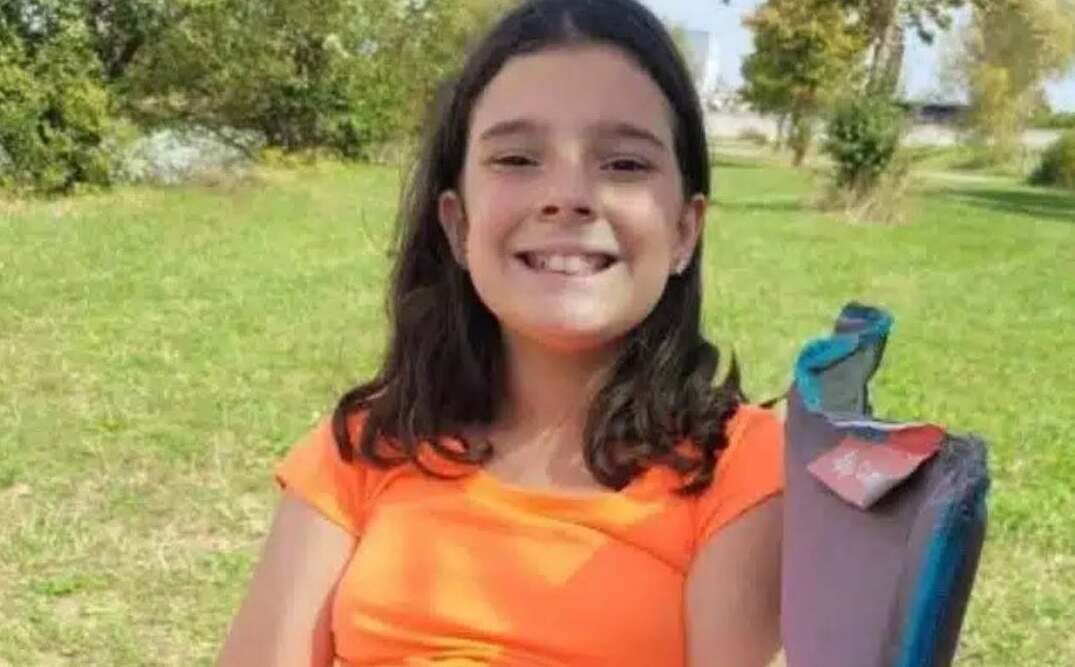
This image is used for illustrative purposes only.
Lyhanna’s murder: the government moves fast
The death of Lyhanna, an 11-year-old girl found murdered on June 4 in the Gers department — a rural area in southwestern France — after being reported missing, has triggered an unprecedented political shockwave. Jérôme Barella, the primary suspect in the case, had been the subject of multiple reports and complaints for sexual violence against minors since 2017. He was never taken into police custody for questioning.
On June 9, Sébastien Lecornu, France’s prime minister, convened several cabinet ministers to finalize emergency legislative measures. Two decisions were confirmed: raising the maximum sentence for serial rape from 20 years to life imprisonment, and capping the time investigators have to carry out key procedural steps at three months once a suspect is identified in a crime against a child. These provisions will be incorporated into a child protection bill presented to the Cabinet on May 27 and scheduled for parliamentary debate starting July 15. Additional measures are reportedly being finalized, according to sources close to the prime minister.
Separately, Laurent Nuñez, France’s Interior Minister, sent an internal directive Monday to the heads of the national police and the gendarmerie — France’s paramilitary police force responsible for rural areas — ordering them to immediately prioritize sexual violence cases involving minors and conduct a full review of ongoing investigations. An administrative inquiry entrusted to the justice and gendarmerie inspectorates is expected to deliver its findings on June 19.
What Spain figured out twenty years ago
While France scrambles to legislate, Spain offers an uncomfortable mirror. In 2004, following the femicide of Ana Orantes — a woman who had publicly spoken out about the abuse inflicted by her ex-husband before he killed her — the Spanish parliament passed a landmark law against gender-based violence. Built on a comprehensive model — prevention, victim support, coordination between police, courts, and social services — the legislation produced measurable results: two decades later, Spain records roughly half as many femicides as France, and violent men are convicted at twice the rate.
In 2021, Madrid went further with legislation specifically targeting children: automatic suspension of visitation rights for parents under investigation for domestic violence, and consolidation of hearings and forensic evaluations in a single location to reduce trauma. In September 2025, Prime Minister Pedro Sánchez‘s government approved a draft law to make violence against children in domestic settings a standalone criminal offense.
In France, a bill filed in December 2025 by Socialist lawmaker Céline Thiébault-Martinez proposes a broadly similar approach. Victims’ advocates are also pushing for the statute of limitations on child sexual abuse to be lifted — a measure the Council of Europe has called for since 2020, whose effectiveness was reaffirmed in 2024 by the Lanzarote Committee, the body tasked with monitoring the application of European child-protection standards.
France’s Senate moves to protect living organ donors
The French Senate — the upper chamber of parliament, whose members are indirectly elected — passed a bill unanimously on June 9 establishing a protective legal status for living organ donors. The legislation, championed by Philippe Mouiller, the Les Républicains (center-right) chair of the Senate’s social affairs committee, has the government’s full backing.
In France, 70,000 people are alive today thanks to a transplanted organ, while 23,000 patients remain on waiting lists. Yet a 2011 study by the Agence de la biomédecine — France’s national biomedical agency — found that more than one in five living donors reported suffering financial losses as a result of donating: delayed reimbursements, upfront costs, gaps in sick-pay coverage. The 1976 Cavaillet law had established the principle of free, gratuitous donation, but left significant blind spots in practice. The new bill enshrines in law the full exemption of donors from co-payments, medical surcharges, and sick-leave waiting periods. The bill now moves to the National Assembly — the lower chamber — for final adoption.
Pope Leo XIV is coming to France in September
Pope Leo XIV, elected in spring 2026 and the first American-born pope in history, will make his first official state visit to France from September 25 to 28. The program, detailed on June 9 by the French Bishops’ Conference, includes an outdoor Mass in Paris on September 26, a celebration on September 27 in Lourdes — a pilgrimage city in the Pyrenees and one of Catholicism’s most sacred sites worldwide — on the meadow facing the Grotto, and a Mass on September 28 at the Cathedral of Saint-Étienne in Metz. It is the first papal visit to Lourdes since Benedict XVI in 2008. The Vatican has indicated that Leo XIV wishes to meet with survivors of clerical sexual abuse during the trip. The Notre-Dame-de-Bétharram victims’ collective — a group alleging abuse by clergy at a Catholic sanctuary in the French Pyrenees — has submitted a formal request to that effect.
Sources: franceinfo · AFP · ICI Béarn Bigorre