
The EU's Moscow envoy: a job nobody wants
Brussels needs a special envoy to talk with Russia. The problem isn't the candidate — it's that the job has no realistic mission.

At a Glance
The EU has reluctantly moved toward appointing a special envoy for direct talks with Moscow, driven by European capitals that refuse to be shut out of a peace process now steered from Washington.
None of the candidates being floated — former German Chancellor Angela Merkel, Finnish President Alexander Stubb, former Italian Prime Minister Mario Draghi — combines Moscow’s trust, pan-European legitimacy, and independence from the United States.
Russia already has a direct channel to Donald Trump and has no structural reason to grant the EU the mediator status it has denied Brussels since 2022.
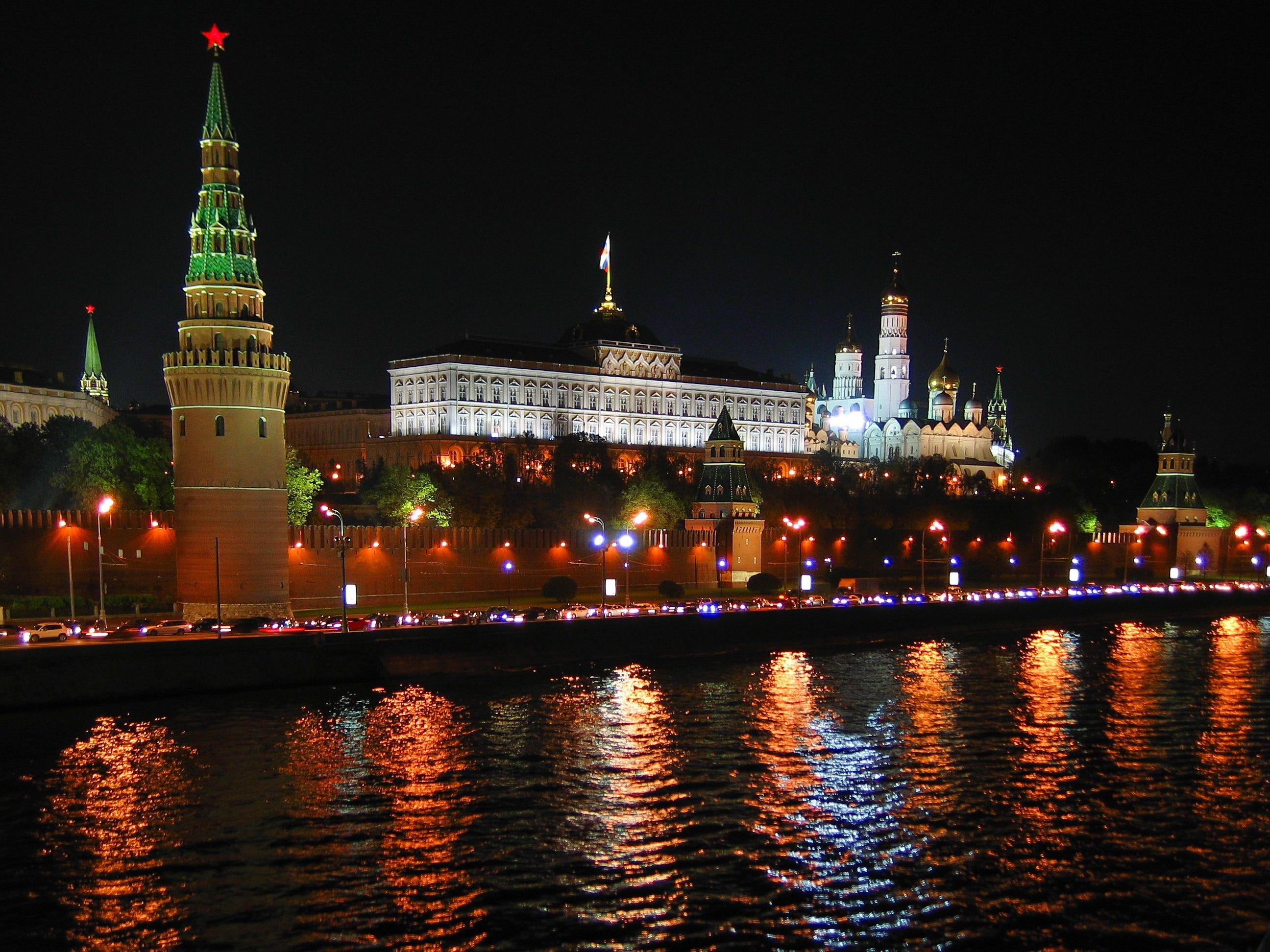
This image is used for illustrative purposes only.
A post created by necessity, not strategy
Some diplomatic assignments are difficult. Some are hopeless. And some manage to be both — with the added bonus of a very public humiliation that gets filed away in the archives of European foreign policy history.
The creation of an EU special envoy for direct talks with Moscow falls squarely into that third category. The consensus around the idea didn’t emerge because Brussels believes it will work. It emerged because the alternative — letting Washington and Moscow redraw Europe’s security architecture without a European voice at the table — felt even less acceptable.
That’s damage control. Not strategy.
Kallas stepped aside. So who’s left?
Kaja Kallas, the EU’s High Representative for Foreign Affairs and Security Policy — roughly the bloc’s foreign minister — warned in late April that the EU risked putting itself in the position of a supplicant if it went knocking on Moscow’s door without leverage. She has since removed herself from the envoy role. Her record of outspoken opposition to Russia, shaped by decades of Estonian politics and sharpened by the 2022 invasion, would guarantee an immediate rebuff from the Kremlin.
Three names have been circulating as alternatives: Angela Merkel, Alexander Stubb, and Mario Draghi.
Merkel declined, arguing that negotiating a settlement is a task for sitting heads of state, not former ones. Her track record is also a liability: the Minsk agreements she co-brokered — a diplomatic framework meant to freeze the conflict in eastern Ukraine — whose failure has since been widely recognized. Stubb, Finland’s president, runs into a structural obstacle: Helsinki’s recent accession to NATO makes him a non-starter for Moscow as a neutral interlocutor. Draghi commands respect across European and international chancelleries, but has shown no appetite for the role.
More unconventional names have also surfaced: Norwegian Foreign Minister Espen Barth Eide and Indian Foreign Minister Subrahmanyam Jaishankar, who has maintained working relationships with both sides of the conflict. Their profiles raise a more fundamental question: if the EU must look outside its own borders for a credible representative, it is implicitly acknowledging that no figure within the bloc currently carries the necessary stature.
Vladimir Putin has made his own preference known — Gerhard Schröder, the former German chancellor turned energy executive with longstanding ties to the Russian gas industry. Kallas dismissed the suggestion as unrealistic. German Chancellor Friedrich Merz was blunt: the EU, and no one else, would decide who speaks to Russia on its behalf.
The structural trap no envoy can outmaneuver
The obstacle isn’t just the shortage of willing candidates. It’s the EU’s negotiating position from the outset.
Moscow has a direct line to the Trump administration. The United States brings the world’s largest economy, a permanent seat on the UN Security Council, and — critically — has already eased sanctions on Russian oil and suspended military aid to Ukraine, allowing it to present itself as an equidistant broker between the two warring parties.
The EU, by contrast, has just approved a €90 billion loan (approximately $99 billion) to Ukraine and adopted its twentieth package of sanctions against Russia. In Moscow’s eyes, Brussels is a party to the conflict, not a referee. A senior European diplomat, cited by Euronews, captured the bind with characteristic understatement: the Russians might engage seriously — “and that’s a big if.”
Think of it this way: the EU envoy would be walking into a role not unlike the one Richard Holbrooke played at Dayton in 1995 — except without American firepower behind him, without Moscow’s trust, and with a mandate his own principals haven’t fully agreed on yet.
Kallas is currently working with EU foreign ministers to draft a preliminary list of conditions and concessions the bloc expects Russia to meet before any dialogue begins. That framework — described by diplomats involved as highly ambitious and unlikely to be fully accepted — could be put to the 27 EU leaders for approval at the European Council, the EU’s summit of heads of state, on June 18–19. The envoy would inherit it as a roadmap. Whether European capitals can agree among themselves on what that roadmap actually says is, according to multiple sources, the bigger obstacle — bigger, even, than Russia’s position.
Kyiv has added its own conditions to the pile. Ukrainian Foreign Minister Andriy Sybiha made clear that the EU should not run “alternative peace talks” but play a “complementary” role within the existing process. Translation: the European envoy would be a supporting actor in an architecture built by others.
Analysis — three things the press releases don’t say
① The appointment as signal, not solution. The real logic behind this initiative may be less diplomatic than political. Naming an envoy allows the EU to signal to European publics — and to the capitals pressing for direct engagement — that it is doing something. It is a response to internal pressure, not to any opening from Moscow.
② The American precedent as warning. Europeans have watched the U.S.-brokered talks yield little beyond prisoner exchanges. The EU envoy risks being drawn into the same sterile cycle — with the added indignity of arriving late, hat in hand, at a table set by someone else.
③ An asymmetry of leverage that no candidate can fix. Russia doesn’t need the EU to negotiate. What Moscow needs from Brussels — eventually — is sanctions relief, market access, and the legitimacy that democratic Western recognition of any peace deal would confer. This could constitute a structural advantage Moscow would carry into any conversation — one no envoy’s personal standing, however distinguished, could neutralize.
The real question isn’t who will take the job. It’s whether Moscow will grant that person any purchase at all.
The bottom line
Europe faces a contradiction no choice of candidate will resolve: it wants to shape a peace process whose terms are being negotiated without it, using instruments — loans, sanctions, military support — that define it as a party to the conflict rather than an honest broker. Whoever accepts the envoy role will carry that contradiction into every meeting. The mission may well amount to waiting for a seat at a table whose seating chart was drawn up elsewhere.
Sources: Euronews · European External Action Service