
The European minute — June 9, 2026
June 9, 2026 · 5 stories, 5 minutes

Ukraine is the thread running through today’s edition — in sanctions, diplomacy, and drones. Two other stories push beyond the conflict: Germany’s vanishing bomb shelters and the fight for Europe’s economic soul.
The EU’s 21st sanctions package targets oil, ghost tankers, and Russian soldiers
The European Commission — the EU’s executive arm — proposed its 21st package of economic restrictions against Russia today, as allies look for new ways to break the deadlock and push Moscow toward a ceasefire. The package is a proposal; adoption requires unanimity among all 27 EU member states and has yet to be voted on. Commission President Ursula von der Leyen unveiled measures targeting Russian oil sales, the so-called shadow fleet of aging tankers used to dodge Western restrictions, banks, cryptocurrency firms, metals, and — for the first time — certain Russian fishery products.
The technical crux involves the price cap on Russian oil, jointly maintained by the EU, the G7, and Australia since December 2022. A scheduled July 15 review would have automatically raised that cap, because Russian Ural crude has surged to $87 a barrel from $58 in February — a direct consequence of the closure of the Strait of Hormuz. Brussels wants to freeze the cap at its current level of $44.10 a barrel until January 2027, denying Moscow an unintended windfall. An additional 30 shadow fleet vessels would be blacklisted, and Russian soldiers who participated in the invasion would be barred from the Schengen area — the passport-free travel zone covering most of Europe.
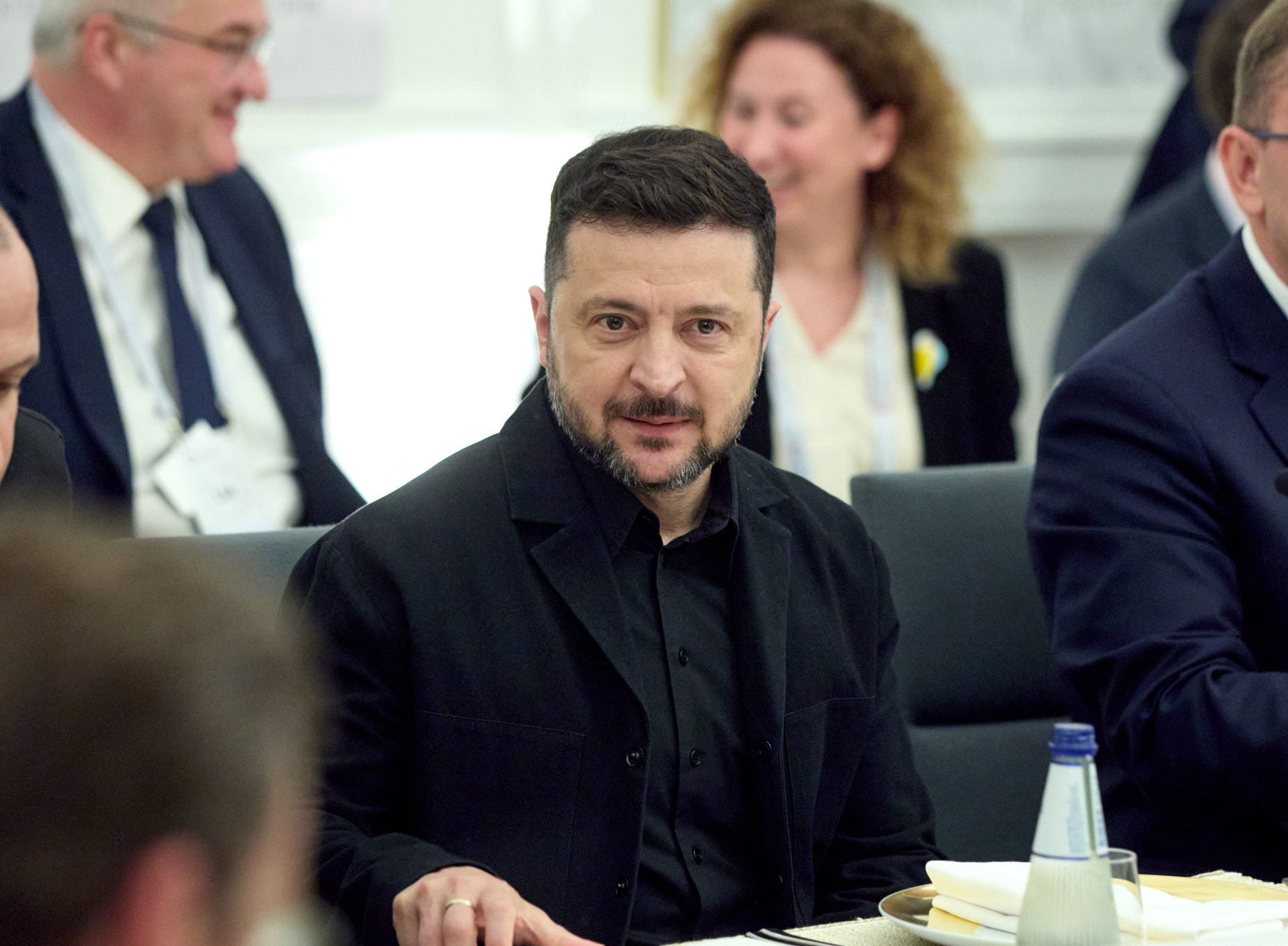
This image is used for illustrative purposes only.
Zelensky in Tallinn: pressure as a peace strategy
Ukrainian President Volodymyr Zelensky laid out a two-track doctrine in Tallinn, the Estonian capital, on Tuesday: hold the front lines and step up long-range strikes deep inside Russia. According to Zelensky, Russia is losing more than 30,000 soldiers a month — killed or seriously wounded — and fuel shortages are already being felt in Russian-occupied Crimea. He had come from a meeting in London with the French, German, and British leaders, and was addressing the Nordic-Baltic summit ahead of a G7 gathering in France next week and an EU leaders’ summit in Brussels on June 18–19.
On the sidelines, Kyiv signed a drone cooperation deal with Latvia, whose new Prime Minister, Andris Kulbergs, was meeting Zelensky for the first time. Recent drone incursions into Baltic airspace — which Kyiv attributes to Russian electronic jamming that knocked its drones off course — have strained relations, but the Baltic states remain among Ukraine’s staunchest backers. Kremlin spokesman Dmitry Peskov reiterated Tuesday that the U.S.-led mediation process was “currently suspended” and that the EU had no role to play in any future peace talks.
Ireland under pressure: are its alumina sales fueling Russian weapons?
Kaja Kallas, the EU’s foreign policy chief — effectively the bloc’s top diplomat — traveled to Dublin on Tuesday to press the Irish government on an uncomfortable question: is the country’s largest alumina refinery indirectly supplying Russia’s war machine? Aughinish Alumina, located in western Ireland and the largest plant of its kind in Europe, has continued selling alumina — the white powder used to produce aluminum, a metal that ends up in weapons and ammunition — to Russian smelters controlled by its parent company, United Company Rusal. Alumina is not covered by existing EU sanctions, creating a legal gray zone. Aughinish has said exports to Russia accounted for roughly 45% of its total sales in 2025.
The timing is delicate: Ireland takes over the rotating presidency of the EU Council — the body that coordinates member states’ positions — in less than a month. Kallas met both Foreign Minister Helen McEntee and Taoiseach Micheál Martin — Ireland’s head of government — who confirmed that a national investigation into Aughinish had been opened and pledged to share findings with the Commission. Dublin has warned that sanctions could threaten local jobs. Kallas insisted the EU cannot tolerate loopholes of this kind. Alumina was ultimately excluded from the 21st sanctions package proposed the same day, with member states unable to reach consensus.
Germany’s missing shelters
Of the roughly 2,000 bunkers Germany built during the Cold War, only about 580 remain — and not a single one is operational. In 2007, the federal government officially stripped them of their civil defense designation, leaving them to slowly deteriorate. In the event of an air raid alert — like the one triggered recently in neighboring Lithuania — Germans would have nowhere to take shelter.
A Berlin-based association, Berliner Unterwelten, which operates historic underground tunnels and museums in former World War II-era shelters, has decided to act: it plans to bring two installations back into service by year’s end, with capacity for up to 900 people for a few hours. Folding chairs and water canisters have already been purchased. The federal government has announced a civil defense pact worth €10 billion ($10.8 billion) through 2029, but the detailed shelter concept remains unpublished. Interior Minister Alexander Dobrindt of the conservative Bavarian CSU party acknowledged that the nature of the threat has fundamentally changed: small and medium-range drones, not intercontinental missiles, now define the priority risk. Finland, the Netherlands, and Luxembourg already run regular drills with their populations.
Letta: unite or become a colony
Enrico Letta, Italy’s former prime minister and author of a landmark 2024 report on the EU single market, warned Tuesday that the bloc risks falling under the economic sway of the United States and China if it fails to deepen integration. The message was blunt: Europe does not want to be anyone’s colony. Letta’s 2024 report, Much More Than a Market, argued for completing the single market across key sectors — energy, digital services, capital markets — and called for a “fifth freedom” devoted to research and innovation. It directly shaped the Commission’s current competitiveness agenda.
Letta credited the Greenland episode — in which U.S. President Donald Trump renewed threats to annex the Danish autonomous territory — as a “serious wake-up call” that shook European leaders into action. The Commission has since launched its “One Europe, One Market” strategy, comprising 42 legislative reforms with a set timeline. Two flagship measures — an Industrial Accelerator Act and a harmonized EU company statute dubbed “EU Inc” — could be finalized by end of 2026. The political conditions, Letta argued, have rarely been so aligned.
Sources: Euronews