
The by-election that could bring down Starmer
A Labour safe seat near Manchester has become a proxy war for Britain's future — with a populist surge and a leadership crisis.

At a Glance
Andy Burnham, the widely popular mayor of Greater Manchester and a leading figure on Labour’s left, is standing in the Makerfield by-election on June 18 (a special election called to fill a vacant parliamentary seat) — a contest that could give him the seat he needs to challenge Prime Minister Keir Starmer for the party leadership.
A Survation poll published May 22 put Burnham at 43% against Reform UK’s Robert Kenyon at 40% — a gap well within the margin of error, in a constituency that swung sharply to the right in May’s local elections.
Reform UK is standing by its candidate despite the emergence of sexist, homophobic, and violent social media posts linked to him — a decision that says as much about the party’s political calculus as it does about its vetting standards.
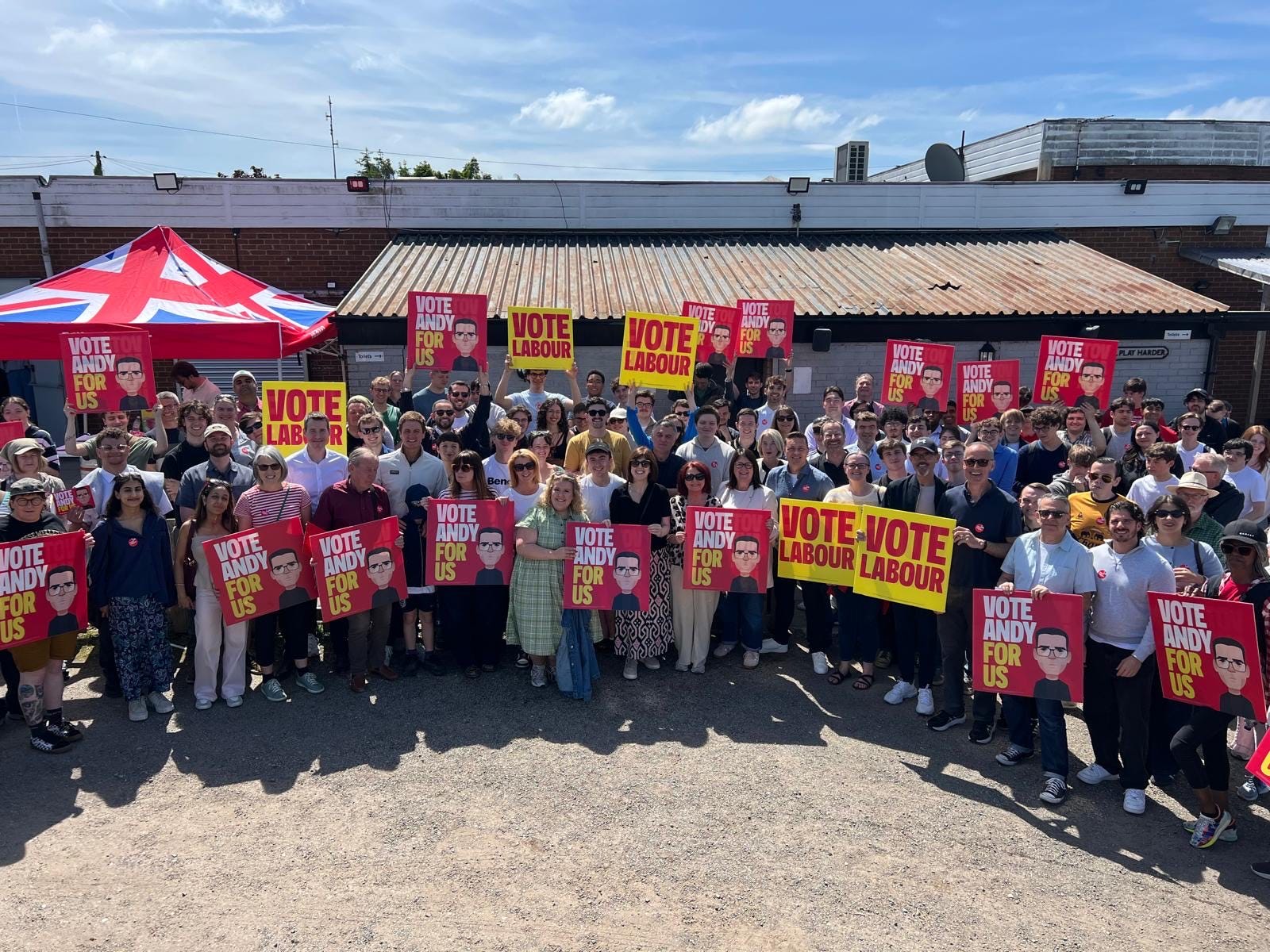
This image is used for illustrative purposes only.
Makerfield, a seat engineered for a succession crisis
A parking lot outside a sports club in Ashton-in-Makerfield, a former mining town in Greater Manchester’s industrial belt. That is where Andy Burnham chose to launch, on May 22, the most consequential campaign of his political career.
The mechanics of the by-election are unusually transparent. Josh Simons, Labour’s former MP for Makerfield, resigned his seat on May 14 specifically to open a path for Burnham — the first time a British by-election has been triggered solely to provide a parliamentary seat for an outside figure since the 1965 Leyton contest. Under British parliamentary rules, a party leadership challenger must hold a seat in the House of Commons, the UK’s lower legislative chamber. Burnham, who has served as elected mayor of Greater Manchester since May 2017 and won a third term in 2024, does not. Makerfield is his entry ticket.
The backdrop is a Labour Party in acute distress. The May 7 local elections delivered a crushing verdict on Starmer’s government: Labour lost control of dozens of municipal councils across England, Wales, and Scotland, while Reform UK — Nigel Farage’s hard-right party — made sweeping gains. Several ministers resigned in the aftermath. Starmer, defying calls to quit, told his cabinet he would keep governing. Dozens of Labour MPs have publicly called for his resignation or demanded a departure timetable. More than a hundred others signed a letter warning against a leadership contest — leaving the party effectively paralyzed between two factions that cannot yet coalesce around a resolution.
In a constituency like Makerfield, these national fractures are written into the streetscape. Ashton-in-Makerfield today shows more Reform posters than Labour signs. The seat, held by Labour continuously since 1983, voted heavily for the right in May’s local elections: Reform UK won all eight council wards in the Makerfield portion of Wigan, with around 50% of the vote.
For many voters here — many of them working-class homeowners in a post-industrial economy — the cost-of-living crisis has made the gap between Labour’s promises in 2024 and its performance in government feel like a breach of trust. Several residents canvassed by AFP during the campaign launch said they had voted Labour their entire lives but saw no reason to do so again — whether under Starmer or his would-be successor.
Burnham’s gamble — and Reform’s liability
A poll by Survation, a UK-based polling firm, conducted between May 18 and 22 (N=369, margin of error ±5.1 percentage points) placed Burnham at 43% and Reform’s Robert Kenyon at 40%. Statistically, the race is a toss-up.
Burnham’s main asset is personal popularity in a region where he has governed for nearly a decade. Born in Liverpool, representing a neighboring constituency earlier in his career, he has built a reputation in Greater Manchester for competent, place-first leadership — bus services brought under public control, a focus on homelessness, a visible regional identity distinct from Westminster. A Survation modeling exercise suggested that without Burnham as Labour’s candidate, Reform would be favored to take the seat outright.
His vulnerability is precisely the accusation that follows him from door to door: that Makerfield is a stepping stone, not a commitment. Reform’s campaign has leaned directly into this, accusing Burnham of using the constituency for his broader ambitions — an argument that does not require evidence to land, only plausibility. Some voters have already made up their minds on exactly those grounds.
Reform’s own candidate carries a significant liability. Robert Kenyon — a local plumber, born in Makerfield, and a councillor in Wigan, the borough that covers the Makerfield constituency — was confirmed as Reform’s candidate on May 19. Within days, the anti-racism organization Hope Not Hate revealed a now-deleted social media account linked to him containing sexist, homophobic, and violent posts. A separate account had previously been suspended by X, formerly Twitter. The anti-fascist organization Searchlight further reported links between Kenyon and far-right activists, a claim Reform did not dispute.
Reform’s response was to stand firm. A party spokesperson said the posts were made “before he entered politics,” describing Kenyon as a straight-talking voice for ordinary working people. The defense is legally and politically coherent within its own logic: for an electorate hostile to professional politicians, the admission that he does not “speak like one” functions as a credential, not a disqualification. Whether it holds through six weeks of scrutiny is another question.
The bottom line
Makerfield on June 18 is not simply a by-election. It is a stress test for three propositions simultaneously: whether personal popularity can still override a national political tide; whether Reform’s brand survives candidate-level controversy that a year ago might have been fatal; and whether Labour can find a successor model before the party’s institutional damage becomes irreversible.
The real question Makerfield poses is not who wins on the night. It is whether the winner — whichever party — can credibly claim that the result tells us something durable about British politics, or whether this constituency, engineered into national significance by a single resignation letter, will be remembered as a flashpoint that clarified nothing and settled everything.
Sources: AFP · TV5 Monde · Greater Manchester Combined Authority · BBC News · Survation / The Times