
Switzerland's self-declared king and his 150 unclaimed estates
A 31-year-old IT professional has quietly assembled a 117,000-square-meter land empire by exploiting a two-century-old legal loophole.

In a country celebrated for bureaucratic precision, Switzerland is discovering it doesn’t always know who owns its own territory.
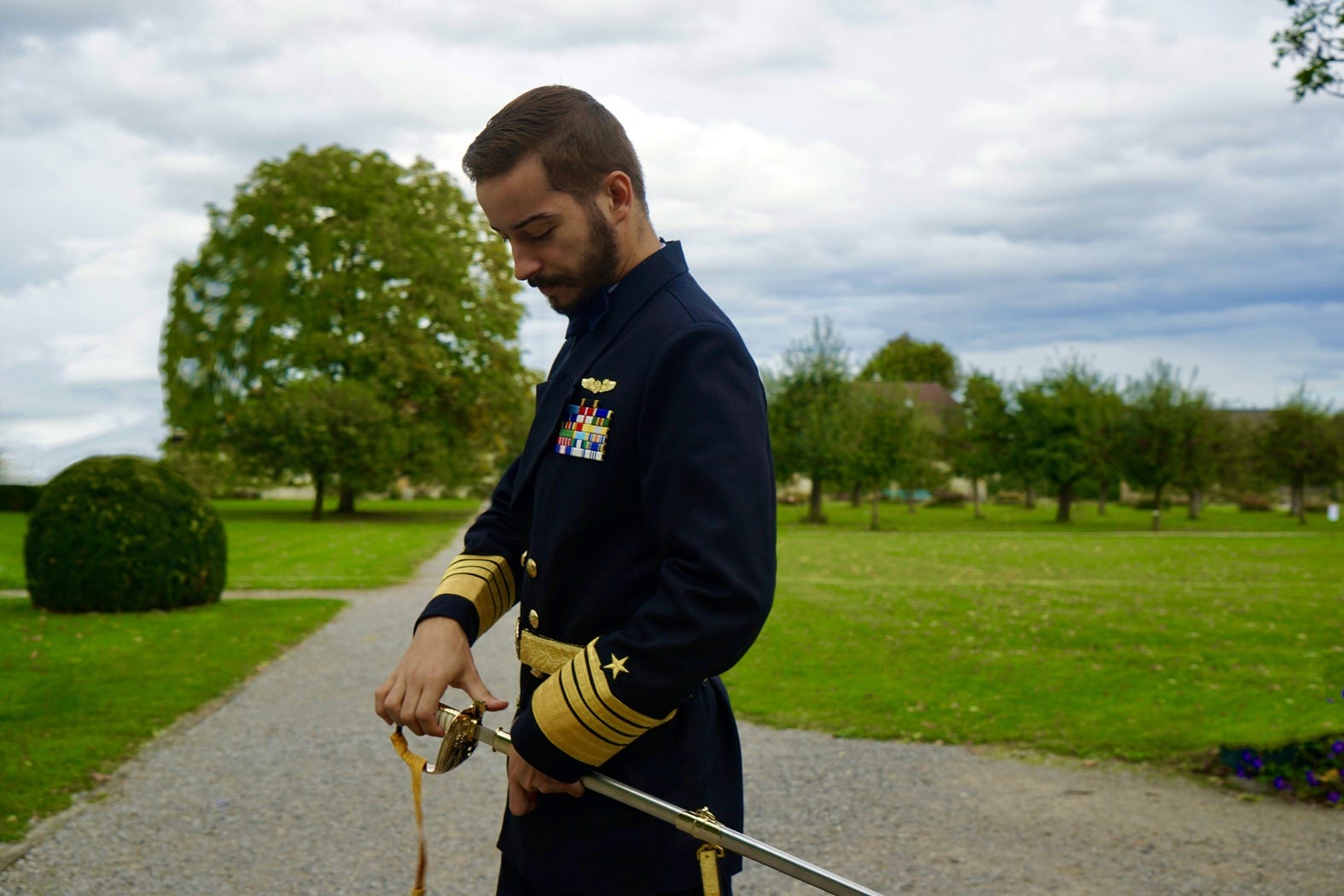
At a Glance
Jonas Lauwiner, self-proclaimed “King of Switzerland” since 2019, legally owns 149 parcels and 83 private roads across nine cantons — acquired for a total of roughly 15,000 Swiss francs (approximately $17,000).
Article 658 of the Swiss Civil Code allows anyone to claim ownership of land with no registered owner, for a modest administrative fee — a provision almost no one had systematically exploited at this scale.
Several cantons are now moving to reform the law, seeking to give municipalities the right of first refusal on vacant land before private individuals can claim it.
An IT guy, a land registry, and an idea
The story begins with a birthday present: a small plot of land, a gift from his father. While consulting the property records to locate the parcel, Jonas Lauwiner — a dual Swiss-Moroccan national then working as an IT professional in Burgdorf, in the canton of Bern — discovered that Switzerland’s famously rigorous administrative system harbored hundreds of parcels in legal limbo: owners long dead with no registered heirs, roads never formally assigned, plots that had simply fallen through the cracks of cantonal administration.
The loophole is real, and it is entirely legal. Article 658 of the Swiss Civil Code allows any person to claim ownership of land with no known registered owner by filing with the land registry — for a few hundred francs in processing fees. Lauwiner turned this into a system, working canton by canton, registry by registry. Over six years, he accumulated 149 parcels and 83 roads spread across nine cantons — Bern, Lucerne, Schwyz, Valais, among others — totaling more than 117,000 square meters, all acquired for roughly 15,000 francs in total.
Jonas Lauwiner’s land empire
What Lauwiner does with this “empire” deserves attention. He is not a conventional property developer: his holdings consist mainly of secondary roads, rural paths, forest plots, and abandoned industrial parcels. He leases timber rights to forestry companies, grants energy operators the right to install pipelines and electrical cables, and collects right-of-way fees on certain roads.
The affair turned contentious when residents in the canton of Lucerne discovered that the Rosenweg — a neighborhood road they had used for years — now officially belonged to a man they had never met, who was offering to sell it back to the municipality for 150,000 francs. The municipality had no legal right of first refusal and found itself negotiating with a self-styled monarch. Lauwiner defends himself by pointing to the maintenance costs he bears and the strict legality of his approach. “The only thing I charge for is maintenance costs,” he has said [translated from French]. The Lucerne public prosecutor’s office sided with him, issuing a decision not to pursue the case — a ruling described as “incomprehensible” by the lawyer who filed the complaint.
Analysis: a loophole, or a mirror?
The Lauwiner affair exposes a structural gap that could be described as an institutional blind spot. In a country where private property is one of the pillars of civil order, thousands of parcels had quietly drifted into legal no-man’s land without federal or cantonal authorities putting an automated reclamation mechanism in place. The canton of Valais moved to close the door on Lauwiner in Hérémence by reclaiming 800 affected parcels in a single administrative sweep in 2021 — but only because the threat had already materialized.
This sequence could suggest that the real problem is not Lauwiner himself, but the legal vacuum he has made visible. His strategy is replicable by anyone with the time and method to work through cantonal land registries. That a single individual identified and exploited this gap at this scale plausibly implies that others have done so — or will — in ways that are less theatrical and far less visible.
It is worth noting a parallel that American readers may recognize: several U.S. states allow a similar mechanism known as adverse possession, under which a person who openly occupies abandoned land for a statutory period — typically five to twenty years depending on the state — can acquire legal title to it. Switzerland’s Article 658 operates on a different procedural basis, but the underlying tension is the same: what happens when private initiative moves faster than public administration in claiming territory that formally belongs to no one?
Several cantons have now opened legislative discussions to grant municipalities a right of first refusal over vacant land. Lauwiner, for his part, stopped making new acquisitions in 2025 — having, he says, taken everything that interested him.
The bottom line
Switzerland has inadvertently run a live legal stress test: what happens when a private citizen applies the law more systematically than the institutions responsible for enforcing it?
The real question is not whether Jonas Lauwiner is an eccentric or an entrepreneur. It is how many similar actors could still emerge — in Switzerland or in other European countries with equally fragmented land registries — before legislators finally close the gaps in their own cadastral maps.
Sources: France 24 · RTS · 20 minutes