
Switzerland's Brexit test: what the UK experiment proved
On June 14, Swiss voters decide whether to cap the country's population. The British experience suggests controlling immigration is far harder than populists claim.

Ten years ago, British voters chose to leave the European Union, convinced they could take back control of their borders. A decade later, net immigration to the United Kingdom has returned to levels comparable to pre-Brexit averages — but its composition has shifted dramatically: fewer Europeans, far more people from South Asia and Africa, and a record surge in clandestine Channel crossings. That is precisely the mirror Switzerland is now holding up, three weeks before a referendum that could redraw its relationship with the European Union.
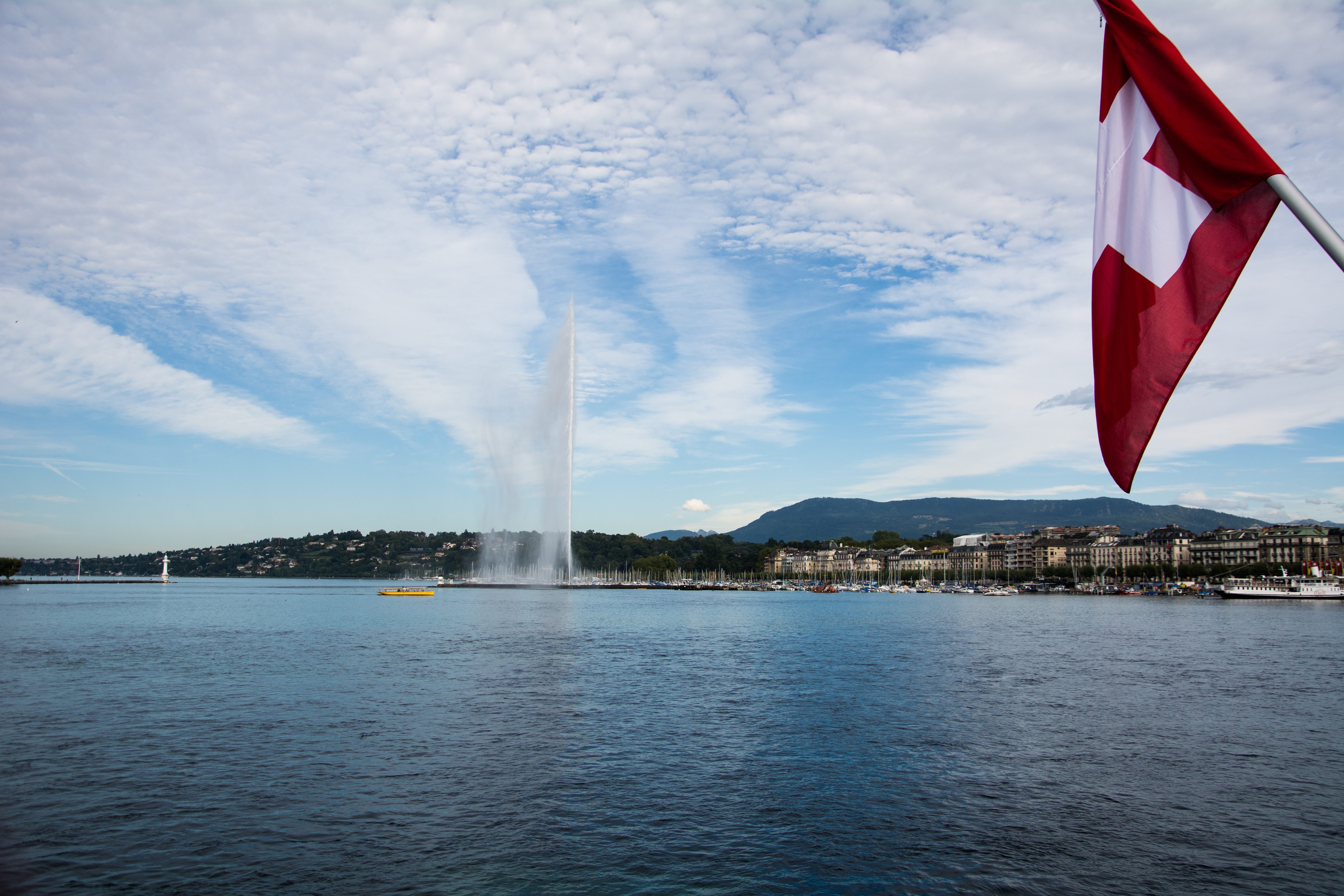
This image is used for illustrative purposes only.
At a Glance
On June 14, 2026, Swiss voters will decide on an initiative by the Swiss People’s Party (SVP/UDC), Switzerland’s largest political party, titled “No to a Switzerland of 10 million,” which aims to cap the permanent resident population and could ultimately lead to the termination of Switzerland’s free movement agreement with the EU.
In the United Kingdom, ending free movement did not reduce overall immigration: the decline in European arrivals was more than offset by a sharp rise in non-European migration, and asylum requests hit a record high of more than 110,000 in the year to late 2025.
The central lesson from the British experience, according to experts, is that no government fully controls migration flows: economic and demographic pressures shift form, they do not disappear.
The Brexit precedent Switzerland cannot ignore
No country has ever used a demographic cap to regulate immigration. But there is a precedent for leaving free movement behind: the United Kingdom. That case study now frames the Swiss debate.
The SVP/UDC initiative asks the Swiss Federal Council and Parliament — Switzerland’s executive and legislative bodies — to prevent the permanent resident population from exceeding 10 million by 2050. It would first restrict asylum procedures and family reunification. If those measures prove insufficient, terminating the free movement agreement with the EU is explicitly listed as a last resort.
The SVP’s rhetoric carries clear echoes of the Brexit campaign. The slogan “Take back control” — deployed by the Leave campaign in 2016 — was driven in large part by mounting anxiety over migration from Central and Eastern Europe following EU enlargements in 2004 and 2008.
Cenni Najy, head of policy at the Centre Patronal, a Swiss employers’ organization opposed to the initiative, sees “striking parallels.” The immigration question Switzerland faces today closely resembles, in his assessment, the one that lay at the heart of the Brexit debate.
What Brexit actually produced
The outcome was counterintuitive. Jonathan Portes, professor of economics and public policy at King’s College London, puts it plainly: Brexit did not reduce net immigration. In the short term, it increased it.
European immigration began slowing as early as 2016 — the referendum result alone deterred many EU nationals from coming. That slowdown deepened after free movement formally ended on January 1, 2021. At the same time, a new visa system made it easier for non-EU workers and students to enter, at a moment when labor shortages from the post-Covid recovery were acute and large numbers of refugees from Hong Kong and Ukraine were arriving.
The fall in European arrivals was more than compensated by a sharp rise in immigration from outside the EU. The most recent data show that net migration has returned to levels comparable to pre-Brexit averages — around 170,000 to 200,000 annually — after post-pandemic peaks that briefly exceeded 900,000. The compositional shift is nonetheless profound, as the Oxford Migration Observatory has confirmed: fewer Europeans, far more arrivals from India, Pakistan, China, and Nigeria.
A second, compounding problem emerged in asylum. Requests surged after 2021, hitting a record of more than 110,000 in the year to late 2025, compared with a range of 22,000 to 46,000 annually between 2004 and 2020. Clandestine Channel crossings followed the same trajectory — roughly 300 in 2018, approximately 46,000 in 2022, and a further peak of around 41,500 in 2025. Since 2018, more than 200,000 people have attempted the crossing, the overwhelming majority seeking asylum. Since leaving the EU, the UK can no longer return asylum seekers to the first EU country they entered, as the Dublin Regulation — which governs asylum responsibilities across EU member states — previously allowed.
The substitution effect Switzerland might replicate
Opponents of the Swiss initiative argue that a similar substitution effect could follow. Cenni Najy highlights a specific geographic vulnerability: unlike the UK, Switzerland has no maritime border — it is surrounded by four countries in the Schengen Area, the EU’s passport-free travel zone. Controlling every kilometer of land border would, in his view, be operationally impossible.
The Centre Patronal identifies two likely adjustment variables. First, a rise in cross-border workers — those living in neighboring France, Germany, Italy, or Austria while working in Switzerland — who would not fall under the initiative’s cap and already number more than 400,000. Second, a proliferation of precarious or temporary statuses that carry no right to family reunification. The net result, this analysis suggests, could be a more chaotic, less predictable migration regime than the current bilateral framework.
The SVP’s rebuttal: this is not a Swiss Brexit
Nicolas Kolly, a member of Switzerland’s lower house of parliament representing the SVP in the canton of Fribourg, rejects the comparison. The initiative is not, he insists, “a Swiss Brexit.” In his reading, it could be implemented without ever touching free movement, by acting first on asylum, family reunification, and existing safeguard clauses. He also argues that even under the initiative, roughly 40,000 people a year could still immigrate — enough, he contends, to meet demand for skilled workers.
Kolly pushes back on the premise that high immigration resolves labor shortages: it generates its own demand for housing, healthcare, and infrastructure. On the British experience, his judgment is that the UK’s problem was not leaving free movement but the incoherent immigration policy that followed. A clear demographic target, he contends, would set a firm direction and prevent a simple displacement of flows.
Analysis: the mechanics of the illusion of control
The real question this debate raises is not about immigration. It is about the limits of state sovereignty over structural forces.
The British case exposes a paradox that advocates of hard migration caps consistently fail to resolve: labor markets have needs that do not respond to legislation. When one entry route closes, the flow adapts — it shifts in composition, legal category, and pathway.
What a border change alters is who comes, not necessarily how many.
For Switzerland, the stakes are amplified by geography and by the density of its institutional ties with the EU. The free movement agreement is not a standalone arrangement: it forms part of a package of seven bilateral accords negotiated in 1999, which govern Switzerland’s access to the EU’s single market. Under what is known as the “guillotine clause,” terminating one agreement would trigger the automatic termination of the others — a sequencing that could suggest the full costs of the initiative would extend well beyond migration policy, though that scenario remains contingent on political choices not yet made.
Portes frames the British balance sheet in terms that translate readily to the Swiss context: economic and demographic pressures did not disappear with Brexit — they changed shape. The principal lesson the UK offers may be the one least comfortable for any government to absorb: policymakers have considerably less control over these dynamics than they tend to promise.
The Bottom Line
Switzerland is not the United Kingdom. Its relationship with the EU is denser, more bilateral than multilateral, and its tradition of direct democracy makes it a genuinely distinctive political laboratory. But the British precedent delivers one finding that June 14 cannot override: restricting free movement does not guarantee control over immigration. What the vote will reveal is something different — how much Swiss voters are willing to sacrifice, economically, institutionally, and geopolitically, for the promise of a cap.
Sources: France Info · SWI swissinfo.ch · King’s College London · Oxford Migration Observatory