
Sweden's energy bailout: 1.7 billion euros, four months before elections
Stockholm's governing coalition has approved a €1.7 billion relief package to cushion the energy shock — including half-price public transit nationwide.

The timing, four months before elections, has a name in Swedish: valfläsk.
At a Glance
Sweden’s four-party coalition has approved 17.5 billion kronor (approximately €1.7 billion) in relief measures targeting households and businesses hit by the ongoing energy crisis, funded through a supplementary budget.
The centerpiece: a 50% reduction on monthly public transit passes nationwide, running from July 1 through December 31, 2026, at an estimated cost of 6.5 billion kronor — with the central government compensating regional transit authorities for lost fare revenue.
With legislative elections less than four months away, the announcement has reignited a debate Sweden knows well — the line between emergency economics and electoral spending.
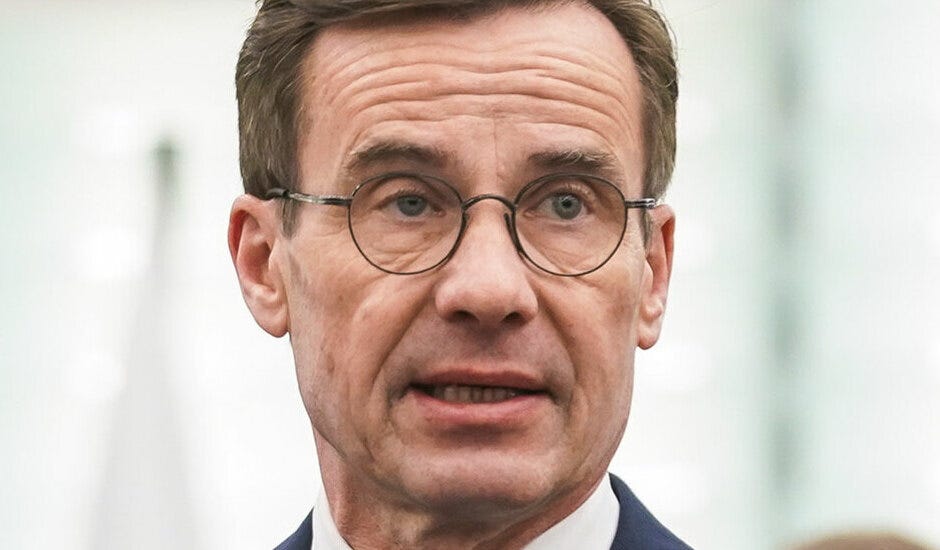
This image is used for illustrative purposes only.
When fiscal discipline bends to urgency
Sweden is not a country that spends lightly. Its tradition of budgetary restraint, forged through the financial crises of the early 1990s, has made it one of Europe’s most closely watched models of fiscal responsibility. That makes the scale of the current package all the more striking.
The official justification is the energy crisis. The war in the Middle East and the disruption of the Strait of Hormuz — a critical chokepoint for global oil trade — have driven up energy prices, squeezing Swedish households and businesses alike. The government’s response is a 17.5 billion kronor package (approximately €1.7 billion, or roughly $1.9 billion at current exchange rates), to be financed through a supplementary budget. It is shared across four coalition partners: the Moderates (Sweden’s center-right conservative party), the Christian Democrats, and the Liberals — who form the governing cabinet — along with the Sweden Democrats, a nationalist party that provides parliamentary support without holding ministerial posts.
The Kristersson government has previously deployed targeted energy relief, including fuel tax reductions. What makes this package politically notable is its scale and visibility: a nationwide transit subsidy touching virtually every commuter in Sweden is a different kind of intervention.
Half-price transit: the headline measure
The most visible element of the package is a 50% cut on monthly public transit subscriptions nationwide, effective July 1 through December 31, 2026, at an estimated cost of 6.5 billion kronor. Regional transit authorities will be compensated by the central government for the resulting shortfall in fare revenue — a design that ensures the measure reaches commuters uniformly across the country, not just in the largest cities.
The announcement was made on May 26 at a bus depot in Gustavsberg belonging to Storstockholms Lokaltrafik (SL), the regional transit authority serving the Stockholm area, with the leaders of all four coalition parties in attendance — a carefully staged backdrop for a nationwide announcement.
For the average commuter, the measure delivers immediate, tangible relief. Its six-month shelf life, however, signals its purpose: this is a buffer, not a structural reform of transit pricing. When January 1 arrives, full fares return.
An energy crisis with European dimensions
The Swedish response is part of a broader pattern. Across the continent, governments have repeatedly turned to direct transfers and subsidized tariffs to cushion successive energy shocks since 2021. Several European governments deployed similar short-term measures in the 2022–2024 period — reduced transport fares, energy vouchers, temporary VAT suspensions on basic goods — before phasing them out as market conditions normalized. Sweden is following a familiar playbook, with a politically charged twist.
What sets the Swedish case apart is the structural tension it exposes. When an energy shock coincides with an election cycle, fiscal intervention becomes almost impossible to disentangle from political calculation — even when the underlying crisis is entirely real.
Valfläsk: Sweden’s word for the problem
In Swedish political discourse, the word valfläsk — literally “election pork,” the rough equivalent of the American political term pork barrel — refers to public spending announcements timed to precede a vote. The word has been circulating more widely than usual this spring to describe the government’s moves, even among commentators broadly sympathetic to the coalition.
The discomfort is specific: a government that built its credibility on fiscal restraint is now financing emergency relief through borrowed money, at a scale that goes beyond previous targeted interventions — and doing so in the final stretch before voters go to the polls.
Would the same package, at the same scale, have been announced in a non-election year?
That question belongs to Swedish voters. But the dynamic it describes — the collision between genuine economic urgency and the logic of electoral timing — is recognizable across every European democracy navigating the energy transition and geopolitical instability at once.
Sources: Le Monde · Sveriges Radio · Riksdag.se