
Spain's €9 billion climate plan
Making the green transition affordable — or just making it look that way

Pedro Sánchez unveils a social climate plan that bets the success of Spain’s energy transition on its accessibility: renovated housing, near-free public transit, and vulnerable households at the center.
At a Glance
On May 25, 2026, the Spanish government unveiled a proposed Social Climate Plan of nearly €9 billion, split between housing renovation (€4.7 billion) and sustainable mobility (€4.3 billion).
The plan explicitly targets lower-income households, aiming to make the energy transition financially accessible to all — not just those who can afford solar panels or electric cars upfront.
Spain must finalize and submit the plan to the European Commission before the end of 2026, under the EU’s Social Climate Fund framework, designed to cushion the social costs of decarbonization.
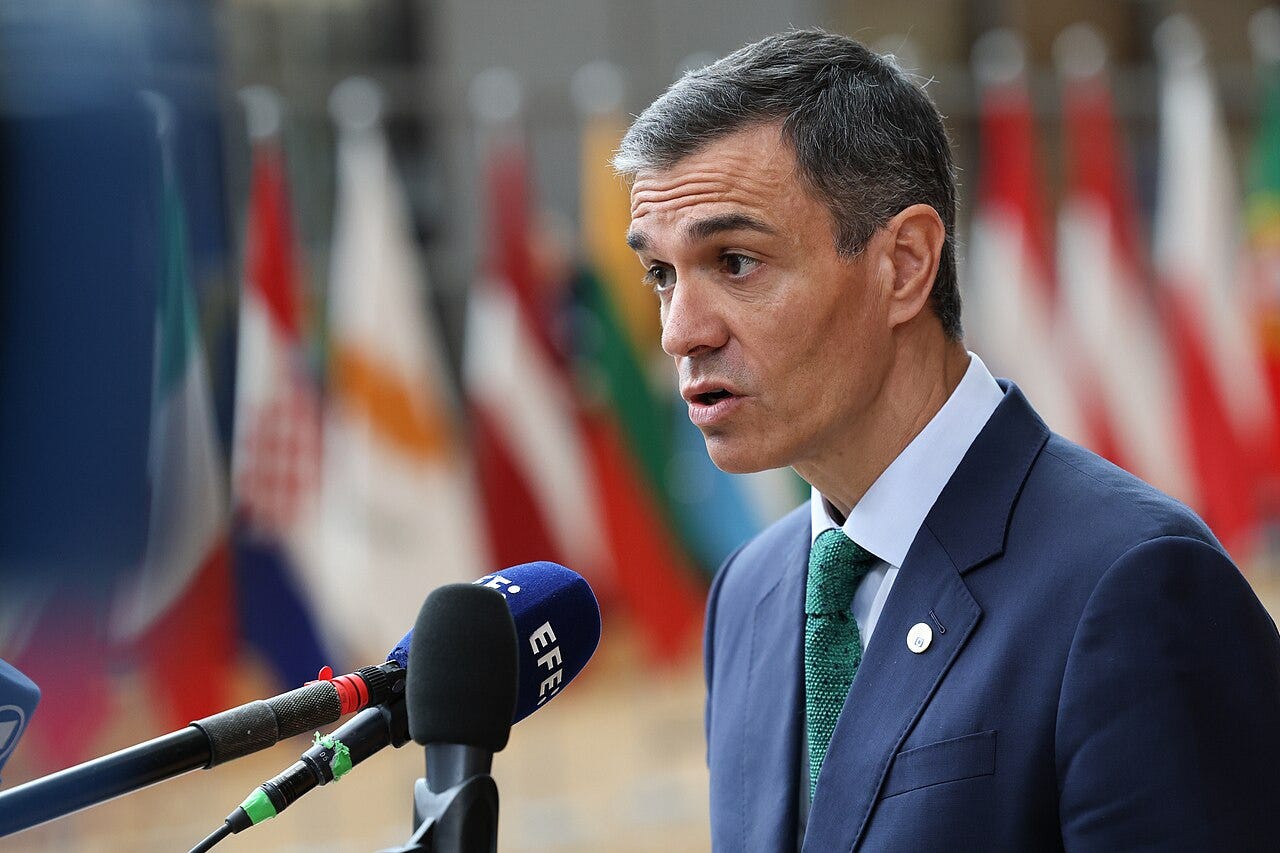
This image is used for illustrative purposes only.
The energy transition’s new fault line
The contradiction had become too obvious to ignore: climate policies designed to save the planet tend to benefit those who can afford to act on them first. Installing solar panels, buying an electric vehicle, retrofitting a drafty apartment — these are, in practice, green choices reserved for households with upfront capital. Pedro Sánchez, Spain’s Prime Minister, chose to address this head-on with the presentation, on May 25, of a proposed Social Climate Plan worth nearly €9 billion.
The political message is unambiguous: the ecological transition cannot be a privilege. It will only succeed if it reaches working-class neighborhoods, rural communities, and households caught in the double bind of energy poverty and rising transportation costs. Sánchez warned that climate-skeptic narratives — which he sees as gaining ground — thrive precisely on this gap between green ambition and everyday economic reality.
What the plan actually does
The budget breakdown reveals the priorities. Of the €9 billion, nearly €4.7 billion goes to housing: energy retrofits targeting lower-income neighborhoods, with the stated goal of making renovation a mainstream practice that simultaneously cuts household bills and carbon emissions. Sara Aagesen, Spain’s Third Deputy Prime Minister and Minister for Ecological Transition and Demographic Challenge, described the plan as an essential instrument for “complex times.”
The remaining €4.3 billion targets mobility: vehicle replacement subsidies, expanded public transit in rural areas, and a push toward near-zero fares on public transport — a continuation of measures the Spanish government has been rolling out over the past several years. Transport Minister Óscar Puente framed access to mobility as a fundamental right, not a line item subject to budget cuts. Housing Minister Isabel Rodríguez, who also spoke at the launch, connected the plan directly to ongoing public pressure over access to affordable housing.
The government expects to finalize and submit the plan to the European Commission before the end of 2026. It fits within the framework of the EU’s Social Climate Fund — a mechanism established under European legislation to help member states manage the social costs of decarbonization, particularly for lower-income households, as the bloc extends carbon pricing to buildings and road transport.
Analysis: a political strategy as much as an environmental one
A green backlash problem across Europe
Spain is not releasing this plan in a political vacuum. Across several European countries, the perception that climate policies place a disproportionate burden on ordinary households has been fueling populist pushback that threatens to undermine long-term climate commitments. The European Commission itself adjusted certain milestones under its Green Deal — the EU’s sweeping climate roadmap — under pressure from member states and right-leaning blocs in the European Parliament.
This sequence — rising populist pressure, partial recalibration of the green timeline, and a counter-push reframing transition policy as social policy — suggests that Spain’s Social Climate Plan is as much a domestic political position as a financial architecture. By explicitly anchoring climate action in the language of economic fairness, Sánchez is attempting to reframe the debate: the question is no longer “for or against the transition,” but “who bears its costs, and who gets the benefits.”
Putting the numbers in context
The €9 billion figure deserves perspective. Spain has a population of roughly 47 million. The effort translates to approximately €190 per inhabitant over the plan’s duration. Germany’s building energy renovation law (Gebäudeenergiegesetz) generated fierce political controversy precisely because the subsidies on offer failed to cover the real financial burden on homeowners. France’s flagship renovation scheme has similarly drawn criticism for producing too few deep retrofits relative to public spending. Spain’s ambition is significant — but its operational translation, still to be detailed, will determine whether the redistribution effect is real or largely rhetorical.
The European mechanism behind the plan
The EU’s Social Climate Fund — established under the European legislative package extending emissions trading to buildings and road transport, with a total EU-level budget of €86.7 billion over 2026–2032 — is designed to provide member states with resources to protect vulnerable populations from higher energy and fuel costs. National social climate plans are the delivery mechanism for these funds. The original submission deadline was set at June 30, 2025; several member states, including Spain, are still in the process of finalizing their plans. Brussels expects submission and approval before co-financing can begin — which makes Spain’s end-of-2026 target a working timeline, not a hard legal deadline.
Spain may be one of the first European governments to publicly present the full structure of its national plan, which could strengthen its negotiating position with the Commission.
A signal worth watching
The political staging of this announcement — a presidential press conference, three ministers on stage, carefully calibrated rhetoric about “making ends meet versus the end of the century” — suggests Sánchez is seeking to capitalize electorally on a green agenda repositioned as a social agenda. This reading remains an informed hypothesis rather than an established fact. It is plausible that the announcement also serves as a response to recent demonstrations in Madrid calling for his resignation — a signal that the government is choosing programmatic offense over political defense.
The Bottom Line
Spain has raised a question every European government will have to answer in the years ahead: at what social cost is decarbonization being pursued, and who absorbs that bill? The financial architecture of Spain’s Social Climate Plan is ambitious. But between political announcement and operational delivery lies the distance where climate promises most often go quiet. Brussels is waiting for the document. Vulnerable Spanish households are waiting for the subsidies.
The real measure of this plan won’t be found in the €9 billion headline — it will be in the number of homes genuinely retrofitted, and buses made genuinely free, before 2032.
Sources: Euronews · European Commission (employment-social-affairs.ec.europa.eu) · European Parliament