
SoftBank's $87 billion AI bet on France

Japan’s SoftBank Group is committing a record €75 billion (approximately $87 billion) to artificial intelligence infrastructure in France — the largest single AI investment commitment ever announced in Europe. First revealed in an interview published May 30, and set to be formally announced at France’s Choose France summit on June 1, the pledge redraws the map of the global race to build the physical backbone of AI.
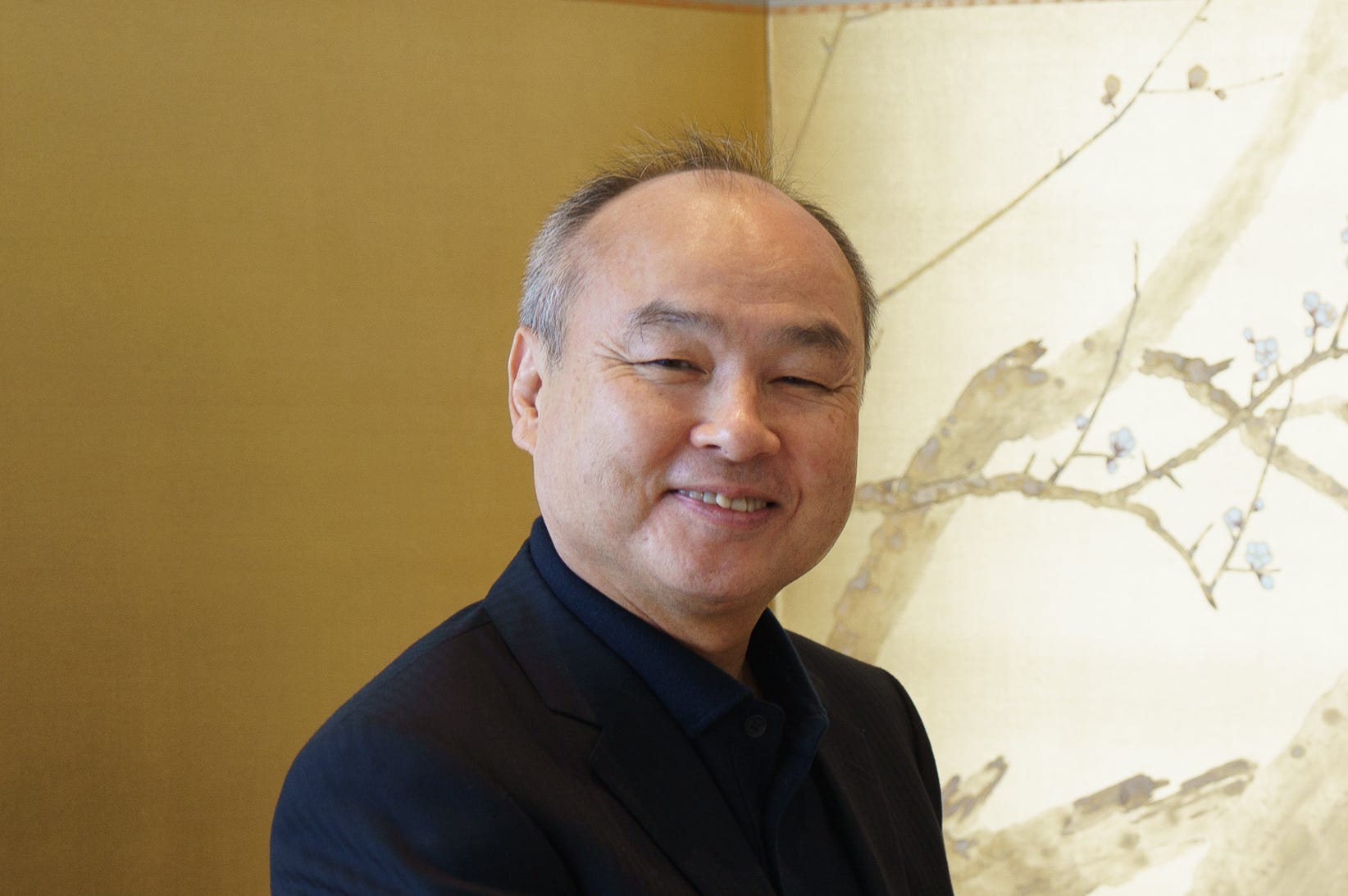
This image is used for illustrative purposes only.
At a Glance
SoftBank, the Japanese tech investment giant led by founder and CEO Masayoshi Son, has committed €75 billion to AI infrastructure in France — with €45 billion earmarked for 3.1 gigawatts of data center capacity in the northern Hauts-de-France region by 2031, across three initial sites: Dunkirk (Loon-Plage), Bosquel, and Bouchain.
The deciding factor, according to Son: France’s electricity supply — abundant, competitively priced, and 95% carbon-free, mostly from nuclear power — which is essential for the energy-hungry data centers that power modern AI systems.
The announcement is set to be formally confirmed at the ninth Choose France summit at the Palace of Versailles on June 1, where President Emmanuel Macron had set out to surpass the record €20 billion in foreign investment pledges secured at the 2025 edition.
Why France — and why now?
The timing is not accidental. Masayoshi Son, speaking in an interview published by the French business weekly La Tribune Dimanche on May 30, said the decision followed his meeting with French President Emmanuel Macron during Macron’s official visit to Tokyo in April. Son said he was struck by Macron’s personal commitment to France’s economic success — a level of engagement that helped shift SoftBank’s focus toward Europe, a continent where the group had previously made few major moves compared to its U.S. and Asian portfolios.
But beyond personal diplomacy, the structural argument Son places at the center of his decision is energy. France is one of the only countries in Europe that both produces and exports electricity at scale, with a grid that is 95% carbon-free — a consequence of its decades-long nuclear program. For data centers of the kind SoftBank plans to build, which consume electricity in quantities comparable to mid-sized cities, that combination of low cost and low carbon intensity is not a marginal benefit: it is a prerequisite for profitability. EDF, France’s state-controlled electricity utility, welcomed the announcement by pointing to the country’s ability to host large-scale digital infrastructure thanks to competitive, sovereign, and low-carbon power.
Three sites, 3.1 gigawatts, and a French industrial footprint
The first tranche — €45 billion by 2031 — takes shape across three specific locations in the Hauts-de-France region. Dunkirk (Loon-Plage), on the northern coast, brings proximity to the port and Atlantic fiber routes. Bosquel, near Amiens in the Somme, and Bouchain, near Valenciennes in the Nord department, where an old thermal power plant site is being repurposed, complete the initial phase. Together, these three campuses are designed to deliver 3.1 gigawatts of computing capacity — roughly equivalent to the electricity consumption of three million households.
The industrial architecture of the project is notably French. EDF is directly involved in the Bouchain data center, while Schneider Electric — the French multinational specializing in electrical equipment and industrial automation — will supply equipment and build a dedicated manufacturing facility at the port of Dunkirk. These partnerships anchor the investment in France’s industrial fabric, not merely on its soil.
The scale still defies easy comparison. At last year’s Choose France summit in May 2025, organizers celebrated a record €20 billion in foreign investment announcements across all sectors combined. SoftBank’s pledge, on its own, more than triples that figure.
What this tells us about the global AI race
The geography of AI infrastructure is shifting. Until now, SoftBank’s largest technology bets were concentrated in the United States, Japan, and Asia — most visibly through its Vision Fund, a roughly $100 billion vehicle that helped define the tech investment cycle of the 2010s, and more recently through its partnership with OpenAI on AI infrastructure in the U.S. A pivot of this magnitude toward continental Europe likely reflects a deliberate effort to diversify away from single-jurisdiction regulatory and geopolitical risk, though Son did not say so explicitly.
France’s nuclear advantage is now a hard economic asset. For years, France’s commitment to nuclear energy was framed as an environmental and energy security debate. The SoftBank announcement translates that debate into a concrete investment decision: when the world’s largest AI infrastructure projects go looking for a home, they follow the electrons. France has them at scale and at price.
The dependency question deserves to be asked. An investment of this size, concentrated in a single foreign private actor, raises questions that official enthusiasm tends to sideline: what binding commitments on local employment, skills transfer, taxation, and data sovereignty accompany these €75 billion? French officials have pointed to job creation and European data sovereignty as guarantees — but the contractual substance of those commitments has yet to be made public. It will determine whether this investment genuinely reshapes the French economy or simply uses French soil — and French electricity — to serve global clients from Tokyo boardrooms.
France may have just secured the leading position in Europe’s AI infrastructure race — before most of its neighbors realized the race had begun.
The Bottom Line
But a project of this scale, financed by a foreign private actor in a region still rebuilding after decades of deindustrialization, leaves an obvious question unasked at Versailles: who actually controls the sovereignty of national infrastructure when it’s Tokyo that signs the checks — and Paris that plugs in the power?
Sources: France Info · AFP · France 24 · TechCrunch · La Tribune Dimanche