
Self-managed and exposed: Clever's "no bosses" blind spots
Denmark's EV charging giant scrapped its management hierarchy.

The story is real — and the European data reveals conditions so specific that the model may be less a blueprint than a product of its time and place.
At a Glance
Clever has built a genuine, documented self-managed structure since 2019 — 500 employees, 50-plus teams, a 92% satisfaction rate in its own internal 2024 audit
The model rests on a uniquely Danish ecosystem: flexicurity labor markets, some of Europe’s highest union membership rates, and exceptional levels of social trust — conditions that Eurofound and OECD data do not find replicated elsewhere at the same intensity
Clever remains a subsidiary majority-owned by Andel (94.9%), a Danish energy distributor: the shareholder ceiling is intact, and the model has no formal legal protection if ownership priorities change
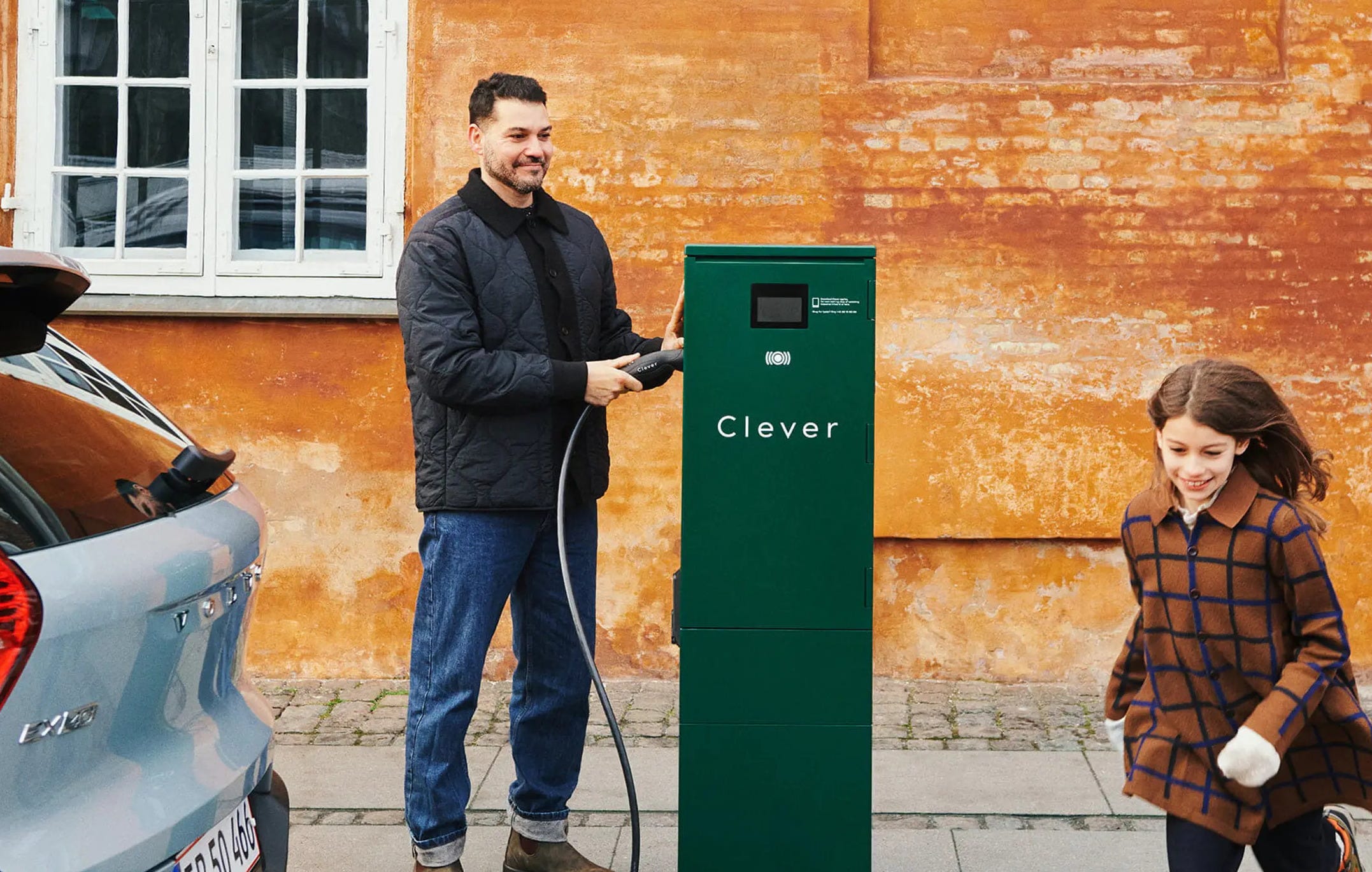
This image is used for illustrative purposes only.
What Clever actually built
One thing the coverage of Clever does not contest: the experiment is real. Since 2019, the company gradually dismantled its management layers, eventually abolishing job titles containing the word “manager” altogether in 2025. Its 500 employees work across more than 50 teams of eight to twelve people, each structured around defined roles — recruitment, HR coordination, budgeting — without any of those roles conferring authority over others.
This is not anarchy, and Clever does not claim otherwise. The model belongs to what organizational theorists call “distributed governance”: written rules, collective decision-making processes, and a heightened sense of individual accountability. Anne-Sophie Dubey, a management researcher at France’s Conservatoire national des arts et métiers (CNAM), a leading public institution for professional and academic training, notes that this type of structure paradoxically requires more formalized rules than a traditional hierarchy — precisely because no one has the authority to override anyone else.
What distinguishes Clever from similar experiments that collapsed is its gradual pace. The transformation unfolded over six years. That is exactly what the implosion of Holacracy at Zappos, the American online footwear retailer, failed to achieve: in 2015, management imposed a full transition to self-governance within months, triggering the departure of a significant share of its workforce.
Why it works in Denmark — and what the European data actually says
The European Working Conditions Survey (EWCS), conducted by Eurofound — the EU agency dedicated to improving living and working conditions — is one of the few sources to measure real workplace autonomy independently and comparatively across the continent. Its findings have been consistent for two decades: Nordic countries, with Denmark at the top, consistently score higher on workplace autonomy than the EU average.
This is not a cultural trait in the vague sense. It has a precise institutional architecture. Denmark practices what economists call flexicurity: a deliberately flexible labor market offset by generous unemployment benefits and heavy investment in lifelong training. This model, built progressively from the 1990s onward, creates career security rather than job security. In an organization without hierarchy, where collective decisions can be wrong, that social safety net meaningfully lowers the personal cost of failure.
Layer onto that a level of institutional trust that ranks among the highest in the world. According to OECD surveys on interpersonal trust, the share of Danes who say they trust most people is substantially higher than in France, Italy, or the United States — a gap that has persisted for decades. That invisible social capital is the lubricant of horizontal organizations: without it, coordination without formal authority generates conflicts that no set of written rules can absorb.
The EWCS data also provides useful context for Clever’s headline figure: 92% of employees say they look forward to coming to work each morning, according to an internal audit conducted in 2024. That is a striking result — and a non-independent one. Eurofound has consistently noted that internal workplace satisfaction surveys systematically overstate scores compared to external measurements, largely due to social desirability bias. This does not mean Clever’s employees are not genuinely satisfied. It means 92% is a floor, not a ceiling — and it cannot be directly compared to European benchmarks without methodological caveats.
The shareholder ceiling
The Euronews article mentions, almost in passing, that Andel — a Danish energy distributor — has owned Clever since 2018, and that it has committed to leaving the unconventional structure intact after the founder’s departure. That sentence is the most important in the piece. It receives the least development.
Andel holds a 94.9% stake in Clever (with NRGi holding the remaining 5.1%). In any self-managed organization that lacks its own formal legal protections — cooperative status, employee equity, worker veto rights on strategic decisions — the shareholder retains ultimate sovereignty. It could, tomorrow, appoint a chief executive, demand restructuring, or pursue a merger. The commitment to “not touch” the unconventional model is a statement of intent, not a legal constraint.
The contrast with Buurtzorg is instructive. Buurtzorg, the Dutch nursing organization widely cited as a successful model of self-governance, operates under a non-profit organizational structure whose model is embedded in its legal form. Clever, by contrast, is a subsidiary whose self-management culture rests on its shareholder’s goodwill.
European Parliament research on worker participation consistently shows that companies with formal co-determination rights — such as German firms where employees sit on supervisory boards — demonstrate significantly greater resilience to governance shocks than companies whose self-management depends on culture alone. Clever has no co-determination. It has a culture. Those are not the same thing.
The AI argument: instinct or analysis?
Casper Kirketerp-Møller, Clever’s co-founder who stepped away from the company in June 2026, justified his model with a thesis about the future of work: in a world where AI handles “everything related to efficiency,” human skills and the human dimension of business will be what allows companies to thrive.
It is a widely shared intuition. But its application to Clever specifically deserves scrutiny. OECD reports on automation show that exposure varies dramatically by sector. Deploying and maintaining EV charging infrastructure involves substantial manual skilled work, on-site intervention, and customer relations — tasks that current AI models do not replace in the near term.
Meanwhile, some of the functions that Clever has redistributed to its self-organized teams — administrative coordination, HR processes, internal budgeting — are among the most exposed to automation according to those same OECD reports. A potential paradox emerges: by redistributing administrative tasks to its operational employees, Clever may have created a more resilient organization in the short term while simultaneously distributing the tasks most likely to be automated first. Kirketerp-Møller’s AI argument justifies the model by invoking precisely the dynamic it does not resolve.
Analysis
The longer arc. Clever did not emerge from nowhere. It sits within a lineage stretching back to Ricardo Semler’s Semco in Brazil, Isaac Getz’s concept of the liberated company in France, Buurtzorg in the Netherlands, and the ill-fated Holacracy experiment at Zappos in 2015. What that trajectory teaches is straightforward: horizontal organizations tend to endure when they have legal anchoring, a founder-architect who remains long enough for the culture to solidify, or a scale that makes coordination without hierarchy naturally manageable. Clever partially met the second condition — and its founder just left.
Power without a title. In an organization without managers, power does not disappear — it redistributes. Research on horizontal organizations, including work by Helge Hvid at Denmark’s Roskilde University, suggests that peer pressure often replaces hierarchical pressure, sometimes with greater intensity. The absence of a visible boss does not guarantee the absence of domination: it can simply make it harder to identify and challenge.
The public dimension. EV charging infrastructure in Europe is partly supported by public funds, in the framework of the EU’s climate and mobility targets. A self-managed model that genuinely improves employee engagement may translate into better service quality. But a model without formalized crisis governance could also generate decision-making paralysis at precisely the moments when it is least tolerable.
Self-management without formal worker rights over strategic governance is, ultimately, a company culture granted by a shareholder — and therefore revocable by one.
The Bottom Line
Clever has proven something meaningful: a 500-employee industrial company can function without formal management hierarchy, with high engagement levels and apparently sustained productivity. That is a genuine contribution to the debate on how organizations can be structured.
But the experiment raises a question that the enthusiasm around it tends to sidestep. Self-management without formal worker rights over strategic governance is, ultimately, a company culture granted by a shareholder — and therefore revocable by one. If Andel changes hands, if results deteriorate, if a new board decides the experiment has run its course: what recourse do Clever’s 500 employees have? Nothing in the available record suggests a clear answer.
The real question Clever poses is not managerial. It is political: can self-management be meaningful without co-determination? And if not, why does the European debate on worker participation remain so quiet in the face of inspirational stories about liberated companies?
Sources: Eurofound — European Working Conditions Survey (EWCS) · OECD Employment Outlook — The Future of Work · Statistics Denmark / Eurostat — Danish labor market data · European Parliament Research Service (EPRS) — worker participation and co-determination · Euronews / AFP, June 17, 2026