
Sarkozy faces his judges: a verdict six months away
France's former president makes his final plea before an appeals court. Prosecutors demand seven years. November 30 will set a precedent.

Nicolas Sarkozy took the floor for the last time before his judges on Wednesday, May 27, with the demeanor of a man who knows his freedom hangs on the next six months. Emotional, tight-jawed, and at moments darkly ironic, the former French head of state closed more than thirteen years of legal proceedings with a plea as personal as it was political: to be judged “like anyone else.” The Paris Court of Appeal will deliver its verdict on November 30, 2026.
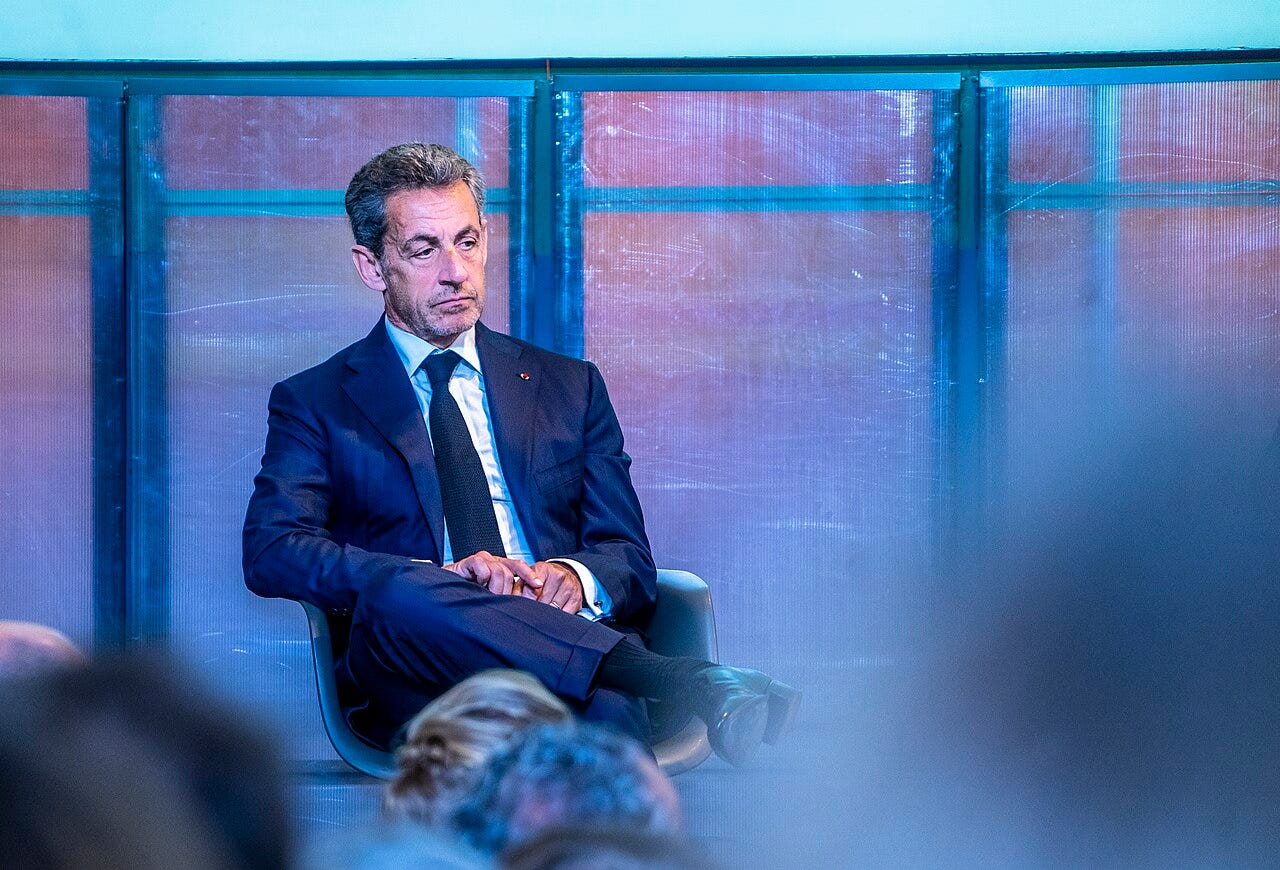
This image is used for illustrative purposes only.
At a Glance
Defense lawyers demanded Sarkozy’s full acquittal, arguing that after thirteen years of investigation, prosecutors have built their case on presumptions rather than hard evidence.
The prosecution is holding firm: seven years in prison on charges of conspiracy, corruption, illegal campaign financing, and handling misappropriated Libyan public funds.
The ruling comes November 30, 2026 — six months of waiting for a man who has already spent nearly three weeks behind bars and fears he may go back.
A state affair, thirteen years in the making
The so-called Libyan financing case traces back to the 2007 presidential campaign. According to prosecutors, Nicolas Sarkozy — France’s president from 2007 to 2012 — allegedly struck a corruption deal with Libya under Muammar Gaddafi, the dictator killed during the 2011 uprising. In exchange for illegal campaign financing, he is accused of granting diplomatic favors, including favorable consideration of the judicial situation of Abdallah Senoussi, a Libyan general convicted for the 1989 bombing of a UTA DC-10 aircraft that killed 170 people over Niger.
The judicial inquiry — conducted by an investigating judge, a French procedural mechanism that functions somewhat like a federal grand jury investigation in the U.S., though with significantly broader inquisitorial powers — lasted more than a decade. At trial, Sarkozy was sentenced to five years in prison with immediate provisional enforcement of the sentence. He was held at La Santé prison in Paris for nearly three weeks before being released on judicial supervision pending the current appeal.
A defense built on the fragility of the prosecution
The strategy of Sarkozy’s four defense attorneys on Wednesday was coherent and aggressive: challenge not the peripheral facts, but the legal foundation of the central charge. Attorney Christophe Ingrain took aim at the “criminal association” count — a charge under French law that allows conviction for participation in a criminal scheme even without proof of a specific act. He argued that prosecutors had resorted to it to “fill the gaps” in a case that, after thirteen years of investigation, rests on circumstantial inference rather than direct evidence.
This criticism carries legal weight. Association de malfaiteurs — criminal association — is what French practitioners sometimes call a “rescue offense”: it enables conviction when participation in a criminal project is established, even if the underlying act is not directly proven. Its use in politically complex cases regularly triggers debate about the legitimate reach of criminal prosecution.
The defense also raised a democratic counterargument: if the 2007 campaign had been “rigged” by foreign money, how does one explain the 84 percent voter turnout at the decisive second round — one of the highest turnout figures in the history of the Fifth Republic? Sarkozy’s own question to the court — whether French voters had been “deceived by Gaddafi’s money” — crystallized the tension between criminal logic and the political reality of that election.
Power mechanics: why the prosecution won’t back down
The prosecution has maintained its sentencing demands unchanged from the original trial: seven years in prison. That consistency is worth examining. It could reflect genuine legal confidence in the strength of the case — or signal an institutional logic of its own, in which a prosecution that has carried this case for years cannot retreat without significant symbolic cost.
The nature of the affair lends it a political dimension that judicial actors officially ignore but no serious observer can dismiss. Sarkozy is the only former French head of state to have been held in provisional detention under this case — which, without prejudging the merits, places this trial in a category apart in the judicial history of the Fifth Republic, the constitutional framework France has operated under since 1958.
The case also carries the weight of the civil plaintiffs: the families of the 170 victims of the UTA bombing, who since 1989 have sought definitive clarity on the political arrangements surrounding Senoussi. For them, this is not a campaign finance case — it is a question of truth about a mass atrocity.
The real question: can you convict without direct evidence?
The deeper issue this trial raises goes beyond Nicolas Sarkozy. It poses a structural question about how criminal justice handles politically complex cases — opaque by nature, where direct evidence is scarce and circumstantial inference is abundant.
Ingrain closed his argument by quoting Dostoevsky’s Crime and Punishment — the principle that no accumulation of circumstantial evidence can substitute for proof. Whether converging presumptions are sufficient to sustain a criminal conviction is precisely what the appeals court must decide.
For American readers, the closest analog is the federal RICO statute — the Racketeer Influenced and Corrupt Organizations Act — which allows prosecution of participants in a criminal enterprise even without proof of a specific underlying act. The structural parallel with France’s association de malfaiteurs charge is real, and both systems face the same foundational debate about whether such broad conspiracy theories stretch criminal liability beyond its legitimate bounds.
How does a democracy judge its former leaders without turning justice into politics — or politics into justice?
The Bottom Line
On November 30, 2026, the Paris Court of Appeal will say whether more than thirteen years of investigation were enough to prove, beyond reasonable doubt, that Nicolas Sarkozy sold part of French sovereignty to finance his election. An acquittal will raise questions about the quality of the inquiry. A confirmed conviction will set a precedent with no equivalent in French democratic history. Either way, the underlying question remains unresolved: how does a democracy judge its former leaders without turning justice into politics — or politics into justice?
Sources: France Info