
Rwanda Genocide Memorial Opens in Paris
France inaugurated The Archive, a memorial to Rwanda's Tutsi genocide victims, on June 2 — the latest step in Macron's fraught reconciliation with Kigali.

At a glance
On June 2, 2026, France inaugurated The Archive, a monument to the victims of the 1994 genocide against the Tutsi in Rwanda, on the banks of the Seine in Paris — the first permanent public memorial of its kind on French soil.
The ceremony comes five years after Macron, in a landmark 2021 speech in Kigali, acknowledged France’s “overwhelming responsibilities” in the genocide — stopping short of a formal apology, and rejecting direct complicity.
The Franco-Rwandan relationship remains complicated: Rwanda’s ongoing military support for M23 rebels — an armed group fighting in eastern Congo that the United Nations and Western governments say receives direct Rwandan military backing — has slowed deeper diplomatic normalization, while judicial proceedings against alleged génocidaires (perpetrators of the genocide) continue in France.
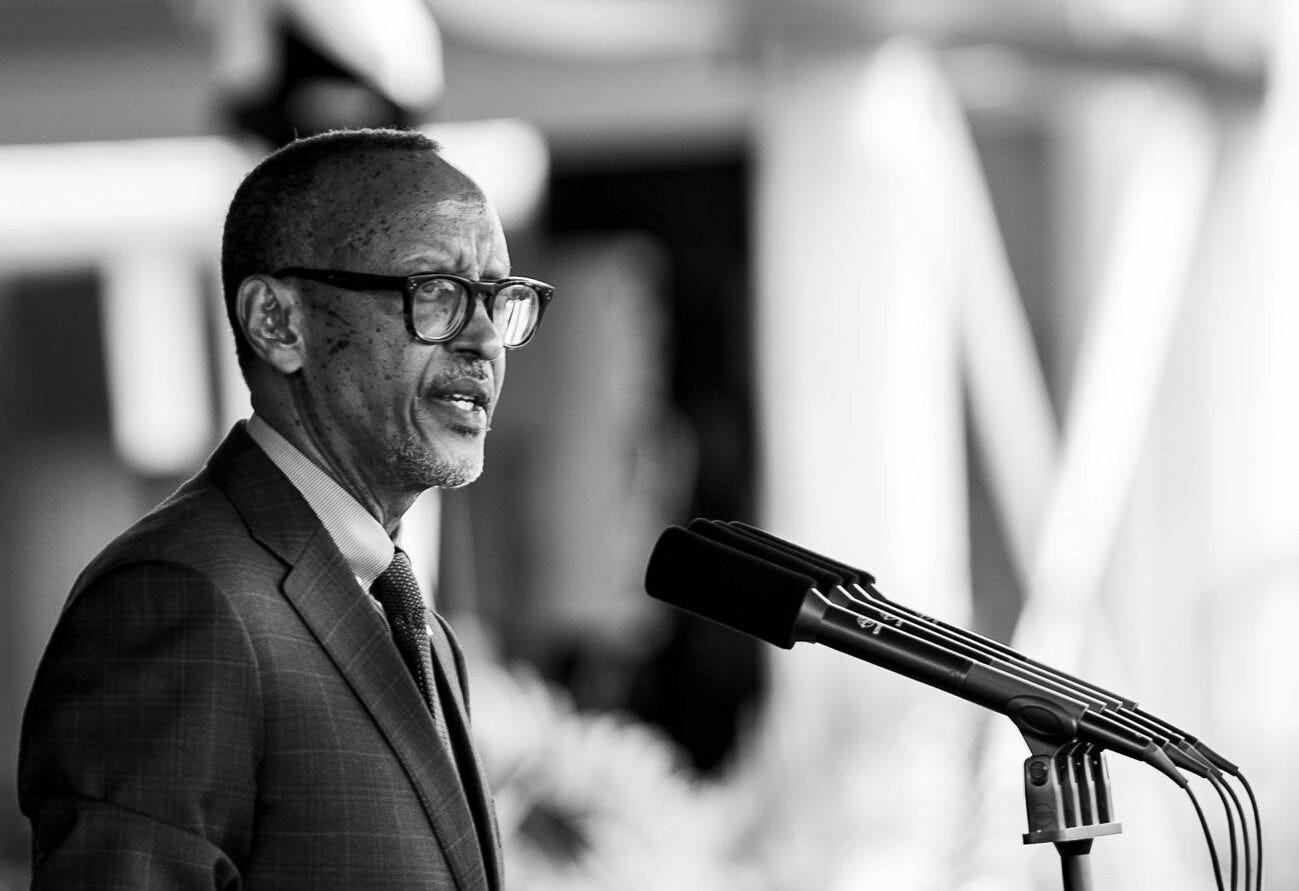
This image is used for illustrative purposes only.
A monument, thirty years of silence
The Seine runs alongside the Esplanade Habib-Bourguiba in central Paris. It is there — a few hundred meters from the French Foreign Ministry and the Élysée Palace — that two blocks of black brass now stand permanently in the cityscape. The inscription carved into them is spare, almost whispered: Here, like an archive, rest the voices and words, the memories and experiences, the feelings and hopes of the victims and survivors.
More than three decades after the massacres of April through July 1994 — which killed at least 800,000 people (a figure widely accepted internationally, though some Rwandan sources place the death toll above one million), overwhelmingly members of the Tutsi minority, in a hundred days of slaughter orchestrated by Hutu extremists — France now has an official memorial site dedicated to this genocide. Built at the initiative of the French state and the City of Paris, and designed by Portuguese artist Grada Kilomba, The Archive is not a mausoleum. In Macron’s words at Tuesday’s ceremony — “a milestone on a path that we have opened” [translated from French] — not a conclusion.
The long road to a partial reckoning
The location of the monument is not incidental. The Élysée itself pointed out that this site stands next to the “centers of power that bore witness to their own failure” during the genocide. France maintained close ties with Rwanda’s Hutu-led government at the time. Accusations of complicity, pressed for years by Paul Kagame — himself the former commander of the Tutsi rebel movement, the Rwandan Patriotic Front (RPF), which ended the killings — poisoned bilateral relations to the point of a full diplomatic rupture between Paris and Kigali from 2006 to 2009.
The turning point came in 2019, when Macron commissioned a panel of historians chaired by researcher Vincent Duclert. Their findings, released in 2021, established France’s “overwhelming responsibility” — a government blinded by a neo-colonial posture that had failed to anticipate the genocide. Direct complicity was ruled out. Macron incorporated those findings into a historic speech in Kigali, acknowledging France’s “responsibilities” without ever using the word “apology,” while saying he hoped survivors would find it in themselves to forgive.
The careful choice of language — responsibility rather than complicity, acknowledgment rather than apology — is deliberate. It could be read as a way to advance the moral reckoning without triggering potential legal consequences, while crossing a symbolic threshold that none of Macron’s predecessors had cleared.
Survivors speak, questions remain
Tuesday’s ceremony was not a piece of diplomatic theater. Jeanne Uwimbabazi, a genocide survivor, took the podium. She was 16 in April 1994. Her family was massacred. She described the “abandonment” by United Nations peacekeepers, who left Tutsi civilians terrified inside a school surrounded by Hutu militiamen:
“Their mere presence would have been enough to protect us.”
In a voice close to breaking, she said: “I still wonder what the chain of responsibility was.”
Franco-Rwandan musician and writer Gaël Faye read a poem by Beata Umubyeyi Mairesse, herself a genocide survivor. On the sidelines of the ceremony, Faye expressed his vigilance against revisionism: “Denialism is still at work, and we need to consolidate this memory — because you never know who might come to power, what might change in official discourse.” [translated from French]
Marcel Kabanda, president of Ibuka France — the main organization dedicated to genocide remembrance, justice, and support for survivors — called the day “oxygen,” after decades during which civil society had carried “this fight alone.” [translated from French]
What the monument does not resolve
The inauguration of The Archive is a step in an unfinished process, not a diplomatic endpoint.
The Franco-Rwandan relationship remains complicated by Rwanda’s role in the conflict in the neighboring Democratic Republic of Congo. That issue has slowed reconciliation efforts in recent years and places a ceiling on symbolic gestures.
On the judicial front, prosecutions in France of alleged perpetrators continue to multiply. In early May 2026, French magistrates called for continued investigations into the potential involvement of former Rwandan First Lady Agathe Habyarimana in the genocide. These proceedings reflect genuine institutional commitment — and work that is far from finished.
Kagame was pointed in his remarks Tuesday. He told Macron: “Assuming historical responsibility requires real courage — and it takes great humanity to go all the way. I want to congratulate you for both.” He then added, in words directed well beyond Paris: “France was not the only country to have failed. Many others failed too. But none has gone as far to restore the truth and acknowledge its share of responsibility for the tragedy.” [translated from French]
Analysis — Memory as foreign policy
The United States offers an instructive parallel. In 1994, the Clinton administration spent months refusing to call what was happening in Rwanda a genocide, wary of triggering legal obligations to intervene. Clinton would later describe that inaction as one of his greatest regrets — suggesting that the passivity of 1994 was not a French monopoly, even if the French role was more direct.
What distinguishes France’s approach is its institutionalization: a historians’ commission, a presidential speech in Kigali, and now a permanent monument in the capital. This triptych constructs a state-sanctioned memory — structured, durable, and potentially replicable. Or, as Gaël Faye feared, reversible.
The site’s location, wedged between the Élysée and the Quai d’Orsay — France’s foreign ministry — says something more than geography. It inscribes failure into the topography of power. It is a permanent reminder, addressed to those who govern, of the cost of indifference.
The question that remains open is whether France’s acknowledgment of the Tutsi genocide will influence how the international community responds to future genocidal risks — or whether it will remain a domestic memorial exercise, turned toward the past rather than toward prevention.
The Bottom Line
Thirty-two years after the massacres, France has a permanent memorial. That is real progress. But Jeanne Uwimbabazi is still asking about “the chain of responsibility.” And Gaël Faye is already worried about what comes after Macron. Institutional memory is never irreversible — it is only as solid as the political consensus that sustains it. The Archive is a milestone, not a guarantee.
Sources: France 24 · France Info · AFP