
Rutte in Kyiv: Russia is "increasingly desperate"
NATO chief Mark Rutte made a surprise visit to Kyiv on June 3, declaring Russia "increasingly desperate" — even as the war shows no sign of stopping.

At a Glance
Mark Rutte, NATO’s secretary general, arrived in Kyiv on June 3, 2026, on an unannounced visit — one day after a Russian strike killed 23 people in the Ukrainian capital and the city of Dnipro.
Standing alongside President Volodymyr Zelensky at a joint press conference, Rutte said Russia is facing heavy military losses and severe economic strain, even as Western sanctions on Russian oil and gas exports have been partially eased.
The war, now in its fifth year, “shows no signs of stopping,” Rutte acknowledged — a candid admission as U.S.-brokered peace talks remain stalled.
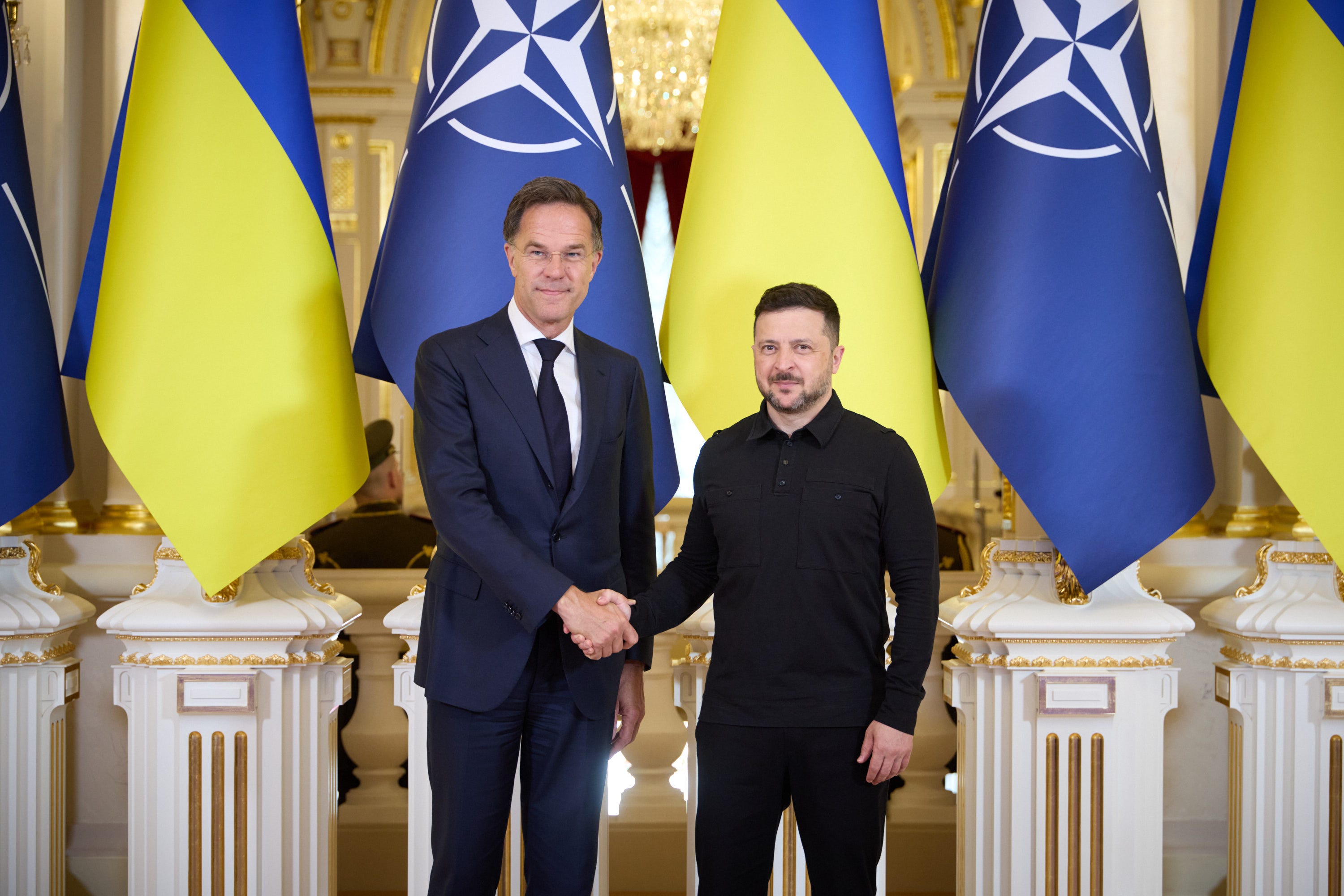
This image is used for illustrative purposes only.
A visit timed for maximum signal
Mark Rutte — NATO’s secretary general and former prime minister of the Netherlands — did not arrive in Kyiv by accident on June 3, 2026. His unannounced train journey to the Ukrainian capital came one day after a Russian drone-and-missile barrage killed 23 people across Kyiv and the industrial city of Dnipro, in eastern Ukraine. Hours before his arrival at Kyiv’s main rail station, Ukrainian drones had struck energy infrastructure and military sites in Saint Petersburg — precisely on the opening day of the city’s International Economic Forum, where some 20,000 guests from 130 countries were expected.
That dual backdrop — a Russian mass-casualty strike on Ukrainian civilians, followed by a Ukrainian counterstrike on Russian soil — gave the visit both symbolic and strategic weight. It was a gesture of solidarity, but also a signal sent to Moscow at the precise moment its economic showcase was, quite literally, on fire.
A two-front assessment
At a joint press conference with President Zelensky, Rutte offered a two-part diagnosis. Militarily, he said Ukraine is achieving “increasing success, both on the front line and in neutralizing some of the key Russian capabilities needed to continue the war.” On the economic front, he said Russia’s economy is “under severe strain” — and that this is true despite the partial easing of Western sanctions on Russian hydrocarbon exports.
That last point matters. Sanctions on Russian oil and gas have been partially relaxed as part of negotiations brokered by Washington — a concession that has drawn criticism from several alliance members. Rutte’s framing could amount to a vindication of the sustained-pressure strategy championed by the alliance’s most hawkish members, though the position of specific capitals was not addressed at the press conference.
It is worth noting that Rutte’s assessment reflects the institutional posture of a NATO secretary general whose mandate requires visible support for Ukraine. His statements about the state of the Russian economy and military losses were not accompanied by publicly verifiable data at the time of the press conference.
No end in sight
The most significant — and least-noticed — line from Rutte may have been his acknowledgment that the war “shows no signs of stopping.” That frank admission, from the head of the alliance backing Ukraine militarily, signals that hopes for a swift resolution have collided with an unyielding battlefield reality.
U.S.-mediated peace talks, described as “at a standstill,” reflect a familiar deadlock: Moscow maintains territorial demands that Kyiv finds unacceptable, while Ukraine refuses any ceasefire that would codify Russia’s current gains. In that context, Rutte’s visit performs a function that diplomacy alone can no longer deliver — demonstrating the permanence of Western commitment, even when the road to peace is blocked.
Zelensky, for his part, has continued to press NATO members to help protect Ukraine from Russian ballistic missile attacks, underscoring the persistent vulnerability of Ukrainian cities — including the capital — more than four years into the conflict.
Analysis: the paradox of Russian desperation
Rutte’s central claim — a Russia “increasingly desperate” — deserves careful weighing. It is plausible given the heavy human losses sustained by the Russian military since 2022 and the inflationary pressures documented in the Russian economy. But it could also reflect an optimistic reading calibrated to shore up political support within the alliance.
What is established: Russia has suffered significant military losses over more than four years without achieving its original objectives — the rapid capture of Kyiv and the collapse of the Zelensky government. What remains to be established: whether those losses translate into a durable erosion of Russian operational capacity, or whether they are being offset by forced mobilization of manpower and industrial resources.
Russia’s economic stress is real — the country’s central bank has had to raise interest rates sharply to contain inflation, and military spending has placed the budget under sustained pressure. But Russia continues to finance its war, in part through hydrocarbon revenues that sanctions have not succeeded in cutting off entirely.
The deeper question, which Rutte’s visit does not resolve, is this: at what threshold of Russian “desperation” is the alliance prepared to negotiate? And who gets to define that threshold — the Ukrainians, Washington, or European capitals?
The Bottom Line
Rutte’s visit sends one clear message in the short term: NATO is not abandoning Kyiv. But behind the rhetoric of Russian desperation lies a harder question —
If Russia is truly losing its footing, why is the war intensifying? And if it isn’t, what does that say about four years of Western strategy?
That answer won’t come from a train platform in Kyiv. It will come from the front line, one strike at a time.
Sources: Euronews · France 24 · AFP