
Russia's shrinking skies: below Soviet-era levels

As of June 2026, Russian citizens will have access to direct flights in just around 30 to 32 countries at most — roughly a quarter fewer than last winter, and well below what Soviet Aeroflot offered at the height of the Cold War. What that number actually reveals about a regime at war.
At a Glance
Starting June 2026, Russians will be able to fly direct to around 31 to 32 countries at most — down from 43 last winter, a drop of roughly 25 percent in just a few months. The final figure remains uncertain pending a possible addition of Saudi Arabia to the summer schedule.
Russia’s own travel industry association acknowledges that Soviet-era Aeroflot served two to three times as many destinations in the 1980s, operating between 80 and 100 international routes.
Of those remaining destinations, only around 15 are considered viable for mainstream tourism — the real ceiling for ordinary Russian families looking to travel abroad.
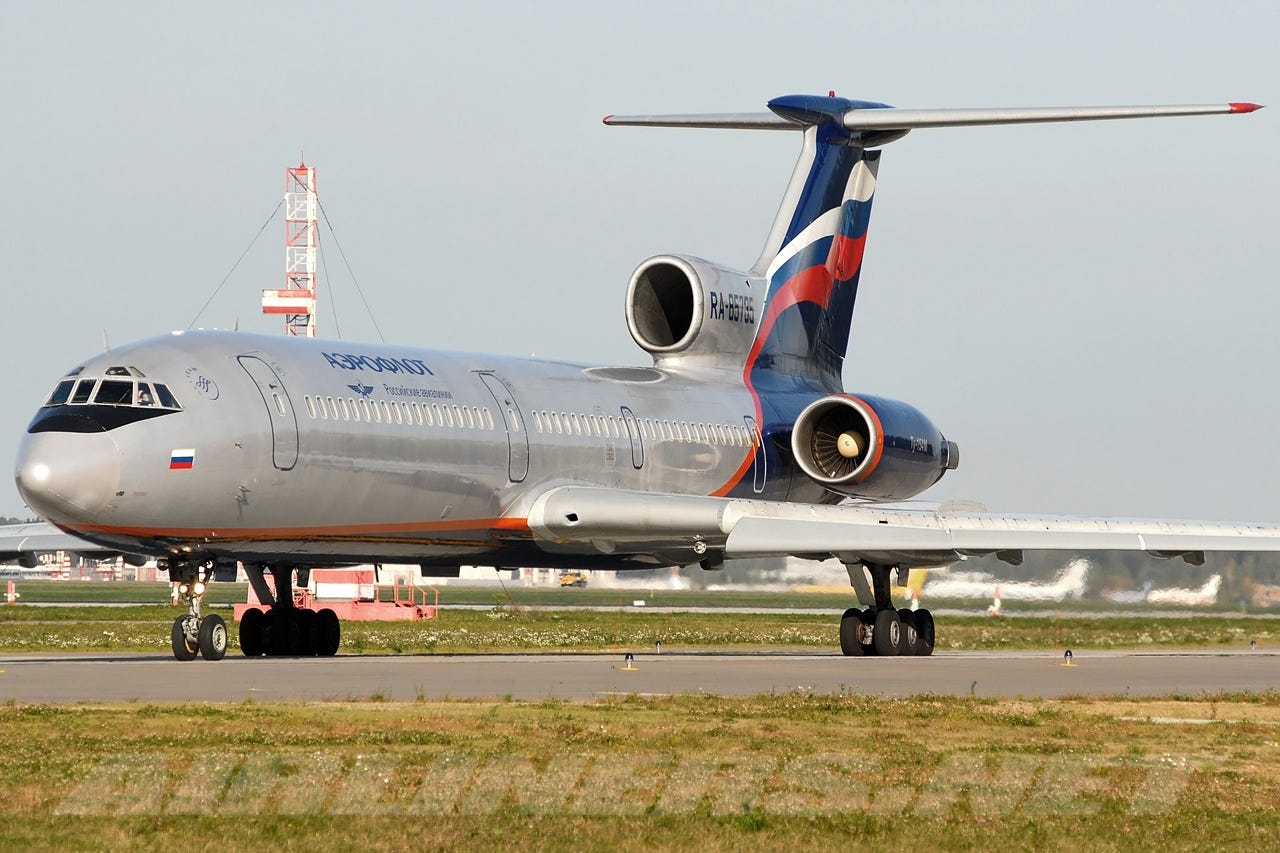
This image is used for illustrative purposes only.
Worse off than under Brezhnev
The figure is striking — and it comes from Russia itself. ATOR, the Association of Tour Operators of Russia, the country’s main professional body for the travel industry, has calculated that Soviet citizens in the 1980s had access to more direct international flights than Russians do today. Aeroflot, then the state monopoly, served between 80 and 100 countries — though ATOR itself notes that a significant portion of those routes were, technically, domestic flights to Soviet republics that have since become independent states, which inflates the historical comparison somewhat.
Today, that network has collapsed to around 31 to 32 destinations at most for the coming summer — down from 43 still reachable last winter, with Saudi Arabia’s inclusion still unconfirmed. The trend is unmistakable.
Why the official explanations fall short
ATOR attributes the disappearing routes to seasonality, rising fuel costs, unspecified “geopolitical factors,” and disruptions stemming from the Middle East crisis. The formulation — carefully decoupled from Russia’s war against Ukraine — is itself revealing of the constraints on professional communication inside Russia. The war, now in its fifth year, is not named. Yet it is the structural driver behind the network’s collapse: the closure of European airspace to Russian aircraft triggered a cascading effect that other countries and airline partners subsequently reinforced. This broader dynamic goes unmentioned in Russia’s industry communications, though it appears to be the determining factor behind the sustained erosion of the route map.
Rising ticket prices — compounded in some cases by tightened visa requirements — have further suppressed outbound demand, eroding the commercial viability of additional routes.
An uneven collapse: who still flies and where
Among the destinations still reachable, two distinct categories have emerged. The first comprises what might be called refuge destinations — countries that declined to apply Western sanctions and have continued to absorb the bulk of Russian outbound tourism: Turkey and Egypt, along with Vietnam and China, where Russian tourist flows have grown in recent years. The second category covers a range of partner or neutral countries whose appeal for mainstream vacationers is limited.
Of the full list, only around 15 are considered suitable for mass tourism — a figure that meaningfully narrows the effective choice for Russian families. ATOR has not ruled out additional routes being announced before summer — Zanzibar and Tunisia have been mentioned — but those prospects remain uncertain.
Analysis: air connectivity as a regime indicator
What this contraction reveals goes well beyond the question of leisure travel. A country’s international air connectivity is one of the most direct barometers of its integration into the global system. When it contracts this sharply — and falls below Soviet-era levels — that is not a scheduling anomaly or a fuel-cost footnote.
For a North American reader, a useful frame of reference is a country operating under a partial, decentralized air embargo: not the result of a single formal international decision, but the cumulative effect of dozens of sovereign choices by individual states and airline operators, each of which has, one by one, closed its skies or markets to Russian carriers. It functions, in practice, as a de facto embargo — progressive, deepening, and self-reinforcing.
This dynamic could signal something structurally significant: the cost of war is no longer purely military or budgetary. It is beginning to register in the daily geography of Russian citizens’ lives. The urban middle classes — historically the most internationally mobile and globally connected segment of Russian society — are the first to feel its concrete effects. Whether that lived experience of geographic contraction eventually translates into political pressure on the regime is a question the available data cannot yet answer. The relationship, if it exists, remains to be established.
The Soviet Union built its isolation by ideology. Russia in 2026 is reconstructing it through the consequences of a war it chose to launch.
The Bottom Line
The open question is at what point this contraction — spatial, economic, symbolic — stops being experienced as patriotic sacrifice and starts being felt as regression. That threshold, no one can yet locate.
Sources: Euronews · Association of Tour Operators of Russia (ATOR)