
Russia's shadow fleet: France seizes the Tagor in the Atlantic
French Navy commandos boarded another sanctioned Russian tanker in the Atlantic on the morning of Sunday, May 31.

It is the fourth such seizure in nine months — and a growing test of how seriously Europe enforces its own sanctions.
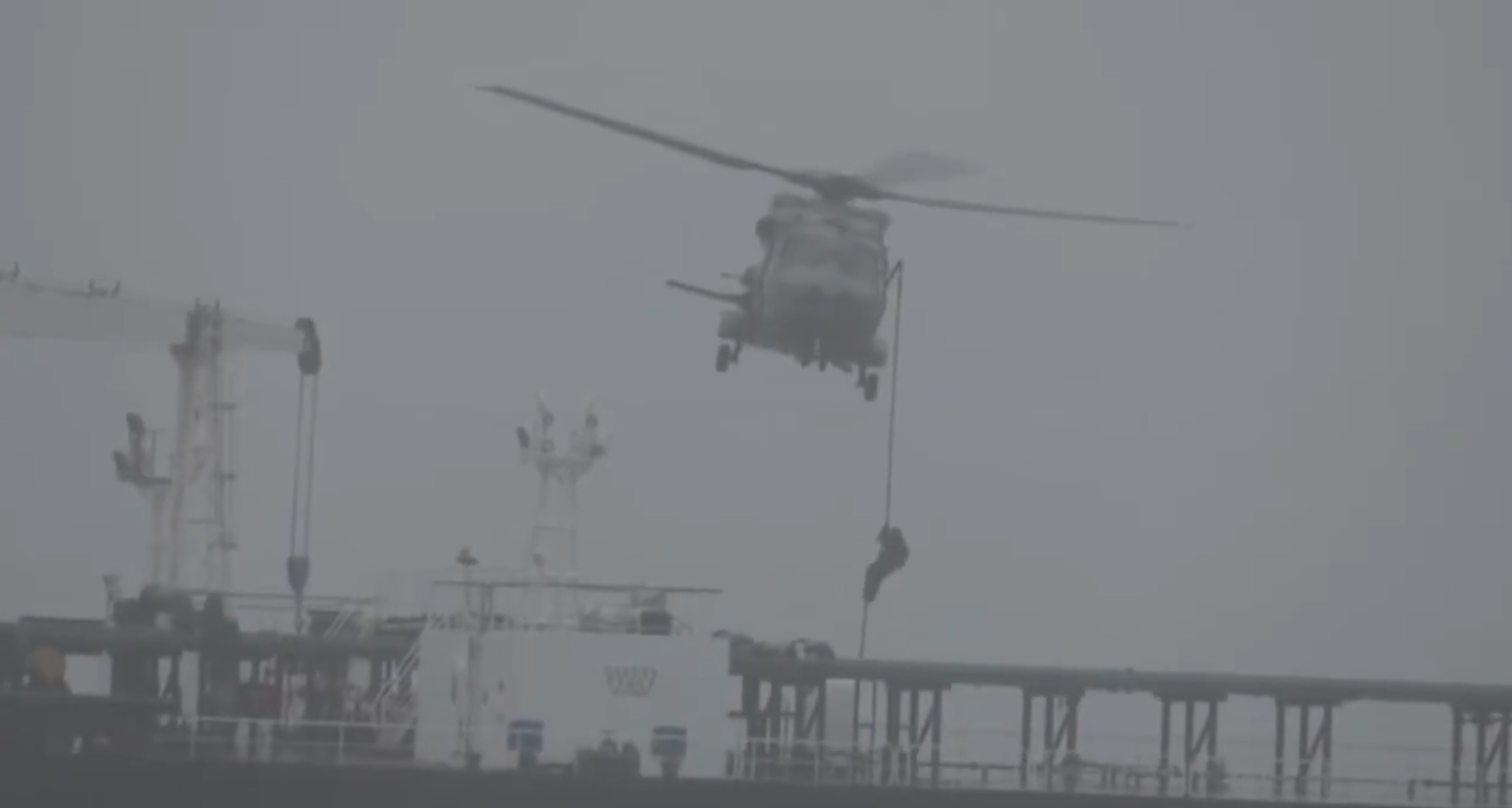
This image is used for illustrative purposes only.
At a Glance
The French Navy intercepted the Tagor — a Madagascar-flagged tanker under international sanctions, loaded with Russian crude from Murmansk — in open waters more than 400 nautical miles west of Brittany on the morning of May 31, 2026, with British support. The vessel was redirected to a French military port for investigation.
It is France’s fourth shadow fleet seizure since September 2025, following the Boracay off Saint-Nazaire, and the Grinch and Deyna in the western Mediterranean. Previous vessels were released after their owners paid fines.
The European Union has now sanctioned more than 600 ships suspected of belonging to Russia’s shadow fleet, the network of opaque vessels Moscow uses to export oil and fund its war in Ukraine.
How the shadow fleet works
Russia responded to the Western sanctions imposed after its February 2022 invasion of Ukraine with a form of maritime engineering. Unable to rely on major tanker fleets subject to Western insurance and tracking standards, Moscow deploys aging vessels, often registered under flags of convenience (shipping registrations in countries with lax regulatory oversight), or carrying fraudulent navigation identities. These ships frequently change flags — the Tagor itself had a history of flag changes and was linked to managers based in the United Arab Emirates — and sometimes transfer cargoes at sea to obscure the origin of the crude oil. French authorities found an “irregularity of flag” aboard the vessel, suspected of flying a Malagasy registration it was not entitled to use.
The economic stakes are significant. Oil exports are one of the Russian federal budget’s primary revenue sources. By disrupting them, sanctions aim to drain the Kremlin’s war-making capacity. But as long as ships continue delivering Russian crude to third-party buyers — primarily in Asia — the effectiveness of the sanctions regime remains limited.
France on the front line of a European strategy
The seizure of the Tagor is not an isolated incident. It reflects an active sanctions-enforcement doctrine France has steadily built since the fall of 2025. In September 2025, the Boracay was intercepted off the port of Saint-Nazaire, France’s major Atlantic shipbuilding hub; its captain was subsequently prosecuted for failing to comply with orders. In January 2026, the Grinch was seized in the western Mediterranean, between Spain and Morocco, and released in February after its owner paid a fine of several million euros. In March, the Deyna — a Mozambique-flagged vessel — was intercepted in the western Mediterranean in a French-led operation with British support. Each intervention was conducted under international maritime law.
Britain’s recurring role alongside the French Navy is no accident. It points to growing bilateral coordination between Paris and London on sanctions enforcement at sea — two naval powers that, despite the turbulence of post-Brexit relations, maintain dense defense cooperation, particularly in Atlantic and Mediterranean waters.
France’s approach could suggest a deliberate effort to set an operational precedent: demonstrating that sanctions are not merely about adding names to blacklists, but come backed by a physical interception capability. Whether that signal is intended as much for Moscow as for third-party states facilitating oil transactions that circumvent Western restrictions remains an open question.
Are sanctions without enforcement really sanctions?
The G7 sanctions regime caps the price of Russian oil at $60 per barrel for transactions involving Western shipping and insurance services. In practice, estimates suggest Russia sells a significant share of its exports above that threshold, through intermediaries who bypass verification mechanisms. The shadow fleet is the primary instrument of that circumvention — and the Tagor‘s cargo was likely priced above the cap.
What France’s seizures reveal is a structural gap in the sanctions framework as designed: the legal instruments exist, but their enforcement at sea remains sparse, dependent on the political will of a handful of national navies. More than 600 vessels are sanctioned by the EU; the broader shadow fleet is estimated at between 800 and 1,200 ships. Four seizures in nine months is a strong political signal. It is also a marginal fraction of the overall traffic.
The underlying question is not military. It is diplomatic: how far are Europeans willing to push active sanctions enforcement, and at what risk of friction with the port states these vessels call on?
Every seized tanker is a symbolic win and one less source of war financing — at the margin. But Russia’s shadow fleet numbers in the hundreds.
The bottom line
Can France — does France want to — industrialize this interception strategy? And if so, will Europe follow, or leave Paris to act alone, claiming the benefit of a maritime sovereignty doctrine that other capitals enjoy without bearing its cost?
Sources: France Info · Euronews