
Russia's oil windfall masks a cracking economy

Russia is cashing in on surging energy exports fueled by the Iran conflict — but beneath the petrodollar gloss, the fundamentals are deteriorating: a contracting GDP, mounting fiscal pressure and deep technological dependency.
At a Glance
Russia’s GDP shrank 0.2% in the first quarter of 2026 — its first contraction in three years — squeezed between the cost of war and sanctions-eroded export revenues
To fill the gap, Moscow has raised the VAT from 20% to 22% on most goods, hitting businesses and households hardest
A structural reliance on Chinese components — from missile guidance chips to civilian aircraft parts — is locking Russia into an energy-price dependency it cannot escape on its own
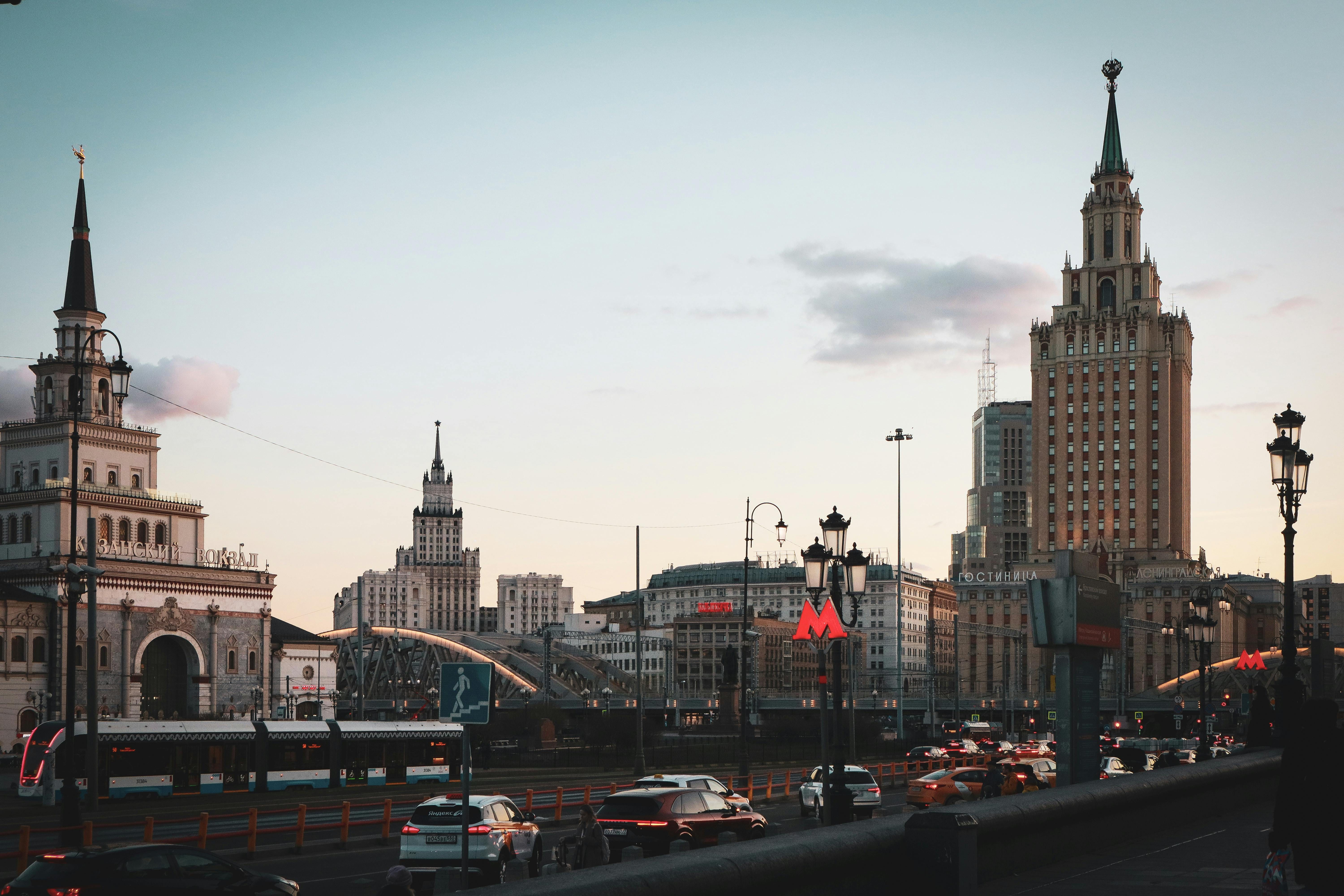
This image is used for illustrative purposes only.
A wartime budget that’s starting to cost
Russia is enjoying an unexpected energy windfall. The conflict in Iran has driven up global demand for hydrocarbons, and Moscow is capturing a significant share. On March 6, 2026, Kremlin spokesman Dmitri Peskov — Russia’s chief official spokesperson — publicly welcomed the surge, presenting Russia as a reliable energy supplier amid regional turbulence.
But that windfall is not enough to paper over the cracks in public finances. In the first quarter of 2026, Russia’s GDP contracted by 0.2% — the first decline in three years. Vladimir Putin, Russia’s president, acknowledged the strain at a press briefing, conceding that economic growth was [translated from French] “unfortunately declining” — a rare public admission from a leader who had long staked his legitimacy on the argument that a war economy could sustain prosperity.
The mechanics are straightforward: funding the military has pushed defense spending to 40% of the federal budget, a record high. That extraordinary outlay, combined with the erosion of hydrocarbon export revenues under Western sanctions, has left the budget with no slack. Every ruble spent on missiles is a ruble not spent on infrastructure, healthcare, or industrial modernization.
The domestic bill
To bridge the gap without cutting military spending, Moscow has turned to the domestic economy. The VAT rate on most goods was raised from 20% to 22% — a seemingly technical adjustment with very real consequences. Russian businesses, already cut off from Western supply chains since the 2022 invasion of Ukraine, now face higher input costs at a time when revenues are under pressure.
Vladislav Inozemtsev, a Russian economist living in exile in the United States, describes a private sector under stress: companies are cutting costs and laying off workers, and anxiety in the business community is running high. The household dimension compounds the picture — rising consumer prices on top of a labor market softening in sectors unrelated to defense.
This transfer of fiscal burden from the state to the private sector and to ordinary Russians could prove unsustainable over the medium term, though the full recessionary effect remains difficult to quantify at this stage.
The technology wall
The less visible vulnerability may be the more durable one. Since 2022, Russia has been cut off from Western supply chains for a critical range of components: electronic chips used in missile guidance systems, spare parts for civilian aviation, and automotive components. The response has been a pivot toward China, which now supplies a significant share of these inputs.
But dependence on Chinese suppliers is not self-sufficiency. It replaces one dependency with another — and would do little to resolve the structural problem of a technological base that cannot innovate at scale without access to Western know-how and hardware. Julien Vercueil, an economist and vice president of INALCO — the Institut National des Langues et Civilisations Orientales, France’s leading research university for post-Soviet area studies — frames the long-term consequence clearly: productivity stagnation, meaning a stagnation of Russia’s capacity to generate wealth. The result, in his view, is a country that cannot be master of its own economic destiny as long as it remains hostage to international oil prices.
Analysis — An economy trapped by its own choices
Russia’s current model rests on a fragile equation: high oil revenues fund a war machine that consumes every available fiscal margin, while domestic taxation is tightened to make up the rest. The social contract underpinning this arrangement — economic stability in exchange for political acquiescence — is quietly being renegotiated at the expense of ordinary citizens.
This model holds as long as crude prices remain elevated. It could become rapidly unsustainable in three scenarios that are plausible if not certain: a diplomatic resolution in the Middle East that eases energy prices; a deepening of Western sanctions that further restricts access to export markets; or a slowdown among Russia’s key import partners, China chief among them.
Two signals arriving simultaneously may be worth watching closely, even if no firm conclusion can be drawn yet: a GDP contraction publicly acknowledged by Putin himself, and a simultaneous increase in domestic fiscal pressure. When a government that has long framed economic warfare as a success story begins to admit its costs, that sequence may be worth taking seriously.
For a reader in Boston or Toronto unfamiliar with Russia’s economic structure, a useful — if imperfect — analogy might be a heavily sanctioned petro-state, not unlike Venezuela in the 2010s in structural terms, but armed with nuclear weapons and a far larger industrial base.
What Russia loses in economic competitiveness, it compensates for through force projection. The question, over time, is how long that substitution can hold.
The bottom line
Russia can still finance its war. But at what cost to its capacity to modernize over the next decade? And if oil prices were to fall — through diplomacy, global recession or the accelerating energy transition — what economy would be left standing behind the rent?
Sources: France Info · Courrier International