
Russia's long arm reaches exiles' bank accounts

Moscow's new law allows courts to freeze the Russian-held assets of emigre citizens deemed to have acted against state interests — a financial chokehold on the diaspora opposition, taking effect September 1, 2026.
At a Glance
Russia’s State Duma, the lower house of parliament, passed a law on May 26, 2026, allowing courts to freeze the Russian-held assets of emigre citizens found guilty of administrative violations against state interests — no criminal conviction required.
The law explicitly targets exiles who still collect rental income or hold financial assets inside Russia while publicly criticizing the government from abroad; it takes effect September 1, 2026.
The measure marks a deliberate escalation: Moscow is no longer merely prosecuting dissidents in absentia — it is striking at the one vulnerability they could not easily sever when they left.
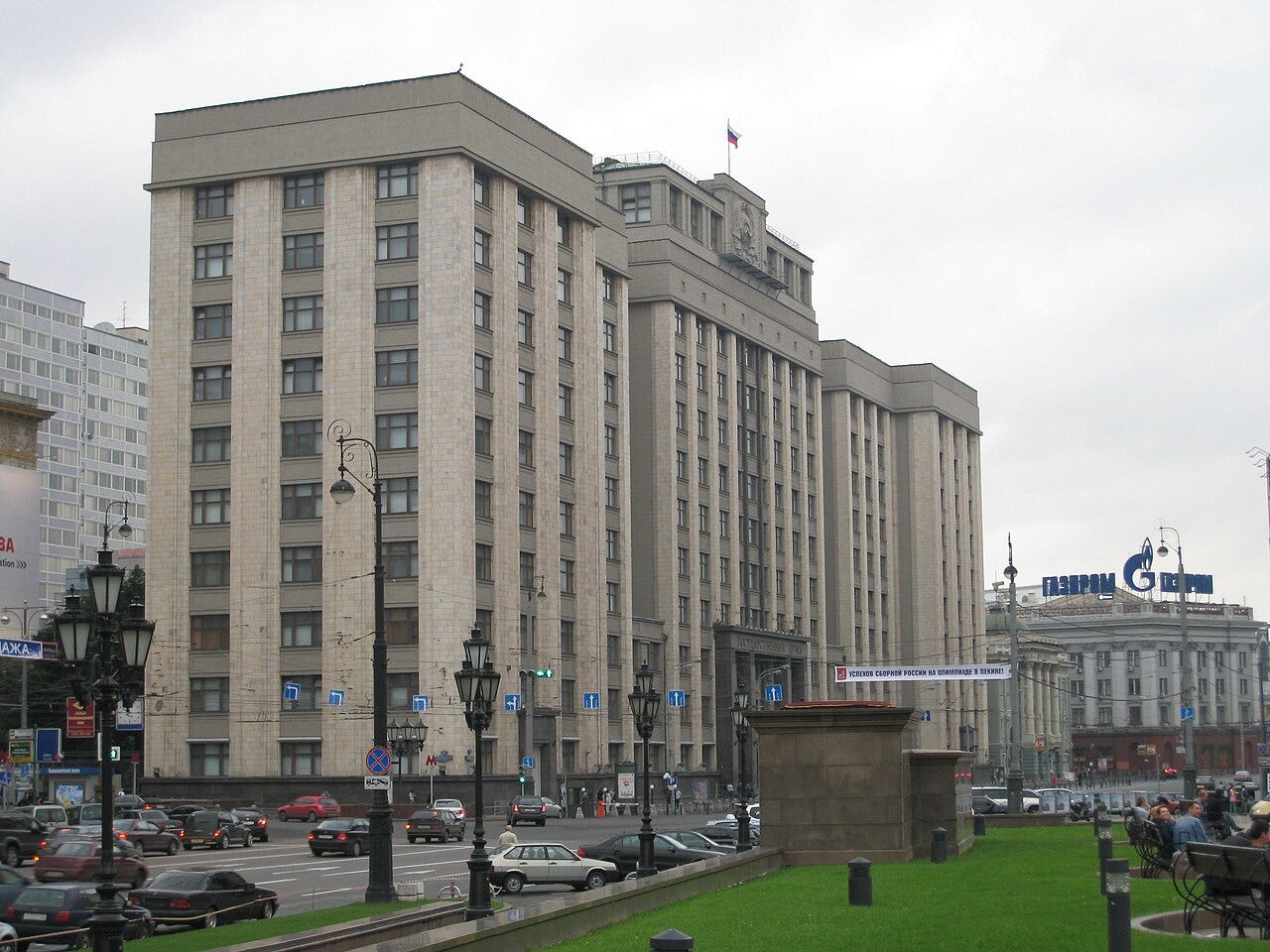
This image is used for illustrative purposes only.
When exile stops being a safety net
Leaving Russia was never a full guarantee of personal safety. As of September 2026, it will no longer guarantee financial safety either. Russia’s State Duma passed legislation on May 26 authorizing courts to place under judicial freeze — what Russian law calls an “arrest” of property — the bank accounts, deposits, and real estate of Russian citizens abroad found guilty of administrative offenses against the “interests of Russia.”
The distinction matters. This is not, in most cases, an immediate and permanent confiscation. It is a conservatory measure: assets are blocked pending enforcement of an administrative ruling. But the practical effect is near-identical. The value of the frozen asset is not capped at the amount of the fine — an apartment or a vehicle can be locked down over a minor infraction. And unlike a criminal conviction, which can be appealed through established procedures, an administrative freeze offers far narrower avenues for challenge. Physical distance from Russia no longer offers protection.
A carefully calibrated list of offenses
The law does not target all criticism. It defines a specific list of violations under the Russian Administrative Code: illegal receipt of restricted-access information, misuse of media freedom, comparing Soviet-era leadership decisions to those of Nazi Germany, violations of the rules governing so-called “foreign agents,” and several other provisions related to state security.
That calibration is not coincidental. It is designed to reach journalists, bloggers, human rights activists, and intellectuals who — from Berlin, Amsterdam, Paris, or Tbilisi — continue to report on Russia or challenge the Kremlin’s narrative. Most of these offenses do not require a criminal conviction. An administrative finding is sufficient. The judicial bar is lower; the financial threat becomes the primary weapon.
How remote pressure becomes a lever
This law is the latest step in a systematic transnational repression strategy Moscow has been building since 2022. In February 2024, President Vladimir Putin signed a criminal law authorizing asset confiscation — in that case, genuine and permanent — from individuals convicted of “discrediting” the military or spreading “deliberately false information” about the armed forces. That law required a criminal conviction; the May 2026 legislation lowers the threshold to administrative offense, a far easier standard to meet, while introducing the conservatory freeze as the enforcement tool.
The escalation follows a discernible sequence. First, criminalize dissent (2022). Then confiscate assets from those criminally convicted (2024). Finally, extend the asset-freeze mechanism to administrative violations, which are procedurally cheaper to establish (2026). Each step widens the financial threat’s reach without requiring the full weight of a criminal prosecution.
The law is expected to pass the Federation Council — Russia’s upper house — and receive presidential signature before its September 1 entry into force. Vyacheslav Volodin, the State Duma’s speaker and one of the bill’s architects, framed the law in comments ahead of the vote in terms that left little room for ambiguity. In his description, those targeted were people who collect income from Russian property while conducting what he called anti-state activity from abroad:
“They live comfortably, renting out property, continuing to receive royalties at the expense of Russian citizens. They use these funds to support the Nazi regime.” [translated from Russian]
Who is actually at risk
The target population is identifiable. Since Russia’s full-scale invasion of Ukraine in February 2022, according to various estimates, hundreds of thousands of educated Russians left the country — journalists, engineers, software developers, artists, and academics. Many left in a hurry and retained assets in Russia: apartments managed by local agencies, active bank accounts, shares in businesses.
It is precisely those people this law exposes. Not the exiles with nothing left in Russia — Moscow cannot easily reach them. But those who, having fled in the weeks after March 2022, maintained a residual financial footprint inside the country: that vulnerability is exactly what this legislation is designed to exploit.
Civic rights organizations working with the Russian diaspora argue the mechanism could force thousands of emigres to choose between their assets and their freedom of expression — an outcome that criminal prosecution alone had failed to reliably produce.
The bottom line
The question this law raises goes beyond Russian domestic law. It is a question of how far a government’s reach over its citizens extends across borders. If Moscow can freeze a Warsaw-based journalist’s apartment over an article published online, where does that reach end?
For European democracies hosting tens of thousands of Russian emigres, the implications are not purely humanitarian. There is a coherence problem: welcoming dissidents while allowing their remaining assets to function as Kremlin leverage — without a coordinated response — is a position that will become increasingly difficult to hold.
Sources: RFI · Euronews · Al Jazeera · Reuters