
Russian drones over the eastern flank: Europe reaches for words
Six drone incursions in three weeks over the Baltic. Vilnius paralyzed, NATO scrambled jets — and the EU issued a statement. Is that enough?

Wednesday, the Lithuanian capital froze. Vilnius’s airport was shut down, the country’s parliament evacuated, President Gitanas Nausėda and Prime Minister Inga Ruginienė moved to secure locations — all because of a one-hour drone alert near the Belarusian border. No aircraft was formally intercepted, but the incident crystallized a reality Brussels can no longer avoid: since the beginning of the month, six drone incursions — confirmed or suspected — have occurred over Baltic and Finnish airspace.
The European Union has a common defense policy on paper. On the Vilnius tarmac, people were still waiting to find out what that means in practice.
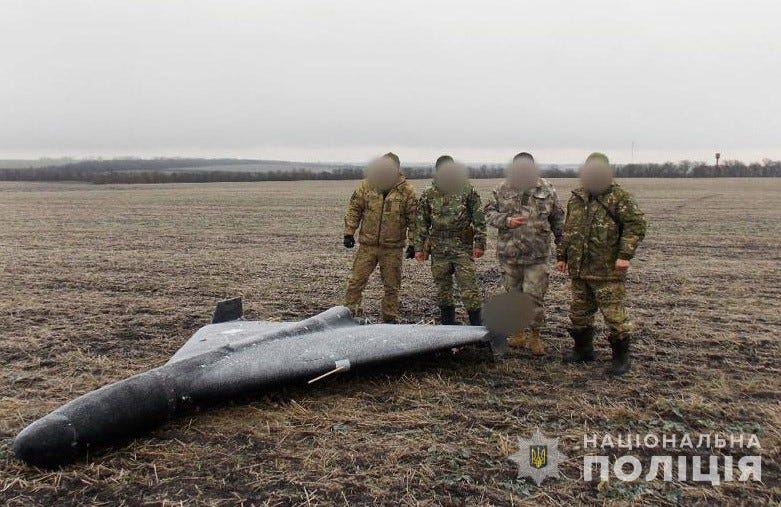
This image is used for illustrative purposes only.
At a Glance
Six drone incursions in three weeks over Baltic and Finnish airspace have forced the EU to move beyond rhetorical ambiguity on the defense of its eastern flank.
Some of the aircraft are believed to be of Ukrainian origin, allegedly redirected by Russia — blurring the chain of responsibility and complicating any calibrated response.
The EU has promised a “united and firm” reply, but its response remains entirely declaratory while NATO carries the operational load.
A sixty-minute alert, a signal weeks in the making
The Vilnius incident is not an isolated event — it is the latest in a sequence that began three weeks ago. In under a month, drones have overflown or skirted Estonian, Latvian, Lithuanian and Finnish airspace, triggering emergency responses from local and allied commands each time.
NATO acknowledged the gravity of the sequence. Its Secretary General Mark Rutte said the string of incidents was a direct consequence of Russia’s illegal invasion of Ukraine in 2022, while praising the rapid response of Alliance fighter jets. The day before, a NATO aircraft had shot down a stray Ukrainian drone over Estonia — evidence that the Baltic sky has become a space of permanent risk management.
The situation is complicated further by a factor that Andrius Kubilius, the European Commissioner for Defense, raised explicitly: some of these drones may be of Ukrainian origin, captured or redirected by Russia to be deployed as instruments of psychological and logistical disruption. If that hypothesis holds — and it has not been formally established — Moscow would have at its disposal a low-cost, high-visibility destabilization tool that is difficult to attribute without ambiguity.
Von der Leyen speaks loudly; the instruments are missing
European Commission President Ursula von der Leyen — head of the EU’s executive arm, the body that proposes legislation and enforces European law — said in a post Wednesday that Russian threats against the Baltic states are “totally unacceptable” and that a European response would come, “united and firm.” Her statement directly answered a letter signed by fifteen Baltic Members of the European Parliament (MEPs), who demanded a formal condemnation and an immediate halt to Russian actions.
Those words carry real symbolic weight. They also carry a structural limit: the European Commission has no air command. It does not intercept drones. Air defense remains a national prerogative and, when a collective threat materializes, a NATO responsibility. Kubilius summarized the Union’s envisioned response in four verbs — increase national defense spending, increase it again, strengthen support for the eastern flank, help Ukraine “prevail” — a formulation that could signal a shift in doctrine, though the corresponding operational mechanisms remain undefined at this stage.
From Warsaw, Polish Prime Minister Donald Tusk described the series of incidents as a “coordinated provocation,” calling on his partners not to look away. Last autumn, some twenty drones penetrated Polish airspace in an incident Tusk had directly attributed to Russian President Vladimir Putin’s responsibility.
Analysis — the blurry line between hybrid war and calculated provocation
A low-cost destabilization laboratory. Russia would appear to have a remarkably efficient instrument at hand: aerial intrusions that paralyze a capital, force the evacuation of a parliament and ground civilian aircraft — without a single direct strike, without formal attribution, and at marginal cost. This sequence could serve a dual purpose for Moscow: testing the coherence of the Western response and demonstrating to Baltic public opinion that their security remains fragile despite NATO membership.
NATO acts; the EU comments. The division of labor remains what it has always been: the Atlantic Alliance operates — its jets intercept, shoot down, document — while the European Union issues political positions. This is not necessarily dysfunctional, but it exposes the EU to a recurring critique: its strategic autonomy ambitions remain, in practice, largely rhetorical the moment a concrete threat materializes on its territory. Moscow has not publicly responded to the incidents.
Attribution — the blind spot of any response. If the drones are, as some sources suggest, partially of Ukrainian origin, the European response runs into a paradox: condemning Russia for using redirected Ukrainian weapons would implicitly acknowledge a vulnerability in the Ukrainian military command chain. That is a politically sensitive concession at a moment when Western support for Kyiv remains the central axis of European defense policy.
For readers outside Europe. What Vilnius experienced Wednesday is roughly equivalent to imagining Ottawa or Mexico City forced to evacuate their parliament because of an unidentified drone launched from a neighboring conflict zone. The eastern flank of NATO — Estonia, Latvia, Lithuania, Poland and Finland — is the physical border between the European Union and Russia. These countries have been Alliance members since the early 2000s for the Baltic states, and since 2023 for Finland, following Russia’s full-scale invasion of Ukraine. Their airspace is Alliance airspace.
The bottom line
The EU can harden its statements, accelerate its defense spending and reinforce its support for Ukraine — all three levers are real and necessary. But the question the Vilnius incident poses without ever quite asking it is more fundamental:
How far can hybrid warfare advance on European soil before the nature of the response has to change? And if that threshold exists, who gets to set it — Brussels, Washington, or the Baltic capitals now living under an uncertain sky?
Sources: Euronews