
Russian drone hits NATO ally Romania — and 56 nations respond

A Russian drone striking a residential building in Romania on May 29 — injuring a woman and a child, both lightly wounded — has triggered the most unified international response since the war in Ukraine began. More than 56 nations condemned Moscow’s conduct at the United Nations. For the first time, a NATO member state has seen civilians directly wounded inside a residential building on its own soil by a Russian drone strike.
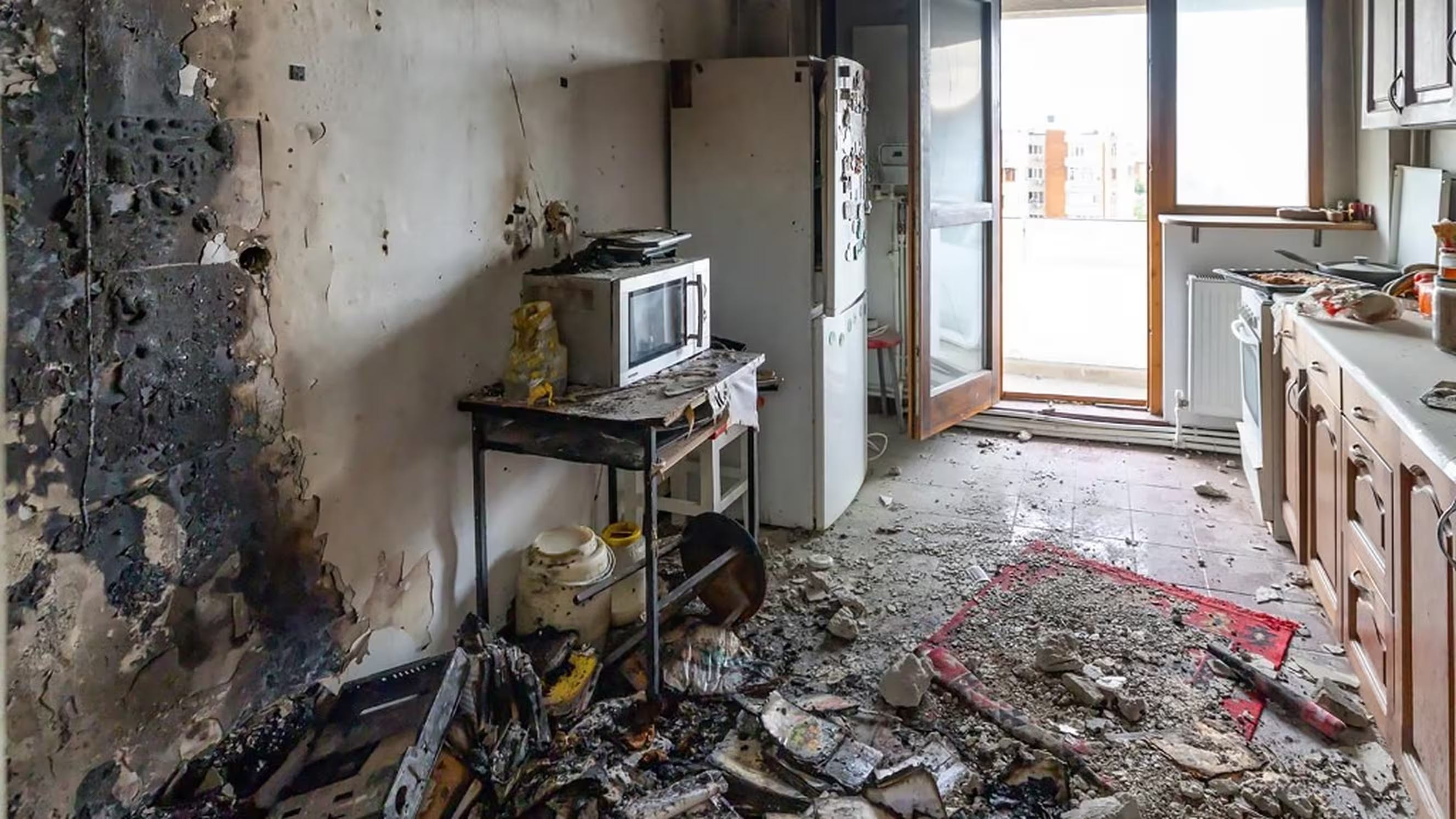
This image is used for illustrative purposes only.
At a Glance
On the night of May 28–29, 2026, a Geran-2 drone of Russian design crossed into Romanian airspace and crashed into an apartment building in the city of Galați, injuring a woman and a child.
More than 56 countries — including EU and NATO members — jointly condemned the incident at the UN as a violation of international law and demanded it stop.
Russian President Vladimir Putin disputed that the drone was Russian-made, a pattern of denial that risks complicating any formal response from the Alliance.
A drone crosses the border — and everything changes
On the night of May 28–29, 2026, a Geran-2 drone — a Russian-produced weapon that military experts have documented as derived from Iran’s Shahed-136 design — crossed into Romanian airspace and crashed into an apartment building in Galați, a city near the Ukrainian border. A woman and a child sustained light injuries.
This is not the first time a drone has drifted from the Ukrainian battlefield into NATO territory. Similar incidents have been reported on multiple occasions in Romania and Poland since 2022, according to officials from both countries. But this is the first time civilians of a NATO member state have been directly wounded inside a residential building on Alliance soil — a distinction that sharpens the political weight of what happened.
Article 5 of the North Atlantic Treaty — the collective defense clause under which an attack on one member is considered an attack on all, similar in principle to a mutual defense pact — was not formally invoked. But the response that followed was immediate and historically wide in scope.
56 countries, one statement
On June 1, 2026, more than 56 nations took a unified stand at the United Nations. Romania’s Foreign Minister Oana-Silvia Țoiu read a joint declaration surrounded by the ambassadors of the United States, France, and Ukraine: the Russian drone had entered Romanian airspace “in violation of international law,” as part of an attack targeting Ukraine. “For the first time, there were Romanian citizens injured,” she said.
“Such behavior is unacceptable under international law and must stop.”
The display of diplomatic unity is striking. It came just hours before an emergency session of the UN Security Council — requested by Bucharest — where Russia holds a permanent veto, making any binding resolution effectively impossible. The joint declaration carries no direct legal force. It carries significant political weight.
Moscow’s playbook: denial as doctrine
Facing this coalition, Vladimir Putin chose the path of doubt. The Russian president disputed that the drone was of Russian origin and reiterated that his country did not “threaten European nations.”
The posture is familiar. Since 2022, every incident involving a Russian drone or missile landing on the territory of a country bordering Ukraine has been followed by the same sequence: technical contestation, doubt cast on local authorities’ findings, counter-narrative. The Geran-2 is a weapon whose Russian manufacture is well-documented by military analysts. That Putin publicly disputes this attribution is a rhetorical stance; that it slows the Alliance’s institutional response is an operational reality.
Analysis: when the Ukraine war spills across borders
The Galați incident is not an isolated accident — it is the symptom of a structural tension that has been building as Russian strikes on Ukrainian cities near the Romanian and Moldovan borders have intensified throughout 2026.
NATO finds itself in an uncomfortable position. Formally invoking Article 5 risks direct escalation with a nuclear power; failing to invoke it risks gradual erosion of the Alliance’s collective defense guarantee. The balance has so far been maintained through firm statements and the deliberate avoidance of direct military retaliation. That equilibrium has held.
But how long does it hold when civilian casualties begin accumulating on Alliance soil?
The declaration of 56 nations at the UN is a strong signal. It is not yet a red line. The distance between the two may be measured in what happens next.
The Bottom Line
The Galați incident forces a question NATO would rather not have to answer publicly: at what threshold — how many casualties, how many incidents, what severity of harm — does the collective defense clause become less a tool of deterrence and more an obligation to act? The answer is not in the treaty text. It is being negotiated, right now, in the corridors of Western capitals.
Sources: France Info · AFP