
Russia warns diplomats to leave Kyiv
Russia tells foreign missions to evacuate Kyiv ahead of new strikes. Paris refuses. Behind the ultimatum, a calculated escalation that tests the coherence of the Western alliance.

At a Glance
Russia’s Foreign Ministry on Monday, May 25, ordered foreign nationals and diplomatic staff to leave Kyiv “as soon as possible” before strikes it said would target “decision-making centers” and military-industrial facilities in the Ukrainian capital.
Russia fired its next-generation hypersonic missile, the Oreshnik, for the third time since the war began, in a weekend bombardment that killed at least four people and wounded around a hundred in Kyiv.
France rejected the Russian warning without hesitation: the Foreign Ministry in Paris stated it was “out of the question” to recall its diplomats stationed in Kyiv.
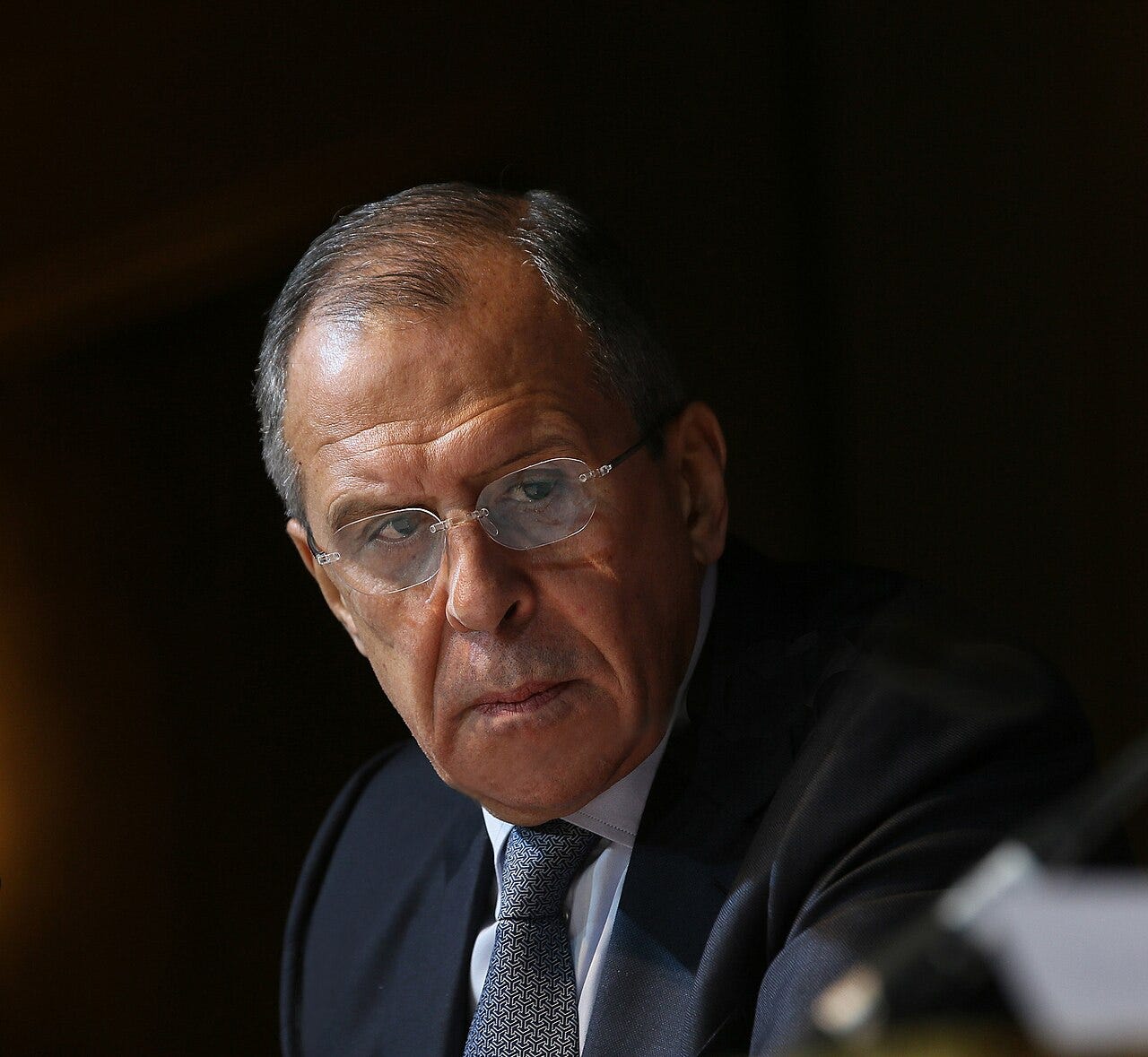
This image is used for illustrative purposes only.
An unprecedented diplomatic ultimatum
Russia crossed a rhetorical threshold on Monday that it had rarely reached since the start of the war: formally ordering foreign governments to evacuate their ambassadors from an allied capital still at war. Russia’s Foreign Ministry issued a communiqué calling on “foreign nationals, including the staff of diplomatic missions,” to leave Kyiv “as soon as possible,” citing imminent strikes on “decision-making centers” and “enterprises of the military-industrial complex.”
This kind of public warning, directed at third-party governments through an official statement, represents a form of diplomatic pressure distinct from the strikes themselves. It signals that Moscow intends to place Western partners before an explicit choice: withdraw their physical presence from Kyiv, or bear the political risk of diplomatic casualties in a Russian strike.
Sergei Lavrov, Russia’s Foreign Minister, personally called Marco Rubio, the U.S. Secretary of State, to urge Washington to evacuate its embassy in Kyiv. The exchange — confirmed by the Russian Foreign Ministry — suggests that the pressure is also being applied through quieter channels, not just through public statements.
The Oreshnik: a new operational standard
The diplomatic ultimatum follows one of the most intense weekends of strikes since the war began. Kyiv was particularly hard hit, with at least four dead and around a hundred wounded. Russia deployed its Oreshnik hypersonic ballistic missile — a multi-warhead system whose speed makes interception by the air defense systems currently deployed in Ukraine extremely difficult — for the third time since the conflict began.
The Oreshnik’s repeated use suggests it has been integrated into Russia’s operational doctrine — no longer a one-off demonstration weapon, but a recurring component of Moscow’s escalation cycles. For American readers, the closest analogy would be an adversary systematically deploying missiles capable of bypassing Patriot interceptors — effectively rendering obsolete, in a live theater of war, the air defense technology the United States and its allies have supplied to Ukraine.
Paris holds firm; European capitals watch
France’s response was swift and unambiguous. The French Foreign Ministry brushed off Moscow’s warning with a terse public statement: it was “out of the question” to pull its diplomats from Kyiv, adding that France was “used to Putin’s threats.” The declaration, deliberately public, serves a precise political function: it signals to Moscow that its intimidation is failing to fracture Western unity, and it reassures European partners of France’s resolve.
The question now facing other European capitals — Berlin, Rome, Warsaw, Stockholm — is whether their collective response will hold. A partial or hurried departure of ambassadors, even framed as a precautionary measure, would carry enormous symbolic weight. It would implicitly validate Russia’s ability to dictate the terms of Western diplomatic presence on Ukrainian soil, and would undermine the logic of sustained support for Kyiv that has underpinned Western strategy since 2022.
Analysis — Mapping the threat
What this episode reveals goes beyond the immediate sequence of bombings. Moscow appears to be probing the threshold at which Western diplomatic presence in Kyiv becomes a vulnerability in its own right — no longer merely a symbol of political solidarity, but a variable Russia can threaten to make untenable.
The logic is consistent with Russia’s broader strategy of attrition. If Western governments maintain their embassies under mounting pressure, the political and symbolic cost of each strike increases. If they withdraw, Moscow claims a rhetorical victory without firing an additional missile — demonstrating that the threat of force alone is sufficient to empty an allied capital of its diplomatic presence.
The third use of the Oreshnik could indicate that Moscow is seeking to establish a new operational baseline: regular strikes with hard-to-intercept vectors, combined with calibrated diplomatic pressure. If that pattern holds, European governments face a difficult equation — maintain a presence that exposes their nationals to risk, or retreat and hand Moscow a symbolic dividend at little cost.
The Bottom Line
The coherence of European deterrence will be judged not on its statements, but on its ability to maintain a physical and political presence in Ukraine in the face of pressure designed to make that presence unsustainable.
The real question is not whether Paris, Berlin, or Washington will recall their diplomats — they will not. It is how long European governments can sustain a credible posture of support for Kyiv if Russian strikes continue to intensify — technologically and geographically — without a corresponding shift in Western rules of engagement.
Sources: France Info · AFP