
Russia sanctions: the EU holds, Britain blinks
Russia oil sanctions are fracturing the Western alliance. Brussels stands firm while London softens its rules — and Washington extends its waiver for the third time this year.

More than four years after Russia’s full-scale invasion of Ukraine in February 2022, a visible crack has opened in the Western sanctions front against Moscow. This Wednesday, the British government eased its restrictions on Russian crude oil, allowing the import of petroleum products — including kerosene and diesel — refined in third countries from Russian crude, at the precise moment Washington was renewing, for the third time in 2026, its own waiver on the maritime transport of Russian crude. Brussels chose not to move.
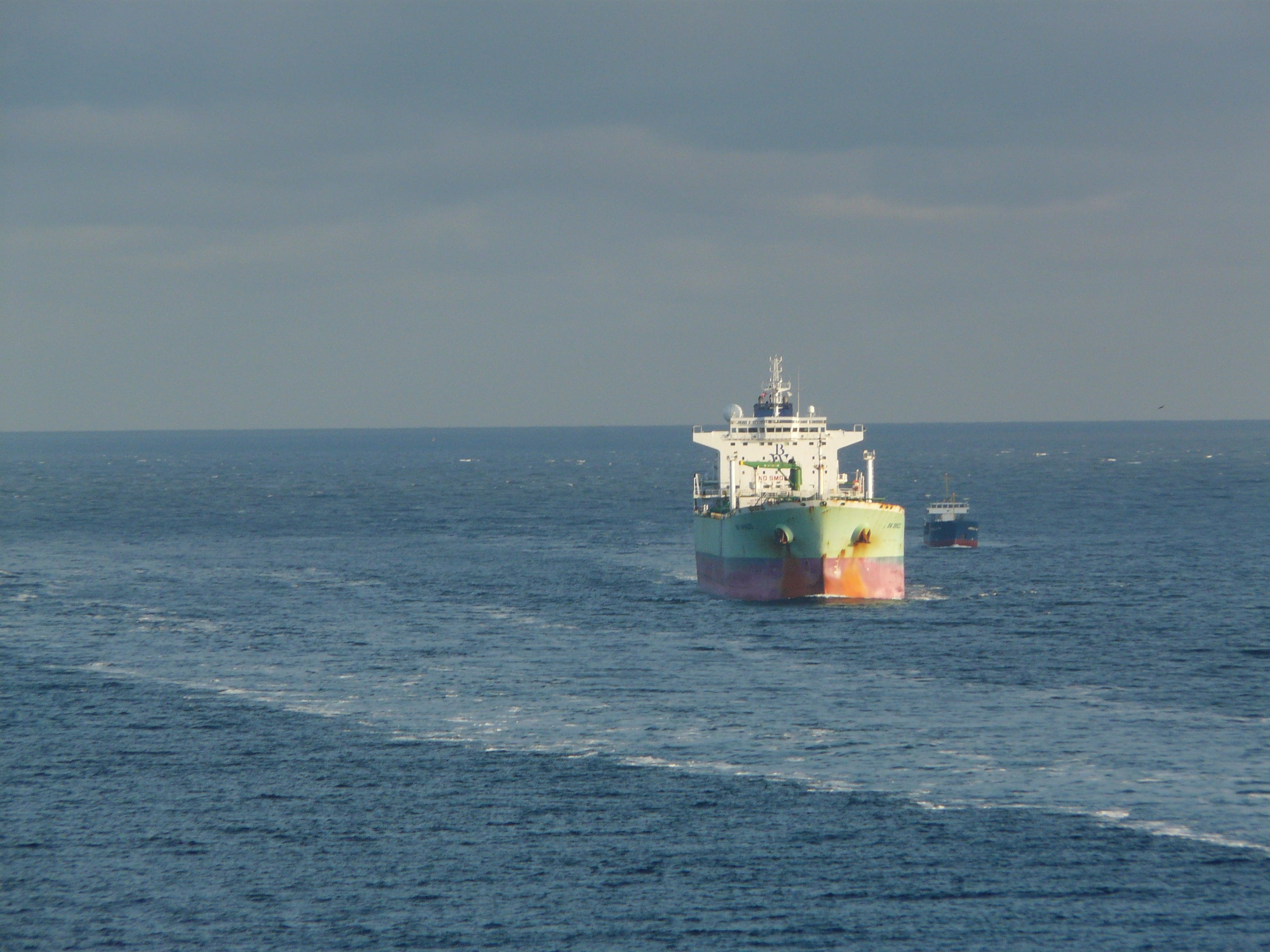
This image is used for illustrative purposes only.
At a Glance
Britain eased sanctions on refined products derived from Russian crude oil, citing energy supply concerns; the trade minister acknowledged the rollout had been “clumsy.”
Washington extended its maritime crude oil waiver for the third time this year, invoking the need for “flexibility” for energy-vulnerable countries.
The European Commission reaffirmed its position without ambiguity: EU sanctions on Russian oil and gas imports remain in place, and the bloc refuses to treat Middle East tensions as a valid reason to lift them.
Britain caught between two positions
The sequence is an awkward one for the British government. The U.K., which has until now publicly backed Ukraine, authorized the import of kerosene and diesel refined in third countries from Russian crude — a move framed as technical, but whose political implications were immediately clear to Kyiv and Brussels alike.
Ukraine didn’t miss the signal. President Volodymyr Zelensky’s office said it was in “very active exchanges” with British counterparts to understand the details of the decision. Vladyslav Vlasiuk, Zelensky’s special envoy for sanctions, raised concerns about the additional revenues the move could generate for Moscow’s budget — a legitimate question, since any uptick in Russian oil income directly funds the war machine.
Facing the backlash, British Trade Minister Chris Bryant apologized for what he called a “clumsy” implementation and promised to revisit the licenses “as soon as possible.” Wording that points less to a policy mistake than to a failure of political management — which, on a matter this sensitive, is not necessarily a reassuring distinction.
Washington extends its waiver, Brussels pushes back
The British announcement followed a decision by U.S. Treasury Secretary Scott Bessent to extend America’s maritime crude oil waiver — invoking the need for “additional flexibility” for the most energy-vulnerable countries. The announcement coincided — likely not by accident — with the G7 finance ministers and central bank governors meeting in Paris, where Bessent was present.
Valdis Dombrovskis, the European Commissioner for the Economy and a former Latvian prime minister, sharply criticized the American extension. The Commission, speaking through its chief spokeswoman Paula Pinho, reaffirmed the bloc’s commitment: sanctions on Russian oil and gas imports stay. She added a line that European diplomats rarely deliver with such candor: lifting sanctions because of Middle East tensions would be “particularly ironic” — implying that allowing Russia to profit from a crisis it did not create would be an elementary strategic error.
Brussels is also testing, among G7 allies, a full embargo on maritime services to Russian oil tankers — think of it as an expansion of the existing price cap mechanism into a near-total shipping ban. The recent choices made in Washington and London are complicating the push for a unified green light.
Analysis — Consistency as strategic capital
① The G7 asymmetry sets a dangerous precedent
The credibility of a sanctions regime rests on a simple principle: it is indivisible. The moment a major ally opens a gap — even a technical one, even a temporary one — Moscow gains an argument to negotiate further exemptions with other partners. Every barrel of Russian crude that generates additional export revenue, however marginal, flows into the budget financing the war in Ukraine. What happened this week could indicate that G7 cohesion on sanctions is now subject to internal pressures that each capital manages separately, without prior coordination with Brussels.
② Britain is playing a particularly risky game
Post-Brexit, the U.K. built much of its international standing on its declared support for Kyiv. Easing Russian oil sanctions at the very moment Ukraine is resisting U.S. diplomatic pressure over a potential ceasefire undermines that political capital. It is plausible that the decision was driven by domestic concerns over energy prices — but this hypothesis, unconfirmed at this stage by any explicit government statement, deserves to be raised.
③ The EU turns firmness into a differentiator
The European Commission did not merely restate its position — it did so by explicitly marking its distance from its allies. That is a political choice, not just a rhetorical posture. In a context where the Trump administration is running its own playbook on sanctions, Brussels could position itself as the most consistent guarantor of the economic pressure regime against Moscow — which would strengthen its role as a central negotiator in any eventual peace process.
The bottom line
If Brussels holds while its closest allies yield one by one, at what point does European firmness stop being a position — and start being a form of isolation?
The question is not whether London or Washington are wrong on the energy arguments they’re making. It is how many successive waivers it takes to turn a sanctions regime into a sieve.
Sources: Euronews · La DH/Les Sports+ · La Libre