
Russia is panicking over Ukraine's drone strikes
Kaja Kallas, the EU's top diplomat, says Moscow is escalating civilian attacks out of weakness — not strength. A 21st sanctions package is in the works.

At a Glance
Ukrainian drones struck energy and military targets in St. Petersburg on Wednesday, the opening day of Russia’s flagship economic forum. Kaja Kallas, the EU’s foreign policy chief, says the strikes expose a Kremlin in panic mode.
Peace talks, launched last year by the United States, have collapsed. According to Kallas, Moscow has presented maximalist demands without offering a single concession.
The European Union is finalizing a 21st package of sanctions targeting Russia’s military-industrial complex and oil revenues — the Kremlin’s primary source of war financing.
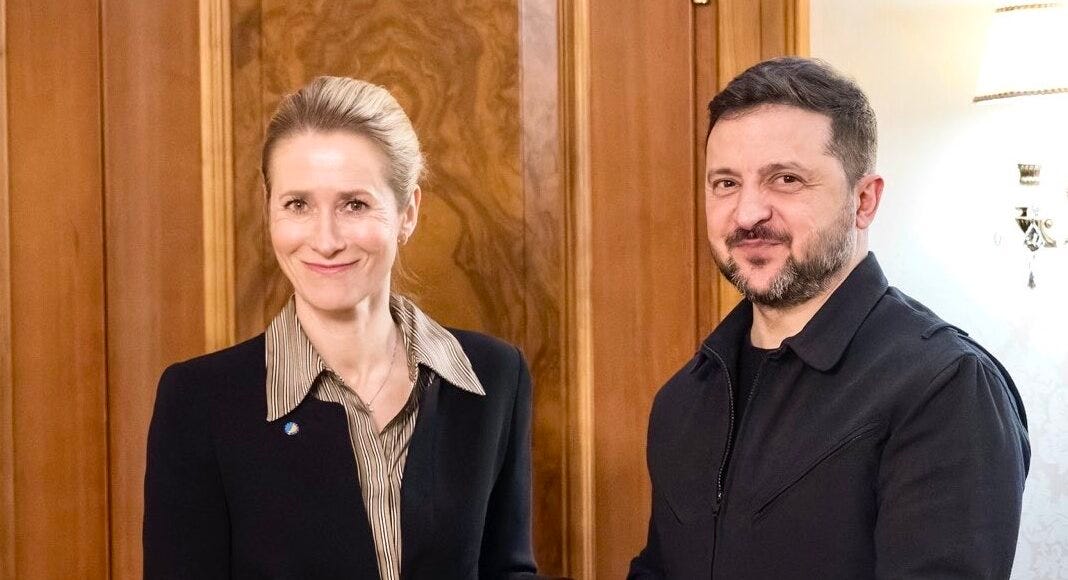
This image is used for illustrative purposes only.
Drones over St. Petersburg — and what they signal
Early on June 3, Ukrainian drones struck energy and military infrastructure in St. Petersburg, the very day the city was hosting its annual International Economic Forum — one of the Kremlin’s most prominent showcases of economic power. The strikes are part of a broader intensification of Ukrainian long-range operations targeting military and energy sites deep inside Russian territory, in retaliation for daily Russian bombardments of Ukrainian cities and power grids.
The previous day, 23 people were killed in Ukraine in a massive Russian missile and drone barrage. The Kremlin responded to the St. Petersburg strikes by vowing “systematic responses.”
For Kaja Kallas — Estonia’s former prime minister and now the EU’s High Representative for Foreign Affairs and Security Policy, the bloc’s top diplomatic official — the sequence points unmistakably to a Kremlin under pressure. Speaking to AFP in Brussels, Kallas argued that the strikes expose what she described as genuine panic on the Russian side, and that Moscow is intensifying attacks on Ukrainian civilians precisely because it does not know how to respond to Ukraine’s growing offensive reach. Recent internet blackouts inside Russia, she argued, serve a related purpose: keeping the Russian public from grasping the reality on the battlefield — something that, in her view, would raise deeply uncomfortable questions for Putin and his regime.
Vladimir Putin, Kallas said, has chosen to escalate terror against civilians because he is operating from a position of weakness on the battlefield. His goal, she argued, is to erode Ukrainian resilience and to test the resolve of European societies supporting Kyiv.
A diplomatic stalemate with no off-ramp in sight
Peace negotiations, initiated last year by the United States, are currently at a standstill. Kallas places the blame squarely on Moscow. Russia has put forward maximalist demands — including recognition of its illegal annexation of Ukrainian territory — while offering no concessions in return. According to Kallas, Moscow has not taken a single step back from its opening position.
The EU, for its part, has never positioned itself as a neutral mediator. Since Russia’s full-scale invasion of Ukraine in February 2022, Brussels has consistently backed Kyiv with financial support, military aid, and successive rounds of economic pressure on Moscow.
That pressure is about to intensify. The EU is negotiating its 21st package of sanctions, with a specific focus on Russia’s military-industrial base, financial institutions that might help Moscow raise capital for the war effort, and — critically — oil revenues, which remain the Kremlin’s primary source of war financing. Twenty previous rounds have failed to dislodge Russia from its strategic objectives, which suggests the threshold for a meaningful change in Kremlin calculus has not yet been reached — and that the cost to European economies of sustaining this pressure, particularly in energy markets, remains a live political variable for EU member states.
Analysis — Pressure without a ceiling
Kallas’s position reflects a coherent strategic doctrine the EU has maintained for two years: no meaningful negotiation is possible until Russia faces sufficient costs to view dialogue as genuinely in its interest. The logic is cumulative — sanctions, military support to Ukraine, diplomatic isolation — and rests on the assumption that Moscow, hemorrhaging men and money, will eventually seek an exit.
That assumption remains unproven. Twenty rounds of sanctions have not fundamentally altered Russia’s war objectives or its negotiating posture. Ukraine’s growing capacity for deep strikes — St. Petersburg, but also other regions hit in recent weeks — may be amplifying domestic political discomfort for Putin. Whether they change his strategic calculations is another question entirely.
The American variable adds further uncertainty. Washington initiated the peace process but has not provided a stable framework. The role of the EU — active on sanctions, limited as a direct mediator — may be forced to evolve, regardless of what Moscow prefers.
The Bottom Line
The EU can tighten sanctions. Ukraine can strike farther. But the question no one is yet answering directly: at what level of pressure does Moscow reconsider its terms — and who can credibly deliver that signal? Twenty rounds of sanctions and months of deep-strike drones have not produced a single Russian concession at the table. The next test may not be military. It may be diplomatic — and Europe may find itself more central to that moment than it currently anticipates.
Sources: AFP · TV5 Monde · France Info