
Russia bets on airpower as its ground war stalls
Outgunned on the front lines, Moscow is unleashing hypersonic missiles, cheap drones, and mass saturation strikes against Ukraine — while Kyiv strikes back at Russia's second city.

Russia has never fired this many Zircon missiles in a single attack. On June 2, 2026, eight of the hypersonic projectiles slammed into Ukraine without a single interception. That number, confirmed by Ukrainian officials, encapsulates the strategic shift underway in Moscow: unable to advance on the ground, Russia is wagering that overwhelming airpower can break Ukrainian resistance where its infantry cannot.
At a Glance
On June 2, Russia launched an unprecedented combined assault — Shahed drones, Iskander-M and Zircon (3M22) ballistic missiles, cruise missiles — killing 23 people and wounding 151 across Ukraine, with casualty figures still being updated as search operations continue.
The aerial “saturation” strategy compensates for Russia’s stalling ground campaign: May 2026 was the worst month for Moscow’s territorial gains in nearly a year.
Ukraine struck back by targeting Saint Petersburg during Russia’s flagship economic summit, prompting U.S. Secretary of State Marco Rubio to warn of a “real risk of escalation.”
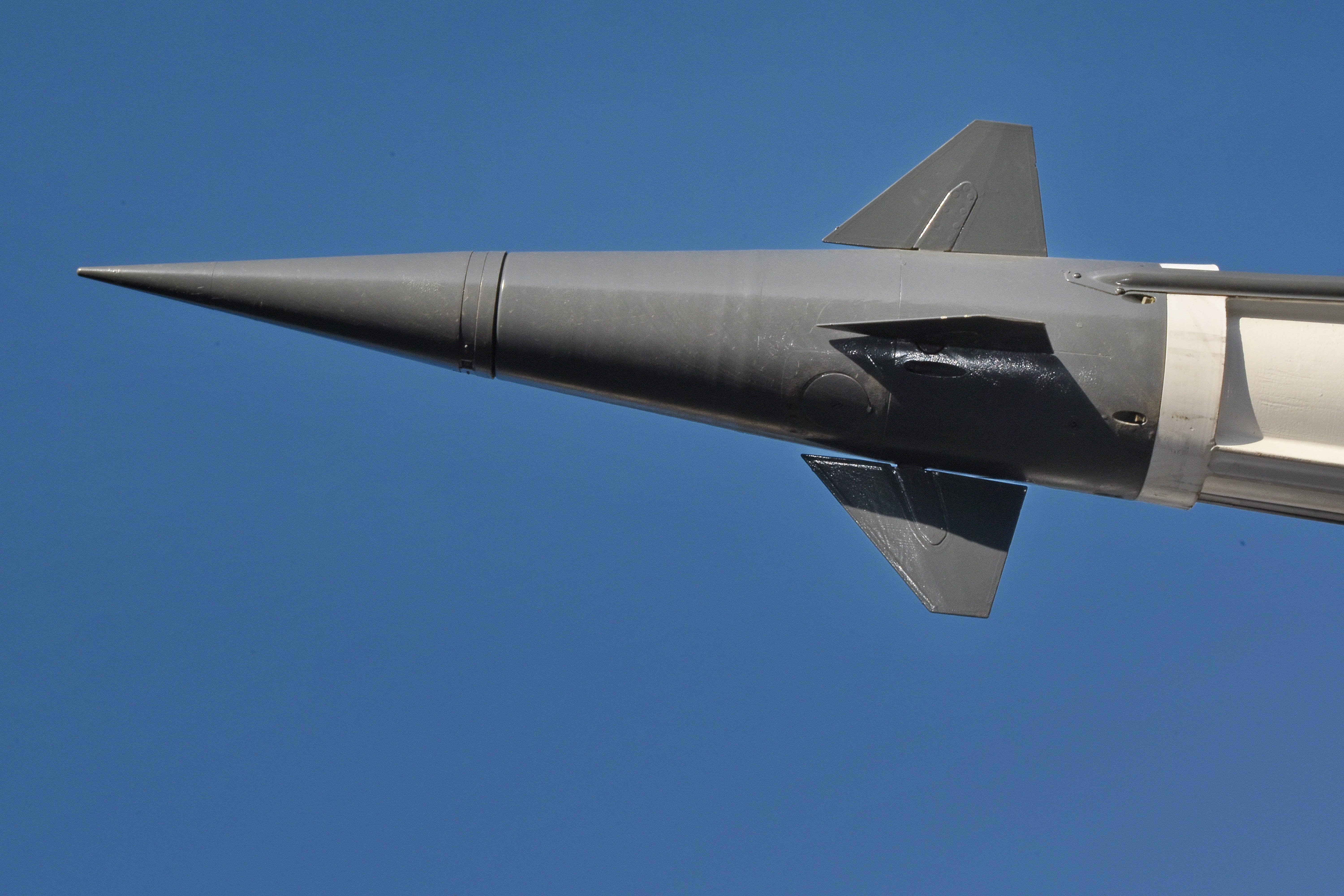
This image is used for illustrative purposes only.
A saturation machine designed to defeat the Patriot
The June 2 attack was not just another strike — it was a doctrine demonstration. The Russian military organized its air assault in three successive waves: inexpensive Shahed-type drones (Iranian-designed loitering munitions that Russia now manufactures domestically) as vanguard, followed by 41 high-velocity ballistic missiles — Iskander-M and Zircon (3M22) — then a final wave of jet-propelled cruise missiles. Of those 41 ballistic missiles launched, 30 caused damage. The Zircon 3M22, a hypersonic missile that Moscow claims reaches Mach 8 — more than 5,600 miles per hour — sits at the heart of this strategy. Originally designed for naval warfare, it is now deployed against land targets. According to the Missile Defense Advocacy Alliance (MDAA), a U.S.-based nonprofit focused on missile defense policy, no Western system — including the Patriot surface-to-air missile battery, Ukraine’s most advanced air defense — can intercept it based on speed alone.
This layered saturation approach targets a precise vulnerability in Ukraine’s defensive posture. Kyiv faces a severe shortage of Patriot systems, a gap made worse by competing demands in the Middle East. Yurii Ihnat, spokesperson for the Ukrainian Air Force, noted that Moscow is also deliberately targeting the least-protected regions of the country.
An admission of ground failure
Russia’s aerial escalation is not a choice of convenience — it is a response to an impasse. According to DeepState, a Ukrainian open-source project tracking front-line movements, May 2026 was the worst month for Russian territorial gains in nearly a year. In April, Ukraine recaptured more ground than Russia seized — the first time that had occurred since 2024, according to the Institute for the Study of War (ISW), a Washington-based defense think tank.
Russia’s army is no longer advancing. It is simultaneously losing men at a rate it struggles to replace. Against this backdrop, Thomas Withington, an associate fellow in military sciences at the Royal United Services Institute (RUSI), a British defense and security think tank, offered a blunt assessment: airpower may be “the only avenue currently available to Russian leaders to hope for any strategic impact on Ukraine.” Yasir Atalan of the Center for Strategic and International Studies (CSIS), a Washington-based think tank, suggested the strategy aims to “sow fear among the population” and ratchet up public pressure on Kyiv’s leadership — positioning Moscow more favorably ahead of any future peace negotiations.
Industrial capacity as the decisive variable
Russia’s drone surge is not only tactical — it is logistical. Since 2025, Russia has acquired manufacturing blueprints for the Shahed drone from Iran and now produces them domestically at the Alabuga industrial complex in Tatarstan, a Russian republic roughly 500 miles east of Moscow. This domestic production line has reportedly lowered unit costs, giving Moscow a substantially expanded capacity for nightly drone attacks — an asymmetry that Ukraine cannot currently match at scale.
Saint Petersburg: symbolism and retaliation
Ukraine did not absorb the blows passively. On the night of June 3-4, a mass drone assault targeted Saint Petersburg — the very day Russia’s flagship St. Petersburg International Economic Forum (SPIEF) opened, with President Vladimir Putin in attendance. Energy and military infrastructure were struck. According to Saint Petersburg Governor Alexander Beglov, several facilities were damaged but no casualties were reported on the Russian side at that stage. Russia’s Defense Ministry claimed it intercepted and shot down 272 Ukrainian drones overnight. The following day, June 4, Ukrainian strikes on Crimea — the peninsula annexed by Russia in 2014 — killed four people in and around Simferopol, the regional capital. The Kremlin promised “systematic responses.”
The symbolic weight of striking Saint Petersburg during a Kremlin showcase event was not lost on Washington. Secretary of State Marco Rubio acknowledged Ukraine’s growing effectiveness “in conducting long-range strikes deep into Russian territory,” while expressing concern over a “real risk of escalation.” “I think that’s one of the reasons that reminds us why it’s important to try to end this war, if we can,” he added. [translated from English original]
Moscow is strong enough in the air to inflict lasting suffering on Ukraine’s civilian population, but too weak on the ground to force a conventional military victory.
The bottom line
Russia’s aerial dominance can punish Ukraine; Ukraine’s long-range capability can now reach Russia’s showcase events and symbolic cities. Whether that balance tips toward negotiation or deeper conflict depends less on the next missile volley than on decisions being made — or deferred — in Washington, Kyiv, and Moscow.
Sources: TV5 Monde · France Info · AFP