
Romania gets its third prime ministerial pick in six weeks
Three names, six weeks, one stalled government: that is the state of play in Romania, a European Union and NATO frontline country where political paralysis is starting to carry a price tag.

On Sunday, June 14, 2026, Romanian President Nicușor Dan, a pro-European independent elected in 2025, named Adrian Vestea, 52, a leading figure in the center-right National Liberal Party (PNL), as his pick for prime minister. The move came just hours after Eugen Tomac, a member of the European Parliament for the centrist Renew group, withdrew his own bid to lead the government.
For a country that joined the EU in 2007 and sits on the alliance’s eastern edge facing Russia, the inability to settle on a working government is more than a domestic footnote. It raises questions about how stable the pro-Western consensus really is on the bloc’s frontier.
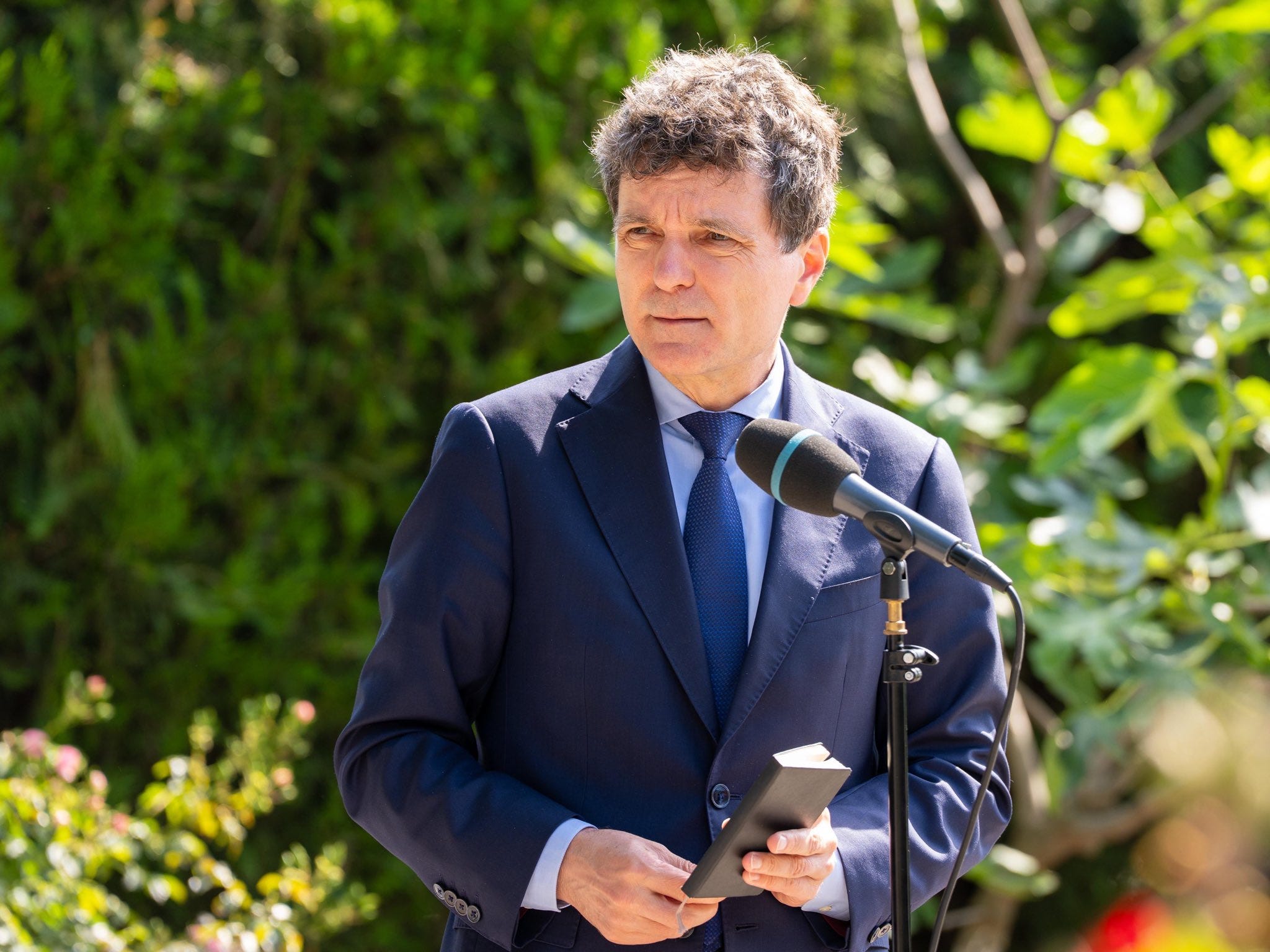
This image is used for illustrative purposes only.
At a Glance
President Nicușor Dan named Adrian Vestea, a former development minister and current president of the Brașov County Council, as prime minister-designate, after a technocratic bid by MEP Eugen Tomac collapsed.
It is Romania’s third prime ministerial pick in six weeks, following the May 5 ouster of Liberal Prime Minister Ilie Bolojan in a no-confidence vote backed by the center-left Social Democratic Party (PSD) and far-right lawmakers.
The crisis comes as Romania carries one of the European Union’s highest budget deficits, an issue the next government will have to confront to keep the country’s pro-Western course on track.
How Adrian Vestea ended up with the mandate
Eugen Tomac, the Renew-aligned MEP, had been tapped on June 4 to form what President Dan described as a “technical, not political” government — an attempt to sidestep partisan gridlock. He never managed to win over a deeply fragmented parliament and withdrew his bid on Sunday morning. Within hours, Dan turned to Adrian Vestea, who has spent his career climbing through local and national administration: mayor of the town of Râșnov for three terms, then president of the Brașov County Council, and most recently development minister. Dan described him as a pro-Western figure with deep experience in public finance and EU funding.
Vestea struck a different tone than his predecessor’s technocratic pitch: “I’m taking on this responsibility during a time of political crisis,” he said, adding that he would negotiate with pro-Western democratic parties in parliament to build a government squarely focused on “real reforms.”
The nomination did not sit well within Vestea’s own party. Ilie Bolojan, the outgoing prime minister still serving in a caretaker capacity and himself a PNL leader, said he had not been informed in advance of the president’s choice. He called Dan’s decision a “hostile act” and “a clear attempt to divide” the National Liberal Party.
Under Romania’s constitutional procedure, Vestea now has ten days to submit a list of ministers and a governing program to parliament and win a vote of confidence — the same deadline that derailed Tomac’s bid earlier this month. That clock starts immediately, leaving little room for prolonged negotiations.
A crisis that started with Bolojan’s fall
To understand the sequence, rewind to May 5. Romania’s parliament — 464 seats across the Chamber of Deputies and the Senate, with 233 votes needed for a majority — passed a no-confidence motion against Bolojan’s government, with 281 votes in favor. The motion was driven by the Social Democratic Party (PSD), a center-left party that had pulled out of the governing coalition in late April, working alongside far-right lawmakers.
The PSD justified its move by arguing that the Bolojan government had “implemented no real reform” and that Romania needed a leader “capable of cooperation.” Faced with the collapse, President Dan immediately ruled out two options: bringing far-right parties into government, or calling early elections. It was within those constraints that he first bet on Tomac’s technocratic solution before turning to Vestea.
A fragility that goes beyond party politics
This episode cannot be read in isolation. It follows directly from the presidential crisis of 2024-2025: Romania’s November 2024 presidential election was annulled amid allegations of Russian interference that had boosted a previously unknown far-right candidate, Călin Georgescu. In the rerun held in 2025, Nicușor Dan, the pro-European independent, narrowly defeated George Simion, the candidate of the Alliance for the Union of Romanians (AUR), a nationalist party that has continued to gain ground in opinion polls since.
Against that backdrop, Romania — a country of 19 million people, an EU member since January 2007, and a frontline NATO state given the war next door in Ukraine — plays a role that extends well beyond its own borders. Its system is semi-presidential: the president nominates a candidate for prime minister, but that candidate must then win parliament’s confidence to actually govern — a structure closer to parliamentary systems elsewhere in continental Europe than to the U.S. model, where the president also serves as head of government.
What the instability is costing Romanians
Behind the parade of nominations sits an urgent budget problem. Romania’s public deficit stood at 9.3% of GDP in 2024, easing to 7.9% in 2025 — still among the highest in the European Union. The very reforms the PSD accused Bolojan of failing to deliver were partly aimed at bringing that deficit down. Every week without a fully functioning government delays the structural decisions investors and Brussels are waiting on, with potential knock-on effects for market confidence and for Bucharest’s ability to meet its EU commitments.
The real question for Brussels
By voting alongside the far right to bring down a pro-European government, the PSD opened a breach that Vestea’s nomination does not automatically close: can a mainstream governing party form a one-off alliance with nationalist forces without paying a political price down the line?
Can a mainstream governing party form a one-off alliance with nationalist forces without paying a political price down the line?
The question carries particular weight in Romania, given its geopolitical position, but it could resonate elsewhere in Europe, where the firewall between mainstream parties and far-right movements appears, in some places, increasingly porous. Whether Adrian Vestea can rebuild a majority broad enough to make this third attempt the last one — or whether Romania is heading toward a fourth name before summer — remains an open question.
Sources: France Info · Euronews · Al Jazeera