
Rising waters: Europe has the data and the money — but not the plan
Europe's coastal cities have the science, the institutions, and much of the funding to adapt to rising seas. What they lack is a political framework to make the one decision that actually matters.

At a Glance
The European Union has real financial and scientific instruments for coastal adaptation — but with no binding mechanism, every city is left to decide its own level of response.
Copernicus satellite data and IPCC projections reveal a two-speed Europe: northern cities with funded, multi-decade adaptation plans, and large stretches of the Atlantic, Mediterranean, and Baltic coasts with no operational roadmap.
“Managed retreat” — the formal abandonment of exposed inhabited zones — is the long-term response that the data validates for the most exposed areas, and the one no European politician has yet dared to formalize, even where reinforced protection is no longer sufficient.
Amsterdam has been fighting the sea for eight centuries. Its system of dikes, canals, and continuous pumping infrastructure ranks among the world’s most sophisticated coastal defenses. Yet in the offices of the European Environment Agency in Copenhagen, the projections raise a question that engineers alone cannot answer: how much is a society willing to spend to defend every inhabited meter of coastline? And when the answer is “not indefinitely,” who has the authority to say so — and to whom?
That is where Europe is stuck. Not on the data. Not entirely on the money. On the decision.
What the numbers actually say
The Sixth Assessment Report of the Intergovernmental Panel on Climate Change (IPCC), specifically Working Group I Chapter 9 on Sea Level Change, published in 2021, provides regional projections for European coastlines across multiple emissions scenarios. Under the intermediate scenario (SSP2-4.5), sea levels around Northern Europe could rise by 0.3 to 0.6 meters by 2100. Under the most pessimistic scenario (SSP5-8.5), which accounts for potential glacial sheet destabilization, the upper range exceeds one meter in several zones. For readers who want to explore country-level projections interactively, NASA’s Sea Level Change portal offers visualization tools built directly on these IPCC datasets.
These figures — frequently cited in headlines without any mention of the underlying scenario — obscure a geographically uneven reality. The Copernicus Climate Change Service (C3S), the EU’s satellite-based climate monitoring program, tracks sea level rise rates that vary significantly across European sub-regions. The western Mediterranean and the northeast Atlantic exhibit distinct dynamics, and several coastal cities — Venice, Rotterdam, parts of the Scheldt delta — also face natural or human-induced land subsidence that compounds actual exposure well beyond global projections alone.
Sea level rise is not a uniform future event. It is a process already underway, regionally differentiated, and measurably accelerating since the 1990s. That nuance is absent from nearly all mainstream media coverage.
Europe’s toolkit: real, but fragmented
The European Union is not without institutional response. It has assembled a set of instruments that, taken together, amount to a coastal adaptation architecture — but not a policy.
Copernicus provides the scientific data. The EU Mission “100 Climate-Neutral and Smart Cities,” funded under Horizon Europe (the EU’s main research and innovation program), channels financing to urban municipalities that commit to adaptation plans. The European Investment Bank (EIB) finances coastal infrastructure across several member states. The European Commission’s Climate Adaptation Strategy, adopted in 2021, establishes a framework — without any binding force.
In France, the third National Climate Change Adaptation Plan (PNACC-3), presented in March 2025, formally introduced the concept of recul stratégique — “managed retreat” — into official policy vocabulary for the first time. This marks a formal acknowledgment that certain coastal zones cannot be defended indefinitely, and that a doctrine for managing their gradual abandonment is necessary. The plan outlines compensation and relocation mechanisms — but their concrete implementation remains to be built, and their funding secured.
The European Environment Agency (EEA) publishes an Urban Adaptation Map that inventories European cities with formalized climate adaptation plans. The picture is striking: cities in the northwest — Amsterdam, Hamburg, Copenhagen — have detailed, often decades-old plans. Large sections of the French Atlantic coast, the Mediterranean, and the eastern Baltic are not listed with comparable operational frameworks.
Europe does not primarily have a data problem, nor entirely a funding problem. It has a doctrine problem — and a decision-maker problem.
The taboo no one will name
“Managed retreat”: the term appears in France’s PNACC-3, in the academic literature, in OECD reports on coastal adaptation. It describes a reality that is simple in formulation and vertiginous in its implications: in the most exposed zones, some inhabited coastal areas will be abandoned, and it would be far better to organize that process in advance than to undergo it chaotically after a disaster. Reinforced protection — the approach that has made the Netherlands a global reference — remains viable for decades to come in many areas. But its cost increases non-linearly with the severity of projected sea level rise, and for lower-lying or economically weaker communities, the calculus may eventually tip the other way.
OECD modeling on coastal adaptation has assessed the differential between the cost of proactive adaptation and the cost of unmanaged inaction. Across most scenarios examined, the cost of doing nothing can be substantial — potentially several times the cost of anticipatory adaptation, particularly when accounting for high-frequency extreme weather events. This finding is consistent with assessments from the World Bank and the IPCC. Translated into concrete terms for citizens and taxpayers, this could mean unaffordable or unavailable insurance in at-risk zones, declining coastal property values well before any physical threat materializes, and post-disaster reconstruction costs dwarfing what preventive adaptation would have required.
And yet, no European government has translated this calculus into an openly stated public policy. In France, the PNACC-3 language is deliberately measured: it speaks of “accompanying transitions,” not deciding them. In the Netherlands, which has the most advanced coastal risk management culture in Europe, the debate over the limits of coastal defense exists in expert circles but remains absent from mainstream political discourse.
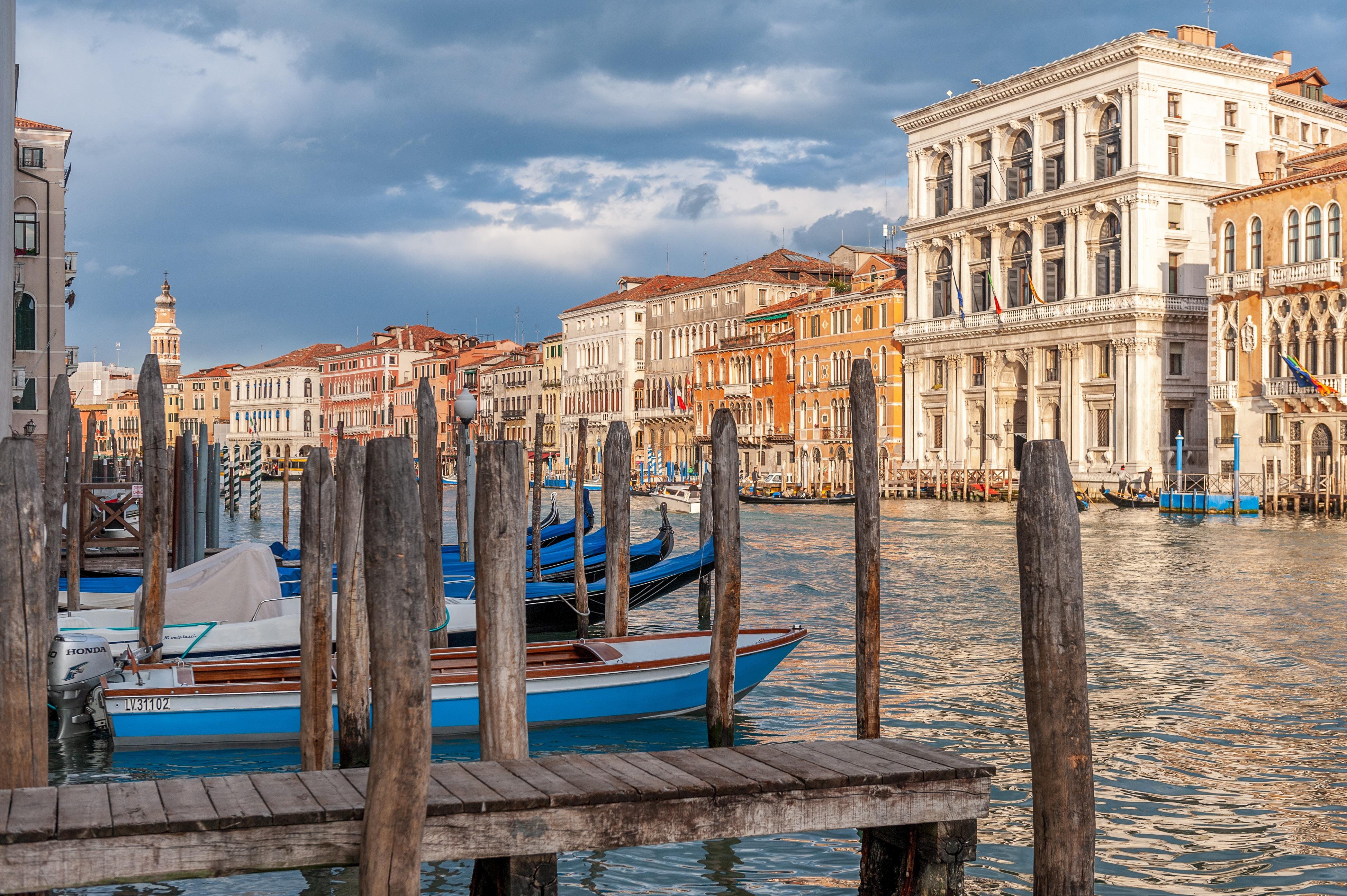
This image is used for illustrative purposes only.
In Italy, Venice is the most striking illustration of this logic taken to its limit. The MOSE mobile flood barrier system — 78 retractable gates sealing the lagoon’s three inlets against the Adriatic — came in at over €6 billion, delivered a decade late, and embroiled in one of Italy’s largest corruption scandals. It was designed to withstand a sea level rise of up to 60 centimeters by 2100. Current IPCC projections for Venice in the high-emissions scenario already exceed that threshold. The barriers are being activated with increasing frequency — 25 times in 2023, 28 times in 2024 — at an operational cost of roughly €300,000 per closure. One leading researcher has projected that, under foreseeable scenarios, MOSE may need to close 260 times a year within decades. At that point, Venice would no longer be a city that occasionally closes its gates against the sea. It would be a city permanently at war with it — and no one has publicly asked whether that war can be won, or at what price.
The reason is structural: announcing that a neighborhood will not be defended immediately devalues the assets of everyone who lives there, triggers legal challenges over property rights, and amounts to a political admission that the state cannot protect its citizens. No electoral cycle is designed for that announcement.
What other regions have done — and what it teaches Europe
The United States offers several instructive case studies, both for their partial successes and their structural limitations.
Following Hurricane Katrina in 2005, New Orleans received massive federal investment in its flood defense infrastructure — while continuing to expand into areas below sea level. The result is a city better protected against a Katrina-scale event, but structurally more vulnerable to something larger. The question of what should be abandoned was raised after the catastrophe; it never received a formal political answer.
Norfolk, Virginia — a major military and port city — is among the most flood-exposed communities on the U.S. East Coast. Its local officials have, in certain neighborhoods, begun organizing relocations. This process illustrates both the technical feasibility of managed retreat and the political slowness it entails, even in a society with a strong tradition of residential mobility.
Jakarta represents the extreme case: Indonesia’s capital, where subsidence in the most exposed neighborhoods can exceed 25 centimeters per year according to scientific studies — driven largely by excessive groundwater extraction — led the government to announce a full relocation of the national capital to Nusantara, on the island of Borneo. This amounts to managed retreat at the scale of a ten-million-person metropolis. It was politically possible within a highly centralized system, and essentially unimaginable within the European institutional framework.
The U.S. analogy is frequently invoked in European climate adaptation debates. It is partially misleading: American-style federalism permits federal-to-local decision transfers that the EU’s institutional architecture does not replicate. Europe has no functional equivalent of FEMA (the U.S. Federal Emergency Management Agency) for coastal adaptation — no supranational authority capable of mandating adaptation plans and guaranteeing their long-term financing. No serious proposal to create such a body is currently on the table.
Analysis
The long-term trajectory is already here. Sea level rise is not a promise for 2100: the IPCC and Copernicus document a measurable acceleration since the 1990s. The decisions European coastal cities make — or don’t make — in the next two decades will determine their exposure beyond 2050. The threat horizon is distant; the horizon for useful decisions is now.
The power structure is fragmented by design. Coastal adaptation in Europe is a national, sometimes regional, minimally European competence. The Commission can fund, recommend, and label — it cannot mandate. This fragmentation produces radically different strategies within a few hundred kilometers of each other. Amsterdam operates plans with a planning horizon of 2150. Comparable Mediterranean cities have no formalized roadmap for 2050.
The fiscal impact on citizens is quantifiable — and substantial. For the millions of European households in high-risk coastal zones, the practical stakes include insurance markets that may become unaffordable or simply withdraw, real estate values that may depreciate long before any physical threat materializes, and the eventual socialization of reconstruction costs that preventive adaptation could have radically reduced.
The fundamental question is about democracy. Managed retreat is not merely an engineering or financing problem. It is a question of democratic legitimacy: who has the right to tell property-owning citizens that their neighborhood will not be defended? Within what legal framework is that decision made? With what compensation, through what procedure, over what timeline? No European democracy has yet built that framework. France’s PNACC-3 lays the foundations — but only the foundations.
The bottom line
Europe’s coastal cities have between twenty and forty years to make decisions whose consequences will unfold over a century. In the meantime, sea levels rise each year — gradually, and potentially abruptly if certain glacial tipping points are crossed.
The paradox is structural: the scientific and financial tools for adaptation exist. The political will to use the one lever that genuinely changes the trajectory — naming what will be abandoned — is absent in every European capital, for reasons that have less to do with money than with the length of an electoral term.
Until that question has an answer, Europe will be very well equipped to measure rising seas. It will be much less well equipped to decide what to do with that information.
Sources: IPCC — Sixth Assessment Report, WG1 Chapter 9: Sea Level Change (2021) · Copernicus Climate Change Service (C3S) · European Environment Agency (EEA) — Urban Adaptation Map · France’s National Climate Adaptation Plan (PNACC-3, presented March 2025) · OECD — “Responding to Rising Seas” · European Commission — Climate Adaptation Strategy (2021) · European Investment Bank — coastal adaptation financing reports · Campaign for a Living Venice — MOSE activation data (2025) · NASA Earth Observatory — Venice sea level monitoring