
Renault pushes Brussels for a regulatory freeze
Renault CEO François Provost is demanding a ten-year EU regulatory freeze on small EVs, as BYD and Geely press deeper into Europe.

At a Glance
Renault CEO François Provost publicly demanded at a London industry summit that Brussels stop adding regulatory requirements, arguing that Europe’s engineers should be focused on bringing down electric vehicle prices instead.
The European Commission — the EU’s executive arm — already proposed in December 2025 a new small EV category, dubbed “M1e,” paired with a ten-year moratorium on new regulatory obligations for that segment.
Chinese automakers BYD and Geely are simultaneously mounting an aggressive offensive on the very models where Renault is strongest, targeting the compact urban EV market directly.
The case against regulatory accumulation
At a major automotive industry conference held in London on May 14, Renault’s chief executive laid out a pointed argument: Europe’s regulatory burden is consuming the very engineering capacity that the continent needs to compete. His framing — that engineers overwhelmed by a “tsunami of European regulations” could otherwise be redirecting their time and resources toward making electric vehicles cheaper — captured a frustration that runs well beyond one carmaker.
The demand lands against a backdrop of institutional movement. In December 2025, the European Commission floated a proposal to establish a new vehicle classification for small electric cars, labeled M1e. The core mechanism: limit new regulatory requirements on that segment to an absolute minimum for ten years, giving manufacturers a stable runway to develop competitive models. For Provost, the window is open — and it won’t stay that way.
The Chinese offensive
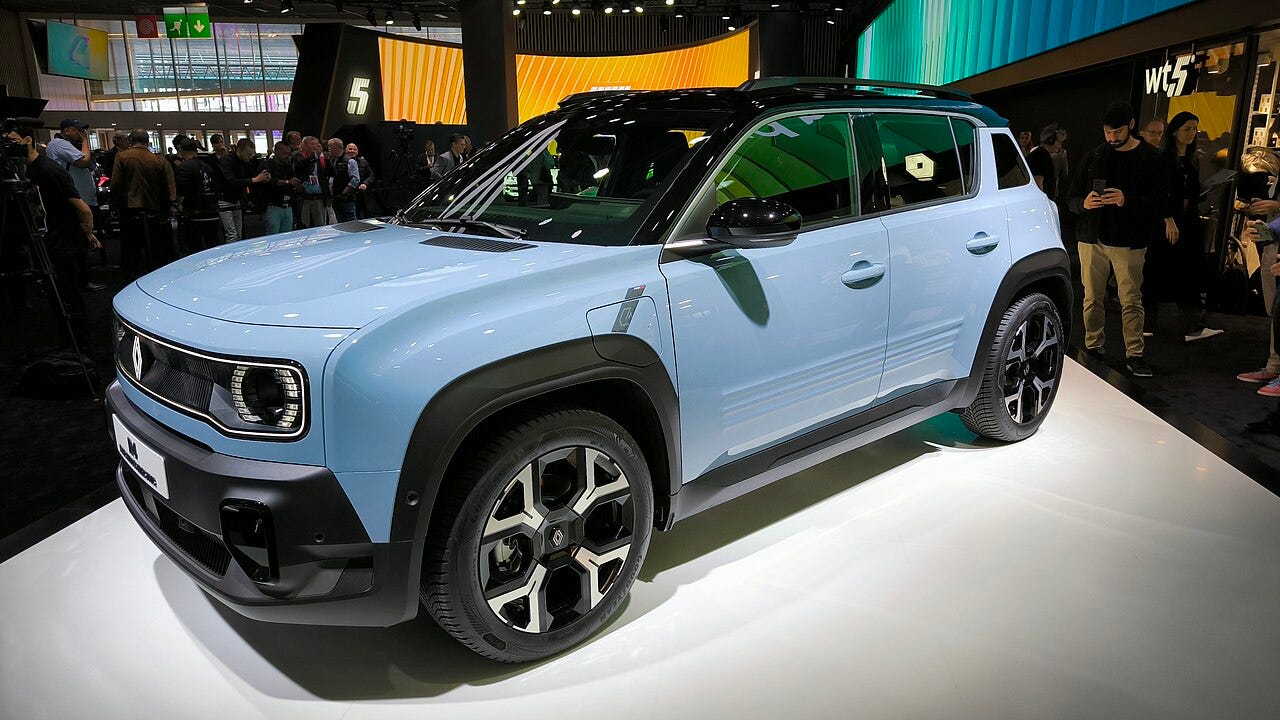
The industrial logic behind the call is specific. The shift to electric vehicles across Europe depends structurally on affordable compact urban models — and that is precisely where Chinese manufacturers are pressing hardest. Renault knows the terrain well: the electric R5 and the Clio have been its strongest sellers, helping drive a 7.3% revenue increase in the first quarter of this year.
But both models are now in the crosshairs. Chinese automaker Geely is preparing to launch a small EV in France designed to go head-to-head with the electric R5. BYD — already operating a plant in Hungary — is in discussions with European brands, including Stellantis, the Franco-Italian automotive group behind Peugeot, Fiat, and Jeep, to take over or jointly run underutilized factories. The goal is transparent: manufacturing inside the EU allows BYD to sidestep existing EU tariff barriers on Chinese-made vehicles, neutralizing one of the few protections European automakers currently enjoy.
A geopolitical accelerant is adding urgency to the picture. The war in Iran has sent fuel prices sharply higher, pushing both households and businesses to accelerate their shift away from combustion engines. New electric vehicle registrations in France surged 48% over the past four months — a windfall for those with the right product lineup, and a warning for those who don’t.
Analysis
Provost’s demand is strategically coherent, but it puts Brussels in an uncomfortable position.
First, the regulatory calendar and the industrial calendar are fundamentally misaligned. Developing a competitive small electric vehicle would typically take several years, industry experts note — which suggests that every new regulatory obligation introduced during that window represents an immediate compliance cost without a proportional near-term environmental return. Provost’s argument is not anti-green by nature: it is a case for framework stability, not abolition.
Second, the M1e proposal already exists, which signals that Brussels has independently diagnosed the same problem. Read through that lens, Renault’s push looks less like conventional industry lobbying and more like pressure to accelerate the implementation of a decision already on the table — a considerably more defensible posture.
Third, BYD’s maneuver warrants close attention. Acquiring or operating European plants through partnerships — including potentially with a weakened Stellantis — could allow the Chinese giant to absorb EU tariffs while preserving its price advantage. This sequence — European partnerships, local production footprint, tariff circumvention — might indicate a long-term strategy to embed Chinese automotive manufacturing inside the EU’s own perimeter, though the ongoing negotiations do not yet allow that conclusion to be drawn with certainty.
The bottom line
The real question may not be how many rules Brussels writes, but whether Europe’s industrial response can be ready before the battle for the urban EV segment is already over.
A ten-year regulatory freeze on small electric vehicles may protect Europe’s automakers in the near term — or it may simply delay the adaptation of an industry that will have to confront Chinese competition regardless, with or without a moratorium.
Sources: France Info · European Commission (M1e proposal, December 2025)