
Putin's debt-for-service law: what it reveals
Putin signed a law erasing up to $140K in debt for new Ukraine war recruits. Behind the offer: a deepening Russian recruitment crisis — and a deliberate targeting of the financially vulnerable.

On May 25, 2026, Vladimir Putin signed a law erasing up to 10 million rubles — roughly $140,000 — in court-collected debt for any Russian who signs a minimum one-year military contract to serve in Ukraine. The benefit extends to spouses. If a soldier dies at the front or sustains serious injuries, the credit obligations of the servicemember and their family are wiped out entirely. The measure applies only to debts already in active legal collection proceedings before the contract is signed. And it is the second law of its kind in less than 18 months.
That figure — $140,000 — is roughly the price of a small studio apartment in Moscow, according to real estate estimates cited by Reuters. It is not a trivial offer. It is also not a coincidence that it is being made again.
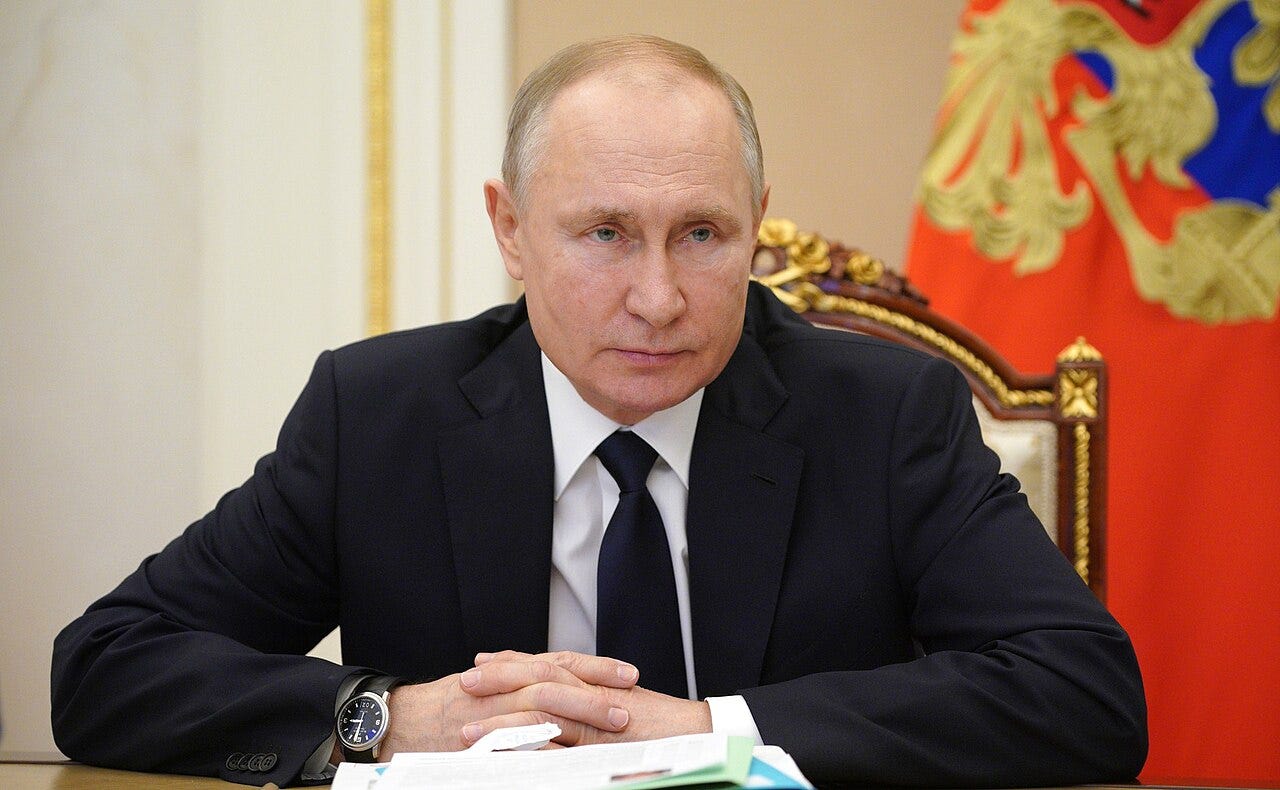
This image is used for illustrative purposes only.
At a glance
Putin signed a law on May 25, 2026, forgiving up to $140,000 in court-collected debt for new recruits signing a one-year minimum military contract for service in Ukraine — with the benefit extended to spouses.
This is the second such law in under 18 months — a previous measure covered contracts signed from December 1, 2024 — signaling an escalation of financial incentives as voluntary recruitment slows.
Russia’s daily recruitment rate fell by roughly 20% in early 2026 compared to the same period in 2025, according to Deutsche Welle, even as sign-on bonuses reached record highs in some regions.
The mechanics: targeting the indebted
The law is precise in its design. To qualify, a recruit must sign a contract with Russia’s Defense Ministry after May 1, 2026, commit to at least one year of service in what the Kremlin officially calls the “special military operation” in Ukraine — its euphemism for a full-scale invasion now in its fifth year — and must have had debt collection proceedings underway before signing.
The target profile matters. Men carrying court-ordered debt are not the ideologically motivated or the patriotically inclined — they are people for whom military service is being positioned as a financial exit from a legal trap. Reports from early 2026, citing Ukrainian intelligence sources whose claims cannot be independently verified, indicated that regional Russian authorities had begun compiling lists of residents with unpaid utility bills as recruitment candidates, using the prospect of debt cancellation as leverage before the law was even formally on the books.
According to Deutsche Welle, Russia’s public international broadcaster, between 800 and 1,000 people signed military contracts per day in the first quarter of 2026 — down from 1,000 to 1,200 during the same period in 2025, a decline of roughly 20% — even as signing bonuses reached record highs in some regions.
A financial arsenal four years in the making
Since launching its full-scale invasion of Ukraine in February 2022, Moscow has built an expanding architecture of economic incentives designed to keep soldiers flowing into the war without triggering a politically toxic general mobilization. The September 2022 “partial” mobilization — which recalled roughly 300,000 reservists, the rough equivalent of calling up a substantial share of the U.S. Army Reserve — sparked protests, a wave of draft-age men fleeing across Russia’s borders, and a political crisis the Kremlin has been careful not to repeat.
In its place: above-average salaries, signing bonuses, subsidized mortgages, fast-tracked university access for servicemembers and their children — and now, debt cancellation. Vyacheslav Volodin, the speaker of Russia’s State Duma (the lower house of parliament, roughly equivalent to the U.S. House of Representatives), stated that 164 laws to support combatants have been enacted over the past four years. Russian state figures — which cannot be independently verified — suggest approximately 417,000 contract soldiers were recruited in 2025, against a target of 1.5 million active personnel by 2026.
The May 2026 law is the second iteration of debt relief. An earlier law, signed in autumn 2024, covered contracts signed from December 1, 2024. The need to renew and expand the policy could indicate that the first round’s effects have worn off.
Analysis
The geopolitical signal of a model under strain
The repetition of debt-relief legislation within 18 months suggests the Kremlin no longer has a sufficient reserve of conventional volunteers and must expand its recruitment pool to the economically vulnerable. This does not necessarily mean Russia faces an immediate manpower collapse — its military capacity in Ukraine remains substantial — but the cost-per-recruit ratio appears to be deteriorating.
The broader pattern reinforces this reading. Human rights monitoring organizations have estimated that Russia recruited more than 180,000 prisoners since 2022, and that at least 27,000 foreign nationals from over 130 countries have signed up for service — the majority drawn from economically deprived regions of the Global South. Observers also report growing pressure on other vulnerable groups: university students facing academic difficulties are reportedly being offered military contracts as an alternative, and reservists summoned for what appear to be routine administrative check-ins are, in some cases, being presented with enlistment offers on the spot. These signals could indicate a system under growing pressure — though not yet a system in crisis.
The economics of permanent war
Russia’s economy has been on a war footing for over four years. Military spending has crowded out civilian investment, and recruitment bonuses — funded from federal and regional budgets — are placing growing strain on public finances. Reports from 2026 indicate that some regional governments have already reduced their enlistment payment offers as budgets tighten. Debt cancellation, ultimately financed through the state balance sheet via creditors, shifts the cost without eliminating it.
A familiar mechanism, a different context
For an American reader, the underlying mechanic is not entirely unfamiliar. The U.S. military has long offered financial benefits — student loan repayment, health coverage, career pathways — as recruitment tools in a competitive labor market. The structural difference here is sharp: where the U.S. military competes for volunteers with private employers, Russia is now targeting men already caught in legal debt proceedings, using financial relief as leverage in an ongoing war of aggression. The mechanism is comparable; the ethical context is not.
The bottom line
Debt forgiveness is not just a recruitment tool — it is an admission.
If Russia is now offering to wipe out court-ordered debt in exchange for a year at the front, it is because earlier incentives are no longer generating enough takers on their own. The real question is not whether Moscow will find soldiers in 2026 — it will. The question is how long a recruitment model built on financial coercion, prisoner enlistment, and foreign nationals from the Global South can remain viable as each of those pools gradually narrows.
Sources: RTBF · Euronews · Reuters · Deutsche Welle · European Council on Foreign Relations (ECFR)