
Putin says no to Zelensky: peace will have to wait
Putin rejects Zelensky's first direct open letter since 2022 and rules out a direct meeting — laying bare the diplomatic deadlock at the heart of the Ukraine war.

At a Glance
On June 5, 2026, Putin rejected the meeting proposal put forward by Zelensky in the first direct open letter of this kind since 2022, dismissing it as containing “boorish remarks” — without once naming its author during his speech at the St. Petersburg International Economic Forum.
Zelensky responded by accusing Moscow of having “once again chosen war,” calling for tighter financial pressure on Russia.
The exchange marks the collapse of a rare direct diplomatic gesture — and lays bare the insurmountable conditions Moscow continues to impose for any ceasefire.
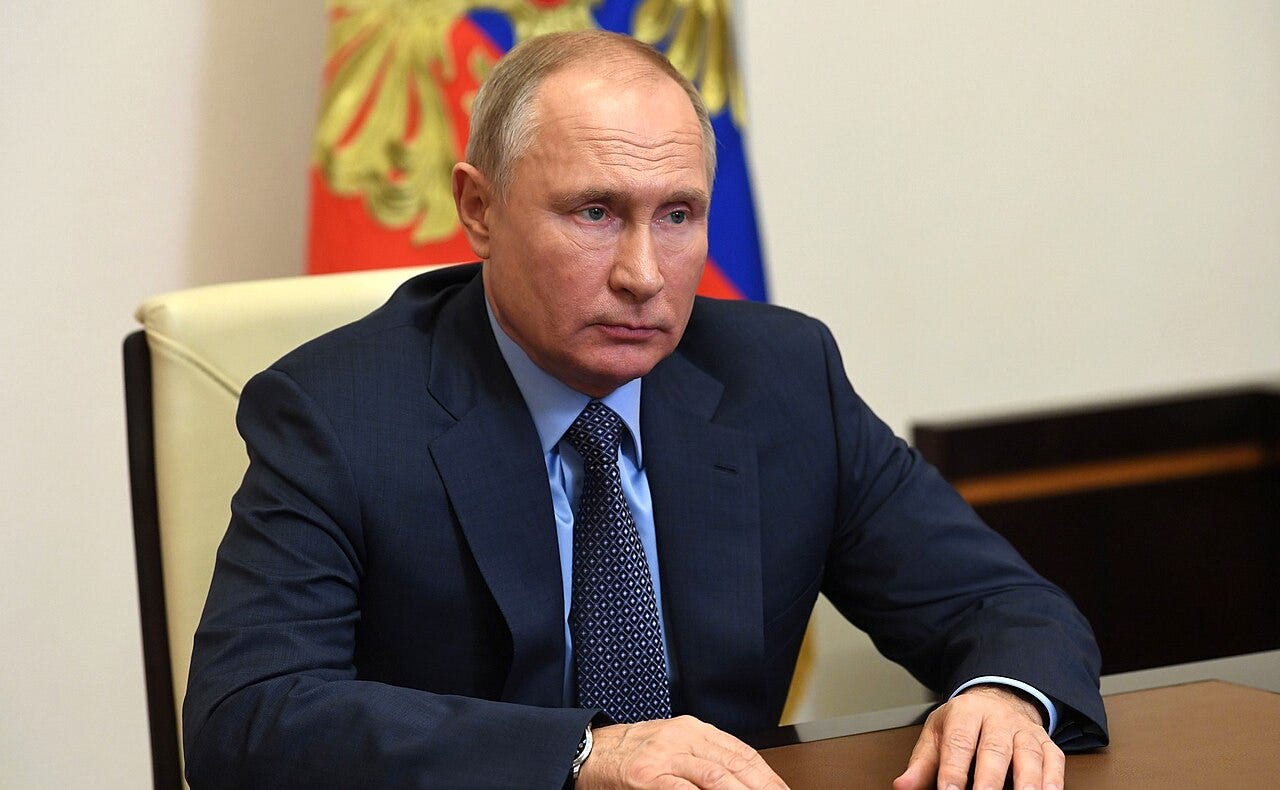
This image is used for illustrative purposes only.
The exchange that wasn’t supposed to happen
On June 4, 2026, Volodymyr Zelensky, Ukraine’s president, crossed a significant threshold: he sent Vladimir Putin an open letter, presented as the first direct public message personally addressed to the Russian president since the start of the full-scale invasion in February 2022 — previous contacts between the two sides having gone through intermediaries or back-channel talks. The tone was direct, the proposal unambiguous — a one-on-one meeting and a “full ceasefire.”
The answer came the following day, from the stage of the St. Petersburg International Economic Forum — Russia’s annual showcase for the foreign business partners who still show up. Putin said he saw “no reason, for the time being, to meet Zelensky.” He justified the refusal by pointing to what he described as “boorish remarks” in the letter — a reference to his age (73) and the length of his hold on power — before landing on a phrase that says it all:
“It’s not entirely clear whether this is meant to create the conditions for a personal meeting, or instead to make one impossible.”
Putin nevertheless insisted he had “never in principle refused” such a meeting — provided that experts first “develop solutions.” In other words: no summit without prior capitulation on Russian terms. And, in a telling detail, he never once pronounced Zelensky’s name during his remarks.
Moscow’s conditions: a documented dead end
The conditions Putin has set for ending hostilities are not new, but their restatement at a major international economic forum carries weight. Moscow demands control over Ukraine’s eastern regions and sweeping military and political restrictions imposed on Kyiv — a package that Ukraine and its Western allies have consistently rejected as categorically unacceptable.
That position has not shifted in more than two years. What has changed is the context. Zelensky’s letter was an attempt at diplomatic bypass — a direct appeal to international opinion, sidestepping the usual intermediaries (Washington, Paris, Berlin) whose effectiveness has been increasingly questioned. By dismissing it as boorish rather than simply ignoring it, Putin chose to respond — but on the terrain of style, not substance. In doing so, he avoided having to address the concrete proposals on the table.
Ukraine’s response was immediate and blunt. Zelensky called the Russian reaction a “weak response that disappointed many around the world.” He added that if Putin refused to change course, there would need to be “less money in Russia and more pressure on Russia.” The sanctions-and-pressure logic remains Kyiv’s compass.
The mechanics of a calculated refusal
The choice of venue was not accidental. By responding from the St. Petersburg Economic Forum — a platform Putin uses to signal that Russia is conducting business from a position of strength — the Kremlin sent a dual message: to the international community, that Russia manages its affairs on its own terms; to its domestic audience, that the legitimacy of the war is beyond debate.
Refusing to name Zelensky follows the same logic. Since 2022, the Kremlin has alternated between two postures toward Ukraine’s president: contesting his legitimacy — his constitutional mandate would have expired in May 2024 under Ukrainian constitutional rules, with no election possible during wartime — and publicly ignoring him to minimize his symbolic standing. Not pronouncing his name during an internationally broadcast address is a way of denying him the status of a peer.
Direct meeting proposals between the two presidents have surfaced repeatedly over four years of war — and each time followed the same arc: proposal, conditions, counter-conditions, impasse. The June 2026 exchange does not break that pattern.
Analysis: what this refusal reveals
Zelensky’s gesture deserves to be read for what it is: a diplomatic repositioning aimed as much at the West as at Moscow. By writing directly to Putin, he sought to demonstrate good faith to war-weary allies, to bypass struggling intermediaries — particularly Washington, whose commitment has remained uneven — and to force Moscow to take a public stance.
The strategy partially worked: Putin responded, and his response confirms that Moscow is not willing to negotiate on fundamentals. That is useful information, even if it is not the news anyone hoped for.
What may be at stake over the longer term — and this is a hypothesis that should be stated as such — is Ukraine’s capacity to sustain Western support in a climate of growing fatigue. With formal negotiations stalled, every direct dialogue attempt also serves as a demonstration to allied capitals: “We are trying. Moscow is the one saying no.”
The deeper question this episode raises is one that neither side can answer alone: how long can Ukraine’s allies sustain support for a war with no credible diplomatic horizon? And by ostentatiously refusing any meeting, is Putin calculating that time is on his side — or risking the patience of partners whose cooperation Russia still needs?
The Bottom Line
Putin’s refusal is no surprise. But its staging — from an international economic platform, without even uttering his interlocutor’s name — says something deeper than a simple no. It says that Moscow does not recognize Kyiv as an equal at the negotiating table. If peace comes, it may not come through a letter. It will come through a balance of forces. Which way that balance tilts, in June 2026, is a question neither Zelensky nor Putin can settle alone.
Sources: Euronews · AFP · AP